
By Theodore Brown-
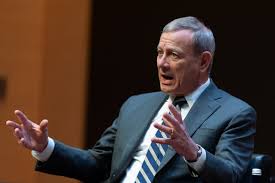
The United States is confronting a crisis of confidence in its judiciary as personal attacks and threats against judges escalate to unprecedented levels. On 17 March 2026, Supreme Court Chief Justice John Roberts broke his customary public restraint to issue a rare warning, describing such hostility as “dangerous” and insisting it must end. Experts say these attacks extend far beyond individual courts, signalling a deeper fracture in the social contract that underpins American democracy a rupture that could undermine public trust in the rule of law for decades to come..
Roberts’ remarks come amid a surge of public criticism and personal attacks on judges, especially those who have ruled against high‑profile political figures.

AD: Capeesh Restaurant
In recent weeks, Supreme Court Chief Justice John Roberts directly condemned “personal hostility” directed at judges, warning that such rhetoric is dangerous and must stop, even as former President Donald Trump has repeatedly lambasted jurists by name after unfavourable rulings.
While criticism of legal decisions is a normal part of political discourse in a democracy, analysts say the line between legitimate critique and intimidation has blurred, with judges now facing heightened public denunciation and pressure that threatens their ability to rule impartially.
Roberts and others have stressed that judges should be evaluated on the basis of legal reasoning, not personal attack, because judicial independence is foundational to the rule of law a principle that allows courts to operate without fear of reprisal or political coercion.

AD: Oysterian Sea Food Restaurant And Bar
Political Debate to Public Anxiety
The rise in hostility toward judges is not limited to courtroom decisions. Social media amplification, political rallies, and partisan commentary have all contributed to an environment in which threats and personal attacks have become normalised.
Threat reports submitted to the U.S. Marshals Service indicate a dramatic increase in intimidation aimed at federal judges over the past two years, with some incidents escalating to harassment of family members and security alerts at courthouses.
Public perception mirrors this tension. Polling from the Pew Research Center in early 2026 shows that 43% of Americans believe judges “sometimes act with political motives,” while 35% believe the judiciary can be trusted to act independently the lowest confidence level in over a decade.
This distrust, combined with heightened partisanship, creates fertile ground for rhetoric that undermines the very institution tasked with safeguarding the law.
Roberts’ statement is particularly significant because it comes at a time when judicial decisions intersect with deeply polarizing issues, from electoral disputes to executive authority and public policy.
While the chief justice did not call out specific individuals, observers widely interpreted his remarks as a response to attacks from high-profile politicians who have publicly questioned the impartiality of federal judges.
Legal scholars and judicial institutions warn that persistent attacks on judges could produce long‑term consequences for the rule of law by creating a chilling effect on judicial decision‑making.
Research into threats and intimidation against the bench suggests that hostile environments can pressure courts to restrain controversial rulings or avoid decisions that might invite retaliation, ultimately weakening judicial independence.
Reports on threats to the judiciary highlight not just risks to personal safety but how such pressures can influence judges’ willingness to engage with contentious legal questions.
Organisations representing judges have issued joint statements warning that intimidation and threats undermine the rule of law and the constitutional role of the judiciary.
In addition, judicial studies show that attacks from political figures and media can erode public respect for courts and create an atmosphere in which judges may feel compelled to self‑censor.
Even sitting Supreme Court justices have publicly acknowledged that threats and hostile rhetoric pose real risks to judicial independence and the integrity of the legal process.
Roberts’ intervention is also a signal to elected officials. While democracy depends on accountability, experts argue that threatening, demonising, or attempting to remove judges for their rulings crosses a line that undermines the Constitution.
Legal advocacy groups have increasingly called for bipartisan measures to strengthen protections for judges, including stricter enforcement of anti-threat statutes and public education campaigns to distinguish lawful critique from intimidation. (judges.org)
While the country approaches another contentious election cycle, the judiciary faces a dual challenge: maintaining its independence while addressing growing public skepticism. Roberts’ warning underscores the stakes, reminding Americans that the courts are more than venues for legal argument they are pillars of a functioning democracy.
How the nation responds to this warning may determine whether respect for the rule of law endures or erodes under the weight of partisan pressure.
In the wake of Roberts’ remarks, one thing is clear: the conversation about judicial independence is no longer confined to legal circles. It has become a defining issue of civic culture, and the way political leaders, media, and citizens navigate it could shape the American legal landscape for decades to come.
The judiciary, long perceived as a relatively insulated branch of government, is now squarely in the public eye, subject not only to scrutiny but to active contestation by forces that often blur the line between criticism and intimidation.
The phenomenon is not merely theoretical; it carries real-world consequences for how laws are interpreted, how disputes are resolved, and how citizens perceive the legitimacy of democratic institutions.
Historically, the United States has relied on a careful balance between accountability and independence. Judges are expected to uphold the Constitution and the law without fear of political reprisal, while elected officials and the public retain the right to critique their decisions. However, the boundaries of this balance have become increasingly strained.
Social media platforms amplify personal attacks on judges, often in real-time, creating viral moments that erode public trust and invite retaliation. Opinion columns, televised commentary, and even campaign rhetoric have begun to target judges as political actors rather than impartial arbiters, turning routine rulings into flashpoints for national controversy.
Roberts emphasised, when rhetoric escalates to threats or vilification, it jeopardises not only individual judges but the integrity of the legal system itself.
Public perception is another critical dimension. Surveys conducted over the past year indicate a growing portion of Americans question whether judges act independently of political influence.
Even when rulings are grounded in law and precedent, partisan narratives can frame judges as either heroes or villains, depending on whether their decisions align with ideological expectations.
This polarization has consequences beyond perception: it influences how cases are argued, how lawyers advise clients, and how lower courts interpret precedent under public pressure. If judicial decisions are seen as politically motivated rather than legally grounded, the legitimacy of courts can suffer, threatening the public’s willingness to comply with rulings or respect judicial authority.
Moreover, the politicization of judicial roles has international implications. The U.S. judiciary has long been a model for courts around the world, demonstrating the importance of an independent legal system in upholding democratic norms.
Attacks on judges in the public sphere may embolden authoritarian regimes elsewhere to justify interference in their own courts, undermining global rule-of-law standards. In this sense, the stakes of Roberts’ warning extend far beyond American borders: the way the country addresses hostility toward judges sends a signal to the world about the resilience of democratic institutions.
Roberts’ intervention also highlights the need for cultural as well as institutional safeguards. Legal scholars argue that protecting judicial independence requires more than security measures or legislation it requires a collective commitment to civic norms that distinguish between legitimate critique and corrosive personal attacks.
Political leaders, media outlets, educators, and civil society organisations all play a role in fostering a culture that respects the judiciary without sacrificing accountability. Citizens, too, bear responsibility; public discourse shapes the environment in which judges operate, and a society that tolerates threats or demonization risks undermining the very protections that allow the courts to function impartially.
In this context, Roberts’ remarks are both a warning and a call to action. They underscore that judicial independence is not a static legal principle but a dynamic civic value that requires constant vigilance.
The coming years will test whether American society can navigate the tension between democratic debate and institutional respect, between political accountability and judicial impartiality. How leaders, media, and citizens respond will determine not only the stability of the courts but also the broader trajectory of the rule of law in the United States.
In short, the conversation Roberts has reignited is not just about judges; it is about the health and resilience of democracy itself, and its outcome may reverberate far into the future.

AD: Heritage And Restaurant Lounge Bar