
By Ben Kerrigan-
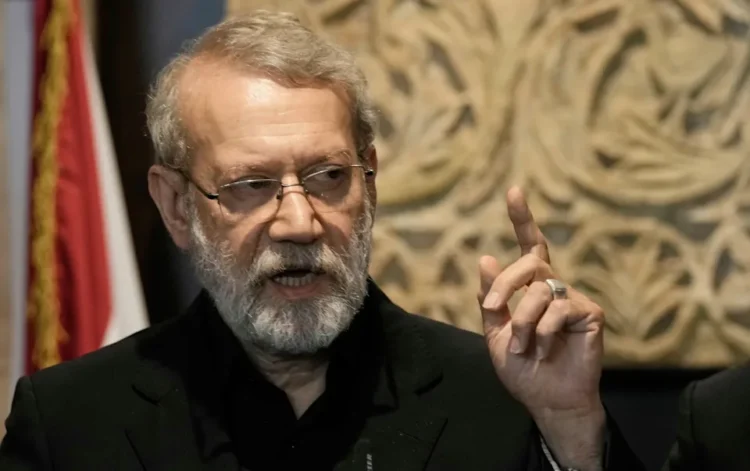
In a rapidly unfolding chapter of the Middle East’s deadliest conflict in decades, the reported death of Iran’s de facto leader Ali Larijani has thrust Tehran into deeper uncertainty one that many analysts argue is even more consequential than the assassination of Supreme Leader Ayatollah Ali Khamenei last month. The implications of this watershed moment stretch beyond Tehran’s corridors of power, shaking regional diplomacy, internal factional balance, and global markets alike.
Larijani’s killing confirmed by Israeli authorities on Tuesday marks not just the fall of a senior official, but potentially the collapse of the last political bridge between Iran’s militant hardliners and the remnants of its pragmatic establishment.

AD: Capeesh Restaurant
Israeli Defense Minister Israel Katz publicly stated that forces eliminated Larijani along with Gholamreza Soleimani, commander of the Basij militia both key pillars of the Iranian security apparatus. Iran’s state media have since confirmed Larijani’s death.
This crushing blow comes barely two weeks after Tehran’s longtime supreme leader was killed in an airstrike at the outset of the ongoing war with the United States and Israel a strike that triggered both grief and celebration across different segments of Iranian society.
Larijani’s journey from parliament speaker to the most influential architect of the Islamic Republic’s policy machinery was long and complex. Born into a prominent clerical family, he served in various capacities from military officer in the Revolutionary Guards to chief nuclear negotiator and parliamentary speaker for over a decade.

AD: Oysterian Sea Food Restaurant And Bar
At times he was seen as a competent strategist who could straddle the regime’s ideological divides; at others, he was the enforcer of its harshest domestic policies.
With the death of Ayatollah Khamenei on 28 February, Larijani effectively became the central node of Iranian governance, overseeing strategic decisions that blended military coordination, diplomatic outreach, and internal suppression of dissent.
His removal “would be a bigger loss to Iran than the death of its supreme leader,” not because of title alone, but due to his practical control over both state and state‑backed armed forces.
Unlike the largely symbolic role of the supreme leader a constitutionally enshrined position steeped in religious authority Larijani’s influence was tangible in every arena where decisions were implemented and executed.
He was a strategist who not only understood the ideological imperatives of the Islamic Republic but also knew how to leverage them into realpolitik gains until the strikes abruptly ended that command.
Diplomatically, Larijani was Iran’s most visible negotiator on key issues including the nation’s contentious nuclear program. His absence could unravel fragile backchannels that had, at various points, hinted at possible de‑escalation talks with Western powers a nuance that mere clerical authority did not command. In contrast, the supreme leader’s function was rooted more in symbolic legitimacy and doctrinal oversight.
Without Larijani to operationalize policy, Iran’s leadership now faces a vacuum that neither the official hierarchy nor informal networks are prepared to fill.
The consequences of Larijani’s death will ripple across Iran’s domestic front and the international system. Domestically, his demise deepens the fragmentation between hardliners, military elites, and the ranks of Iran’s security and intelligence services.
The Basij forces he helped coordinate, already blamed for violent crackdowns on recent protests that claimed thousands of civilian lives, will now operate without their most senior overseer.
Global markets, already jittery after weeks of war, responded sharply; Brent crude oil surged above $100 a barrel on fears that instability in the Strait of Hormuz could choke global energy flows.
The coordinated deaths of both the supreme leader and the strategic helm of Tehran’s security establishment have unnerved traders and policymakers alike, who now see not merely a regional conflict but a potential leadership vacuum threatening to destabilize the architecture of the wider Middle East.
Internationally, responses have been starkly polarized. U.S. and Israeli leaders heralded the strikes as blows against Iran’s “axis of aggression,” while governments sympathetic to Tehran condemned what they describe as unlawful assassinations of sovereign officials.
Meanwhile, It’s noted that Larijani was among the highest‑ranking Iranian leaders still alive, making his reported death one of the most significant losses since Khamenei’s own assassination.
But it is the internal impact that may matter most. The absence of a clear successor with both Larijani’s political heft and his administrative mastery raises questions about the next structure of Iranian command. Mojtaba Khamenei, the late supreme leader’s son and designated successor in recent weeks, remains a divisive figure with limited support outside hardline factions.
Without Larijani’s unifying if authoritarian hand, Tehran risks splintered authority that could hasten internal fracture or empower de facto military rule.
Some analysts already warn that the erosion of Iran’s traditional governance could usher in extremist operators less inclined toward diplomatic engagement, dramatically increasing the risk of wider conflict escalation.
Scholars of Middle Eastern politics have long argued that the loss of senior figures in rapid succession destabilises authoritarian regimes by removing not just leaders, but the intricate web of patronage and negotiation that sustains them. Larijani was precisely that web. While Iran stands at a crossroads that no single assassination not even that of its supreme leader could have engineered alone, the death of Ali Larijani leaves a vacuum in authority and strategy, exposing the fragility of a state that has already endured unprecedented setbacks.
Whether this leads to an ignominious collapse, a hardliner consolidation, or a fractious interim leadership remains uncertain, but the world watches, recognising that Iran’s political future just became a far more unpredictable equation.
Larijani’s absence removes not only a seasoned strategist but also a stabilizing force capable of mediating between the ideological extremes within Tehran’s elite. In recent years, he had functioned as a practical bridge between hardline clerics, military commanders, and technocratic bureaucrats, guiding decisions that ranged from nuclear negotiations to internal security measures.
With him gone, the intricate balance that allowed competing factions to coexist without open confrontation is at risk of unraveling. Analysts warn that the vacuum may empower hardline factions, whose uncompromising stance could escalate both domestic repression and regional aggression.
Alternatively, the lack of a clear successor may trigger infighting among military and political elites, producing a leadership paralysis that could destabilise Iran’s governance even further.
Beyond the corridors of power, ordinary Iranians may feel the ripples of this uncertainty acutely. Social unrest, economic instability, and growing mistrust in institutions may accelerate as citizens witness the rapid erosion of familiar authority structures. Internationally, Iran’s neighbours and global powers must reassess their diplomatic and security strategies in light of the country’s sudden unpredictability.
Oil markets to regional alliances, the reverberations of Larijani’s death are already being felt, reminding the world that the demise of a single individual even one less publicly visible than the supreme leader can shift the trajectory of an entire nation.
In essence, Iran now faces a test unlike any in decades: navigating a future without the guiding hand of its most influential strategist, while contending with both internal factionalism and external pressures.
The outcome remains unknown, but one fact is undeniable: the political landscape of the Islamic Republic has been fundamentally altered, and its next chapters will be written under the shadow of uncertainty and fragility.

AD: Heritage And Restaurant Lounge Bar