
By Tony O’Reilly-
The Metropolitan Police Service will deploy live facial recognition technology during a major protest operation in central London this weekend .
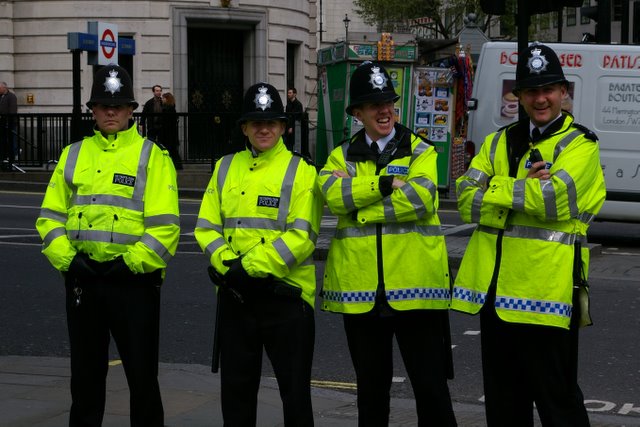
As commanders prepare for what they describe as an exceptionally challenging security operation involving rival demonstrations, heightened community tensions and the logistical demands of the FA Cup Final, the Metropolitan Police has confirmed that officers will use live facial recognition cameras operationally at a protest event for the first time in the force’s history.

AD: Capeesh Restaurant
The move marks a major escalation in surveillance-led policing and signals what critics fear may become a new era of technology-driven monitoring of political demonstrations across the United Kingdom. Around 4,000 police officers will be deployed across central London on Saturday, May 16, in a vast operation expected to cost approximately £4.5 million once associated operational impacts are taken into account.
In addition to specialist public order units, mounted officers, dog teams, drones and helicopter surveillance, police will now integrate live facial recognition systems into the operation, specifically targeting individuals suspected of posing risks to public safety in connection with demonstrations organised under the “Unite the Kingdom” banner associated with Stephen Yaxley-Lennon.

AD: Oysterian Sea Food Restaurant And Bar
The event is expected to draw thousands of demonstrators into central London amid continuing tensions surrounding pro-Palestinian marches, growing concern over hate crime, and wider anxieties linked to extremism and social division.
Senior Metropolitan Police commanders described the operation in unusually stark language during a briefing to journalists, warning that London faces a volatile combination of political anger, religious tensions and public order risks unlike anything seen in recent months. Deputy
Assistant Commissioner James Harman said the force intended to make the “most assertive possible use” of policing powers available under current legislation, reflecting growing concern inside the police service that demonstrations connected to the conflict in the Middle East have increasingly become flashpoints for intimidation, hate incidents and extremist rhetoric.
Harman insisted officers would continue to facilitate lawful protest but warned that anyone seeking to exploit demonstrations to spread hatred, commit offences or provoke disorder would face immediate intervention.
The introduction of live facial recognition technology into this environment has transformed what would already have been a major policing operation into a national controversy about surveillance and democratic rights. According to the Metropolitan Police, facial recognition cameras will be deployed in Camden and linked to intelligence-led watchlists identifying individuals wanted for offences or assessed as presenting risks to public safety.
Police insist that images captured from members of the public who are not matched to the watchlist will be deleted almost instantly, with biometrics from “non-matches” removed within seconds. Yet despite those assurances, civil liberties campaigners and privacy advocates argue that the deployment crosses a significant constitutional line by bringing automated biometric surveillance directly into the policing of public protest.
Critics warn that the use of facial recognition technology at demonstrations risks creating a chilling effect on democratic participation, particularly among minority communities and politically active citizens who may fear being monitored simply for attending lawful events.
Campaigners have repeatedly argued that facial recognition systems fundamentally alter the relationship between the citizen and the state by allowing authorities to identify and track individuals in public spaces on a mass scale.
While police insist the technology will be used narrowly and proportionately, opponents fear the precedent could rapidly expand beyond high-risk events into routine protest policing. The symbolism of deploying facial recognition cameras at political demonstrations is especially troubling for many civil liberty groups because protests have historically occupied a protected place within democratic societies as spaces for dissent, opposition and collective expression free from intrusive state monitoring.
The Metropolitan Police, however, maintains that the security environment facing London has changed dramatically in recent years. Officers point to rising hate crime, several recent terrorist incidents and increasingly hostile confrontations linked to demonstrations surrounding the Israel-Gaza conflict as justification for stronger preventive measures.
Harman revealed that both Jewish and Muslim communities had reported feeling intimidated by previous protest activity in central London, with some residents allegedly avoiding travelling into the city or concealing visible signs of their faith for fear of harassment.
Such remarks underline the extent to which police now view large-scale demonstrations not merely as public order challenges, but as potential catalysts for wider communal tensions with serious consequences for public safety and social cohesion.
The force has imposed strict conditions on both the Unite the Kingdom demonstration and accompanying pro-Palestinian protests under the Public Order Act 1986. These include restrictions on protest routes, timings and rally locations in an attempt to minimise confrontation between opposing groups while managing the enormous strain placed on central London policing resources by simultaneous events.
In a further escalation of regulatory oversight, police also confirmed that conditions would for the first time apply directly to protest speakers themselves. Organisers have reportedly been warned they could face legal consequences if invited speakers engage in unlawful hate speech, incitement or extremist rhetoric during public addresses.
The move reflects growing concern within policing and government circles that inflammatory speeches at demonstrations can rapidly intensify tensions both on the streets and online.
The scale of the operation has also exposed broader pressures facing British policing. Around 660 officers are being drafted in from forces across England and Wales to support the Metropolitan Police effort, illustrating the extraordinary resources required to manage modern large-scale demonstrations in the capital.
Senior officers acknowledged openly that the deployment would inevitably divert officers away from neighbourhood policing and frontline crime duties elsewhere in London, raising difficult questions about policing priorities and sustainability.
At a time when many London boroughs continue to experience concerns over violent crime, burglary and anti-social behaviour, critics argue that the increasing frequency of massive public order operations is placing unsustainable pressure on already stretched policing budgets and personnel.
The use of live facial recognition has become one of the most divisive developments in modern British policing. Supporters argue that the technology offers police an invaluable tool for identifying dangerous individuals quickly and preventing violence before it occurs. The Metropolitan Police has previously claimed successful deployments have helped identify wanted offenders, serious criminals and individuals subject to court restrictions.
Government ministers and some policing leaders increasingly describe biometric technology as an essential component of twenty-first century law enforcement, particularly in an era shaped by terrorism threats, organised extremism and rapidly mobilised online movements capable of generating disorder with little warning.
Opponents counter that the technology remains insufficiently regulated and risks normalising a surveillance culture incompatible with democratic freedoms. Human rights organisations have repeatedly questioned both the accuracy and proportionality of facial recognition systems, warning of potential errors, bias and misuse.
Concerns have been especially pronounced regarding the possibility of disproportionate impacts on ethnic minority communities, with campaigners arguing that algorithmic systems can reproduce or intensify existing inequalities within policing practices.
The decision to introduce the technology specifically within the context of political protest is therefore viewed by many critics as particularly dangerous because it risks deterring lawful dissent through fear of identification and monitoring.
The controversy also reflects a broader transformation in how British authorities approach protest policing. Over the past decade, governments of different political colours have increasingly introduced legislation and policing strategies designed to strengthen state powers in response to disruptive demonstrations, extremist mobilisation and public disorder.
Measures expanding police authority over protest conditions, noise restrictions and public nuisance offences have generated fierce debate over whether Britain is gradually narrowing the practical space for public protest in pursuit of security and order. The deployment of facial recognition technology at demonstrations may now become one of the defining symbols of that shift.
The stakes surrounding Saturday’s operation are exceptionally high. The force remains under intense scrutiny following years of criticism over public trust, misconduct scandals and failures in community relations. Any significant disorder, hate incidents or violent clashes during the demonstrations would likely trigger severe political and media fallout.
Senior commanders therefore appear determined to project maximum operational control and deterrence ahead of the weekend. Harman insisted the force would “police without fear or favour” while responding decisively to criminal behaviour, signalling that police leaders believe strong visible enforcement is necessary to prevent escalation.
The presence of demonstrations linked to Stephen Yaxley-Lennon adds an additional layer of political sensitivity. Yaxley-Lennon remains one of the most polarising figures in British public life, attracting passionate support among some anti-immigration activists while provoking intense opposition from anti-racist organisations and Muslim groups.
Events associated with his movements have frequently generated confrontations requiring extensive police intervention. Combined with continuing anger and mobilisation surrounding the Middle East conflict, authorities appear deeply concerned about the possibility of volatile encounters between rival groups in central London streets already crowded with football supporters attending the FA Cup Final at Wembley.
Analysts believe that happens this weekend may shape the future trajectory of protest policing across Britain. If the operation is judged successful, pressure is likely to grow for wider deployment of facial recognition technology at demonstrations and major public events nationwide. Police leaders may argue that biometric surveillance has proven its value as a preventive public safety tool capable of deterring violent actors while enabling lawful protest to proceed safely.
But if the deployment generates controversy, allegations of overreach or legal challenges from civil liberties organisations, it could equally intensify demands for tighter regulation or parliamentary scrutiny over how such technologies are used.
The debate ultimately reaches beyond a single protest operation or even facial recognition itself. At its heart lies a deeper national argument about how democratic societies respond to rising extremism, polarisation and social conflict without eroding the freedoms they seek to protect.

AD: Heritage And Restaurant Lounge Bar
-
Share On
- Categories
- Date