
By James Simons-
Croydon has become the focal point of a heated local controversy after the Executive Mayor refused to apologise to a resident whose legally parked vehicle was surrounded by a newly painted disabled parking bay and subsequently ticketed even though the council later cancelled the fines.
The episode has ignited intense public debate over local parking enforcement, council communication breakdowns and political accountability in one of London’s largest boroughs.

AD: Capeesh Restaurant
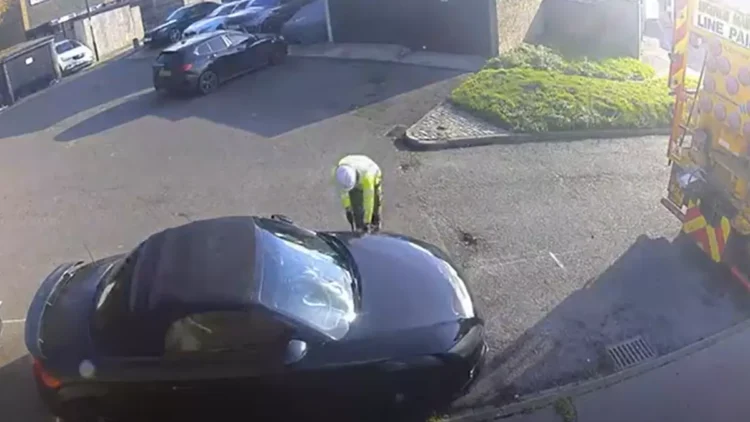
The incident unfolded last month in New Addington, a residential area in south London. CCTV footage shared widely on social media showed contractors applying fresh road markings for a disabled parking bay around an Audi that had been parked on an unrestricted road while its owner was on holiday.
Between 22 and 26 November, parking enforcement officers issued four penalty charge notices (PCNs) to the vehicle, now technically located within a disabled bay that did not exist when it was originally parked.
Croydon Council eventually revoked all of the fines, acknowledging that they were generated due to a failure in internal communication. According to the authority, a system note placed by the contractor who photographed the car before the marking was laid was not passed on to parking wardens, resulting in the incorrect enforcement action.

AD: Oysterian Sea Food Restaurant And Bar
The council also stressed that in its records, no formal penalty was processed because of that oversight. Officials described the episode as a confusing anomaly and apologised for any uncertainty it caused.
Yet despite the council’s apology on behalf of its operational systems, the mayor declined to issue a direct apology to the affected motorist, a decision that has become the centre of significant criticism.
In statements reported by local media, the mayor reiterated that no valid fines were ultimately enforced and thereby suggested that an apology directly to the resident was unnecessary.
This stance has not sat well with many in the community, who argue that administrative missteps and poor communication even where fines were later cancelled warrant an unequivocal apology from political leadership.
Opposition voices and local campaigners have seized on the episode as emblematic of broader frustrations with parking policy and enforcement in the borough. Some residents argue that the approach to installing parking bays and issuing fines has been too heavy-handed and poorly explained.
This is not the first time Croydon’s parking practices have drawn scrutiny; the council has previously grappled with controversies over PCN backlogs and large unpaid fine totals, reflecting deeper challenges in administrative systems and enforcement strategies.
Public reaction on social media was swift and polarised. The video footage of the marking process drew tens of thousands of views and sparked hundreds of comments many sympathetic to the motorist, some questioning how such an error could occur, and others misinterpreting the footage to suggest intentional misconduct.
The resident at the heart of the incident reported feeling unfairly vilified online, with some commenters accusing him of trying to evade parking rules, despite the sequence of events showing the bay being painted around his stationary car.
Commentators have seized on the mayor’s refusal to apologise as a symbolic moment in the ongoing debate over local government accountability. Critics argue that leadership should not only manage operational errors when they arise but also recognise the impact such errors can have on trust between authorities and the public they serve.
They contend that a public apology would help reassure residents that the council takes responsibility for miscommunication and procedural failings.
Supporters of the mayor, however, maintain that insisting on an apology when no enforceable fines were ever issued misrepresents the facts of the case and could set an unwelcome precedent for how local authorities handle administrative confusion.
The wider context in Croydon involves ongoing efforts to balance enforcement, revenue generation, and public service delivery. Parking enforcement represents a significant source of income for the borough, which like many local authorities, faces budgetary pressures and rising costs for essential services.
Last year, the council cited “administrative issues” to explain a backlog of more than £1.1 million in unpaid penalties further underscoring the complex relationship between enforcement policy, administrative capacity and public perception.
The disabled bay controversy has also highlighted criticisms of communication practices within the council’s operations. Residents and local campaign groups have pointed to instances where notification of changes to road markings or enforcement procedures has not been well publicised, leaving motorists unaware of evolving restrictions.
In this latest case, the failure to notify drivers or neighbours in advance about the bay installation left many questioning whether the council had sufficiently considered the practical impact on residents and motorists.
In response to mounting feedback, some councillors have called for clearer guidance and more robust safeguards to ensure that roadwork contractors and parking enforcement teams coordinate more effectively.
Suggestions from community meetings have included preemptive notifications to local residents when bays are going to be installed, and improved digital alert systems to ensure that parking attendants are immediately aware of pending changes. Such proposals aim to reduce the likelihood of similar episodes occurring in the future, though they have yet to be formally adopted.
The episode has also resonated beyond parking policy to touch on issues of trust in local leadership. In recent months, Croydon Council has faced criticism on a range of fronts, from handling environmental crime and fly-tipping to managing public services in a borough grappling with high demand and limited resources.
These broader concerns feed into a narrative among some residents that political leadership needs to be more responsive and transparent when dealing with civic frustrations and administrative errors.
For many motorists and local residents, the disabled bay incident represents more than just a parking dispute. It speaks to everyday interactions with public authorities and how responsive, or otherwise, those authorities are when systems fail.
Even where formal outcomes such as cancellation of fines are positive, the perception of accountability and empathy from elected officials remains a powerful gauge of public confidence. The mayor’s refusal to apologise, therefore, has taken on symbolic weight in the debate about the nature of local governance and the relationship between citizens and those elected to serve them.
As Croydon continues to navigate the fallout from this episode, the council faces difficult choices about how to implement lessons learned without alienating constituents or undermining its own policy objectives. The borough’s leadership will need to assess not just operational fixes, but also how to rebuild trust with residents who feel aggrieved by what they see as avoidable missteps.
That process may require more than policy adjustments; it may demand a shift in how council leaders engage with and respond to the lived experiences of the community they govern.
The New Addington parking bay controversy, and the mayor’s refusal to apologise for it, will likely continue to feature in local political discussions not least because it sits at the convergence of administrative practice, political accountability and public sentiment in a borough grappling with change and challenge.
While the technicalities of PCN issuance and cancellation may seem arcane to outsiders, to many Croydon residents, they reflect larger questions about how local government functions and listens. The implications of this debate may therefore extend well beyond parking lines and fines, into the broader arena of civic trust and public service delivery in the years ahead.

AD: Heritage And Restaurant Lounge Bar