
By Chris Williamson-
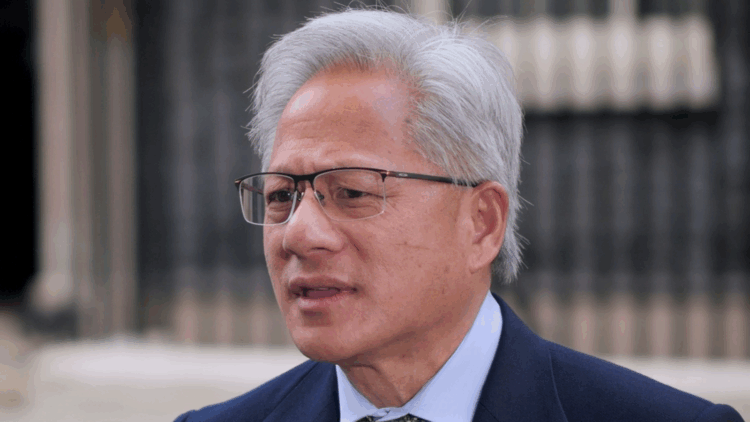
The head of the world’s first $5 trillion company, Nvidia CEO Jensen Huang, confidently dismissed fears of an impending market collapse in the artificial intelligence sector this week.
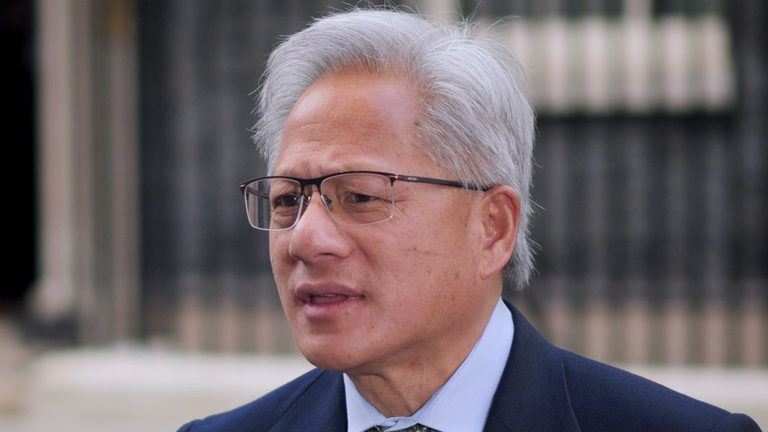
Jensen Huang outside Number 10 Downing Street. Pic: Sky News
Speaking to Sky News shortly after participating in a high-level roundtable at Downing Street, Mr. Huang fiercely defended the monumental valuation ofs industry against criticism from renowned investor Michael Burry. Burry, famously portrayed.

AD: Capeesh Restaurant
in the film The Big Short, recently revealed substantial bets against Nvidia and other technology stocks, suggesting the current surge represents a precarious market bubble. Huang asserted that the AI sector is “a long, long away” from experiencing a crash reminiscent of the 2008 financial crisis, offering a powerful Nvidia AI Defense.
Huang’s confidence is rooted deeply in the fundamental economics driving the technology. The CEO argued that artificial intelligence is the very first technology requiring vast infrastructure to be built on a monumental scale, driving immense, sustainable demand for high-end computing components.
He pointed out that Nvidia has already seen “great returns” from AI investments, explaining precisely why the company and the entire supply chain are accelerating their expansion efforts.

AD: Oysterian Sea Food Restaurant And Bar
The core of his Nvidia AI Defense rests heavily on the concept of profitability: improved AI training has led to algorithms that consistently provide much “better” and significantly more “useful” answers.
Consequently, the AI systems themselves have become intensely profitable for the companies deploying them, justifying the massive capital expenditures.
The CEO explained that when something proves highly profitable, the suppliers logically want to make more of it, accelerating the infrastructure build-out across the globe. This long-term, utility-driven expansion forms the sound basis of the comprehensive Nvidia AI Defense against short-term volatility.
Pushed specifically on whether he was worried about a scenario like the one detailed in The Big Short, Huang was unequivocal in his dismissal.
He emphasized the current phase is merely the beginning of a very long build-out cycle for artificial intelligence infrastructure. He concluded his remarks with a wry statement on social media, borrowing a famous line to tell critics, “These aren’t the charts you are looking for. You can go about your business.”
Michael Burry, however, remains conspicuously unconvinced by the optimism radiating from the technology CEOs currently leading the sector. The influential investor and his firm,
Scion Capital, gained widespread fame and enduring notoriety for their successful financial maneuvering ahead of the devastating 2008 housing market crash.
Burry’s strategic decision to “short” the US housing market—effectively betting against its continued rise—was the central plot element in the acclaimed 2015 film The Big Short, earning him legendary status among contrarian traders. Earlier this week, regulatory filings revealed that M
Michael Burry is once again taking a massive, calculated gamble, betting directly against Nvidia and other major technology firms dominating the AI market.
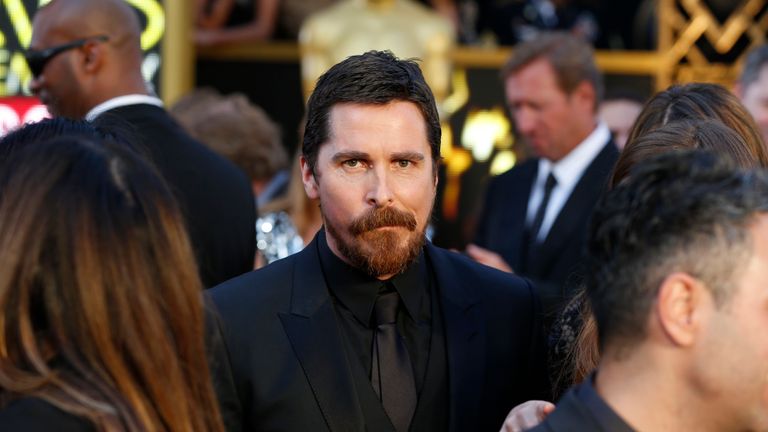
Christian Bale portrayed Michael Burry in the 2015 hit film. Pic: Reuters
This aggressive short position suggests Michael Burry strongly believes the present valuations of these companies have fundamentally detached from sustainable reality. The sheer scale of recent market volatility seems to support the bear’s warning, at least in the short term. Reports indicated that approximately $500 billion was instantly wiped off the value of technology stocks during the overnight trading period spanning Tuesday into Wednesday, reflecting growing investor anxieties.
The famed investor also returned to social media for the first time in over two years, posting cryptic, yet pointed, warnings of a dangerous bubble forming in the technology sector. The recent market uncertainty has overshadowed strong quarterly results from tech giants like Microsoft, Alphabet, and Meta, demonstrating how widespread the fears of an AI bubble have become among mainstream investors.
Concerns have steadily escalated regarding the market surrounding artificial intelligence, particularly due to the unprecedented growth rates experienced by numerous companies, especially those supplying the core hardware. As the world’s largest producer of the specialist computer chips essential for training and running large AI models, Nvidia’s stock price has soared to historical highs.
This rapid, vertical ascent makes it a perfect, high-stakes target for a contrarian investor like Scion Capital, who specializes in looking for systemic overvaluation.
Many financial analysts worry profoundly that the intense enthusiasm surrounding AI, while justified by the technology’s long-term promise, has significantly outpaced realistic, near-term revenue generation.
The crucial debate hinges on whether the current investment wave is a rational industrial build-out or merely speculative frenzy.
The United Kingdom government, meanwhile, is heavily committed to the positive, long-term outlook championed by Mr. Huang and the technology sector leaders.
The political administration is betting substantial public funds on artificial intelligence, hoping the technology can both streamline public services for necessary cost savings and simultaneously generate significant national economic growth by building the infrastructure to back it up.
For example, a major data centre giant recently announced a £4 billion British investment, signaling a huge vote of confidence in the UK’s commitment to supporting the AI boom.
Technology Secretary Liz Kendall articulated the government’s firm confidence, telling Sky News she has “no doubts that AI is going to transfer all parts of our economy and our public services.” She expressed no public concern about the current market volatility, aligning the government’s strategy with the vision of aggressive, long-term growth.
Ultimately, the disagreement between the titans—the visionary CEO focused on long-term technological build-out and the famed investor wary of financial excess—boils down to the time horizon of profitability and adoption. Huang sees a multi-decade infrastructure revolution where chips are the new commodity; Burry sees highly inflated short-term valuations that are acutely susceptible to a sharp, sudden correction.
This fundamental disagreement will shape investment decisions across global finance over the coming months as trillions of dollars are poured into the sector.

AD: Heritage And Restaurant Lounge Bar


