

By Sheila McKenzie-
Microsoft, Alphabet, and Meta recently reported their quarterly earnings, displaying a complex financial picture for the world’s leading technology firms. Investors immediately reacted with nervousness, driven by intense concern that a potentially damaging bubble is now forming around artificial intelligence.
Big Tech AI Spending absolutely dominated the financial narrative this reporting season. Analysts are now closely scrutinizing whether these colossal, multi-billion-dollar investments will ultimately generate sufficient returns to justify current soaring market valuations.

AD: Capeesh Restaurant
Microsoft, the first major company to report, revealed colossal expenditures on AI infrastructure. The tech giant’s investment reached nearly $35 billion (£26.5 billion) during the three months ending in September, representing a substantial year-over-year increase. Despite recording an 18% jump in revenue and a 12% rise in net income, the market’s response was sharp and immediately negative. Shares consequently plunged by almost 4% in after-hours trading as investors focused intensely on the mounting costs required to sustain this massive technological boom.
Microsoft’s vice president of investor relations, Jonathan Neilson, explained the necessity for such large investment. He confirmed, “We continue to see demand which exceeds the capacity we have available.” Neilson also stated that the corporation’s “capital expenditure strategy remains unchanged in that we build against the demand signal we’re seeing.”
Big Tech AI Spending faces escalating pressure to demonstrate clear, tangible returns on these huge investments. This investor anxiety occurs against a backdrop of soaring company valuations and surprisingly limited evidence showing real-world productivity gains yet. Microsoft briefly became the world’s second most valuable company this week. The firm crossed the $4 trillion (£3 trillion) market capitalisation threshold, largely thanks to its significant 27% stake in OpenAI, the developer behind ChatGPT. However, this psychological milestone now appears doubtful following the recent selloffs driven by concerns over future AI profitability.

AD: Oysterian Sea Food Restaurant And Bar

Microsoft is now a $4trn company thanks to its stake in ChatGPT maker OpenAI. Pic: AP
Mark Zuckerberg’s Meta faced an even tougher response from the market. The parent company of Facebook, Instagram, and WhatsApp saw its shares tumble dramatically by as much as 10% in after-hours trading after reporting its figures. Meta anticipates “notably larger” capital expenses next year as they significantly ramp up their investment in AI. The company is actively conducting a global hiring spree to secure the industry’s top talent.
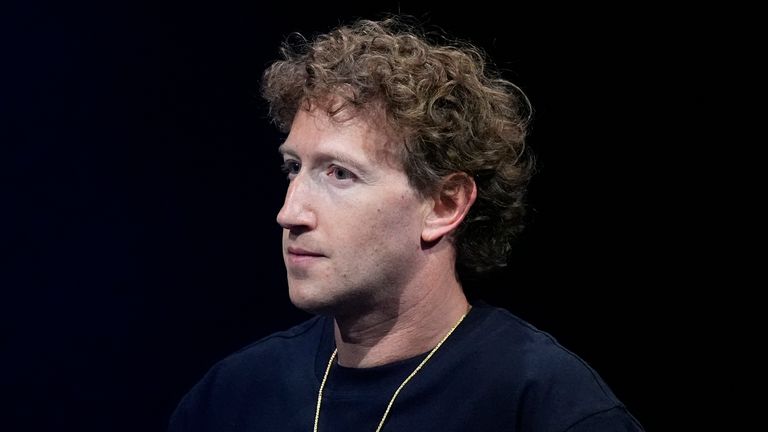
Shares in Mark Zuckerberg’s Meta tumbled after the closing bell. Pic: AP
Meta’s net income for the third quarter stood at $2.7 billion (£2 billion), but this figure suffered an enormous $16 billion (£12 billion) hit due to Donald Trump’s “Big Beautiful Bill.” Initially slow to adopt the trend, Meta has now completely dedicated itself to this still-nascent technology, even setting an ambitious goal to achieve superintelligence. This target represents a future milestone where machines could theoretically surpass human cognitive capacity. The continuous and substantial Big Tech AI Spending suggests a long-term commitment despite short-term market volatility.
The quarter’s results were not uniformly negative across the entire tech sector. Alphabet, the parent company of Google, offered a contrasting narrative and delivered a positive shock to investors. Shares in the search giant surged by an impressive 6% in after-hours trading immediately following the earnings release. Alphabet also outlined aggressive spending ambitions, but successfully reassured investors with an impressive set of results that comfortably surpassed analysts’ expectations across the board. The company’s total revenue for the quarter reached a staggering $102.35 billion (£77 billion). Google’s dominant advertising unit demonstrated robust performance despite increasing competition from rivals. Big Tech AI Spending at Alphabet appears to be translating into positive results for its core business, unlike its rivals.
Pic: iStock
Analysts still maintain lingering concerns that Alphabet’s overwhelming dominance in the search market could eventually be undermined by smaller, more agile AI startups. For example, OpenAI recently unveiled a dedicated browser designed with the explicit goal of rivalling the established dominance of Google Chrome. Hargreaves Lansdown’s senior equity analyst, Matt Britzman, quickly dismissed this potential threat. Britzman believes the company is clearly “gearing up for long-term AI leadership.” He highlighted the firm’s record-breaking performance. “Alphabet just delivered its first-ever $100bn quarter, silencing the doubters with standout performances in both Search and Cloud,” he remarked.
The analyst concluded that new features like AI Overviews and AI Mode are significantly resonating with users. This strong adoption helps to ease existing fears that Google’s fundamental search business might face an existential threat from generative AI technologies. Big Tech AI Spending at Google seems strategically positioned for both defense and innovation.
Britzman further contextualized the competitive landscape, noting that ChatGPT’s recent browser demonstration “fell short of a game-changer.” This failure leaves Google “well-placed to put up a strong defence as gatekeeper to the internet.” While Meta and Microsoft navigate investor anxiety over cost, Alphabet successfully managed to pair its spending ambitions with immediate, tangible financial performance. All three titans, however, reflect a unified strategy: pouring vast sums into AI development despite the short-term market volatility. To understand the long-term impact of this capital investment, one must track future SEC Filings on Capital Expenditure. The question remains whether these expenditures represent solid strategic investment or merely the initial tremors of an impending market bubble.

AD: Heritage And Restaurant Lounge Bar


