
By Sheila McKenzie-
Bosses from Britain’s most significant grocery chains have issued a stark, unified warning to the Chancellor, Rachel Reeves, urging fiscal restraint ahead of the upcoming autumn Budget. These influential executives, representing giants like Tesco, Sainsbury’s, Asda, and Morrisons, alongside discount leaders like Lidl and Aldi, fear that any new tax burden on the retail sector will inevitably lead to higher costs for consumers.

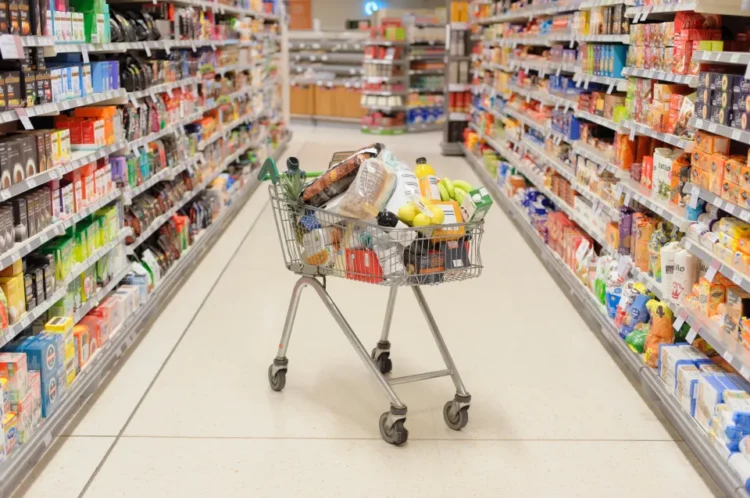
Food and non-alcoholic drink prices are up 4.5% compared to last year, despite overall UK inflation staying at 3.8% in September. Pic: Getty
They claim imposing higher business rates or introducing specific levies would be immediately reflected in prices at the checkout, accelerating the already painful UK Food Price Inflation impacting millions. Their strongly worded correspondence details the fragility of household budgets following years of economic volatility and argues that penalising retailers now will only worsen the national cost of living crisis, making staple goods less affordable for the most vulnerable families. They are appealing directly to the government to consider the social consequences of tax policies.

AD: Capeesh Restaurant
The collective letter, a powerful display of industry unity, was also signed by representatives from Waitrose, M&S, and Iceland, illustrating the depth of concern across the entire grocery spectrum. These companies argue that their primary focus remains supporting customers by keeping prices as low as possible in a persistently difficult economic environment. They have highlighted extensive efforts made to absorb rising operational costs, including energy and supply chain disruption, but insist their capacity to shield consumers from government-imposed financial demands is limited.
Therefore, any move to increase taxation on the sector will be a direct financial hit to shoppers. The executives are specifically pushing back against potential rises to business rates, which represent a significant overhead for physical store locations across the country. Addressing these financial challenges demands a nuanced approach from the Treasury.
This current episode marks one of the most concerted efforts by the retail industry to lobby against pre-Budget tax increases, underscoring the severity of the UK Food Price Inflation threat. Officials at the Treasury have acknowledged receipt of the letter but have not yet offered a public comment on the matter.

AD: Oysterian Sea Food Restaurant And Bar
The backdrop to this urgent plea is a national economy still struggling with stubborn inflationary pressures, particularly within the food sector. Households have already seen their grocery bills swell by record amounts over the past two years, significantly eroding disposable income and causing widespread financial hardship.
Economists suggest that while global commodity prices have started to ease, the domestic factors—such as labour costs and regulatory burdens—remain high, preventing any quick return to historical pricing norms.
Furthermore, the supermarkets contend that the current business rates system is fundamentally outdated, disproportionately penalising retailers with large physical footprints compared to online-only competitors. They suggest that a reform of this structure, rather than an increase in the tax rate, would be a more constructive move for long-term price stability. The government must now weigh the requirement to raise revenue for public services against the very real danger of exacerbating UK Food Price Inflation and pushing more families into financial distress.
This situation echoes previous periods where sudden tax adjustments or regulatory changes have led to predictable price increases, demonstrating that consumers ultimately bear the cost of corporate taxation. The major chains maintain they operate on relatively thin profit margins in their core food businesses. They argue that imposing a major new cost, whether through business rates or an unexpected windfall tax, leaves them no option but to adjust their pricing strategies upwards. Such an outcome would clearly undermine the government’s stated aim of reducing the financial pressures on working families.
Industry analysts believe the Chancellor faces a difficult balancing act: needing to fill fiscal holes while simultaneously being acutely aware of the political and economic damage caused by escalating living costs. Therefore, the supermarket warning should be seen as a critical input into the Budget planning process. Protecting consumers from greater UK Food Price Inflation must remain the government’s paramount economic priority.
The correspondence deliberately frames the issue around consumer welfare, making a compelling moral and economic case for fiscal prudence. The letter concludes by requesting a meeting with the Chancellor’s team to explore alternative solutions that would not place the burden of government fundraising onto shoppers.
The executives are advocating for measures that stimulate growth and investment within the sector, arguing that a healthier, more competitive retail environment is the most effective long-term defense against high prices. Their proposal centres on the idea that supporting jobs and economic stability will naturally alleviate pressure on household budgets.
Meanwhile, consumer confidence remains fragile, with many families reporting that they continue to rely on budget alternatives and reduced spending to cope. Increasing taxes on supermarkets at this critical juncture could easily trigger a new wave of sustained UK Food Price Inflation, potentially undermining any gains made in the broader fight against the cost of living crisis. The final decision rests with the Treasury, who are under immense pressure to deliver a fiscally responsible yet politically palatable Budget.

AD: Heritage And Restaurant Lounge Bar


