
By Theodore Brown-
The courtroom battle surrounding an alleged plot targeting a UFC event at the White House entered a new stage as two of eight men charged in the case pleaded not guilty to federal conspiracy charges.
The hearings marked the beginning of a legal process that will determine whether prosecutors can prove their allegations of a planned attack or whether defense attorneys can challenge the government’s claims.

AD: Capeesh Restaurant
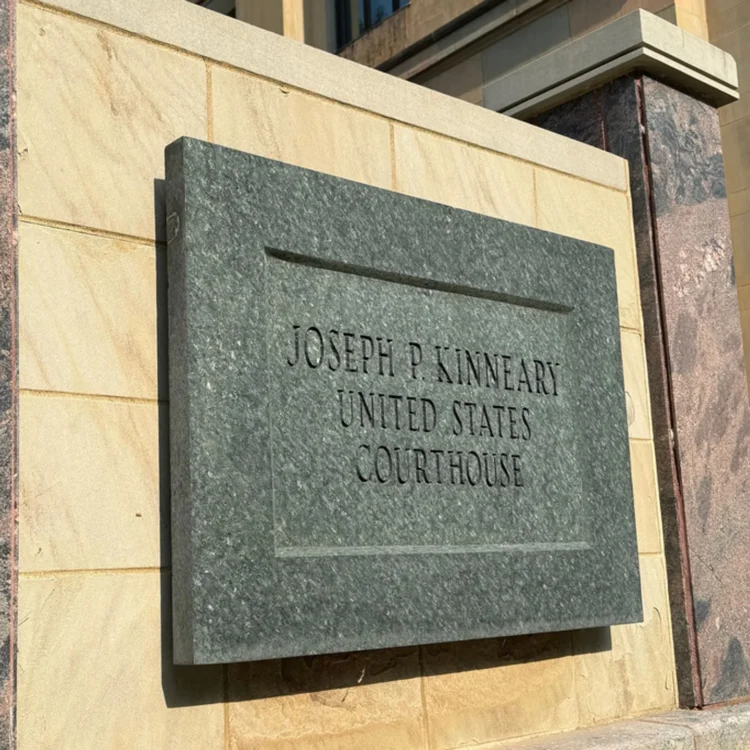
According to the reports, Tycen Proper, 19, of Danville, Ohio, and Chandler Scaggs, 21, of Chapmanville, West Virginia, entered not guilty pleas in federal court in Columbus, Ohio. Both men are among eight defendants accused by prosecutors of participating in an alleged conspiracy involving a planned attack on the UFC Freedom 250 event held on the South Lawn of the White House.
The allegations have drawn national attention because of the location involved. The White House South Lawn, normally associated with presidential ceremonies and major public events, became the center of a federal investigation after authorities alleged that the defendants planned an attack involving drones and firearms. Prosecutors have described the accusations as a serious security threat, though the claims remain allegations and have not been proven in court.
With Proper and Scaggs, the not guilty pleas represent the opening move in a lengthy legal process. A plea of not guilty does not determine the outcome of a case; instead, it requires prosecutors to present evidence supporting their charges while allowing defense attorneys to challenge the government’s version of events.

AD: Oysterian Sea Food Restaurant And Bar
The case involves eight defendants from multiple states, with prosecutors alleging that the group participated in two separate conspiracies: one involving the alleged provision of material support to terrorists and another involving plans to murder federal officials and commit violence on government property. The Justice Department said the investigation involved coordination between the FBI, U.S. attorneys’ offices, the Secret Service, and other law-enforcement partners, who disrupted the alleged plan before it could be carried out.
The accusations surrounding the case center on what prosecutors describe as preparations for an attack during the UFC Freedom 250 event. Federal officials allege that the suspects discussed methods involving drones, firearms, and other equipment as part of the alleged plan. However, those details come from government allegations and will face examination throughout the court proceedings. The location of the alleged target added another level of significance. Events held at the White House require extensive security planning because of the presence of government officials, public figures, and invited guests. Any alleged threat involving the presidential residence immediately becomes a matter of national security.
Federal prosecutors have charged the defendants with conspiracy to provide material support to terrorists and conspiracy to commit murder on federal property and against federal officials. If convicted, the charges could carry severe penalties, including possible life sentences.
The investigation has also highlighted the broader challenges law enforcement agencies face when attempting to identify potential threats before violence occurs. Federal agencies have increasingly relied on information sharing, behavioural threat assessments, and public reporting systems to recognise warning signs and intervene before attacks can be carried out.
The FBI and other national security organisations have noted that modern technology has made threat detection more complex, as individuals can use digital platforms and private communications to organise or conceal activities.
Preventing attacks often requires coordination between federal investigators, local law enforcement, and community members who may provide critical information about suspicious behaviour. In this case, authorities said their investigation prevented the alleged plan from being carried out. It was reported that prosecutors believe the intervention disrupted the suspected operation before the UFC event took place.
Still, the courtroom not public statements or allegations will determine what evidence can be accepted and what conclusions can be reached. Prosecutors must prove their claims beyond a reasonable doubt, while defense attorneys will have the opportunity to question the evidence, witnesses, and interpretation of events.
The case also raises broader questions about how authorities respond to threats involving major public gatherings. Large-scale events often require balancing openness and accessibility with security concerns, especially when political leaders or other high-profile figures are present.
The next phase of the case will focus on pretrial hearings, evidence reviews, and preparation for trial as the federal proceedings continue. According to report on the case, U.S. District Judge Edmund Sargus Jr. scheduled the trial for September 14, 2026, after Tycen Proper and Chandler Scaggs pleaded not guilty in federal court in Ohio.
The remaining defendants involved in the alleged conspiracy are expected to continue through the federal court process as prosecutors and defense attorneys prepare for the next stages of litigation.The central challenge will be proving that the actions described in court documents amounted to criminal planning and conspiracy. For the defense, the focus will likely be on challenging the government’s evidence and questioning whether prosecutors have accurately interpreted conversations, actions, and intentions.
The case arrives during a period when threats against public officials and major events remain a major concern for law enforcement agencies across the United States. Security officials have increasingly emphasized prevention, intelligence gathering, and cooperation between federal and local authorities.
Yet the outcome will ultimately depend on what happens inside the courtroom. The charges against Proper, Scaggs, and the other defendants remain accusations until proven through the legal process. Two defendants have formally entered their pleas, while six others await further proceedings. The alleged plot that once existed only within an investigation file has now become a public courtroom battle, where prosecutors and defence attorneys will present competing versions of what happened.
The next chapter of the case will not be written through allegations alone, but through evidence, testimony, and the decisions made during one of the most closely watched federal prosecutions of the year. The proceedings continue, prosecutors will be tasked with presenting evidence that supports their claims, while defence attorneys will work to challenge the government’s interpretation of events and protect the rights of the accused.
Each hearing will provide a clearer picture of how investigators built their case and how the court evaluates the information presented. The outcome will depend not on public attention or the seriousness of the accusations, but on what can be proven inside the courtroom.
The case remains a developing legal battle with major questions still unanswered. The defendants’ futures, the strength of the government’s evidence, and the broader security lessons drawn from the investigation is all expected to unfold through the judicial process.

AD: Heritage And Restaurant Lounge Bar