
By Ben Kerrigan-
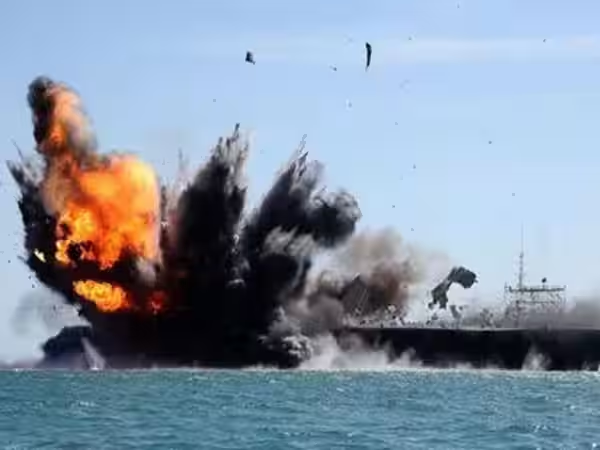
The narrow waters of the Strait of Hormuz have once again become the center of a dangerous confrontation between Washington and Tehran, as the United States expands military strikes against Iran and Iranian officials warn that the strategic waterway represents an untouchable “red line.”
The escalating exchange has pushed the Middle East closer to a wider conflict, with both sides increasing military pressure while global markets watch the fate of one of the world’s most important energy routes.

AD: Capeesh Restaurant
The latest escalation followed a collapse in a fragile ceasefire between the two countries. US forces carried out additional waves of attacks against Iranian targets, including military facilities and strategic positions, while Iran responded with missile and drone strikes aimed at regional targets linked to the United States and its allies.
The growing cycle of retaliation has transformed the Gulf region into a high-stakes confrontation zone where every military move carries the possibility of a broader war. At the heart of the crisis is the Strait of Hormuz, a narrow maritime passage between Iran and Oman that serves as a critical route for global energy shipments.
Tehran has declared the waterway a “red line,” warning that any attempt to force open the strait or attack Iranian infrastructure would trigger further retaliation across the region. Iranian officials have said they would respond to expanded US operations by targeting infrastructure throughout the Gulf.

AD: Oysterian Sea Food Restaurant And Bar
With Iran, control over the strait represents both a military advantage and a symbol of sovereignty. For the United States and its allies, keeping the waterway open is considered essential to maintaining international trade and energy security. The competing claims have created a dangerous maritime standoff, with commercial vessels increasingly avoiding the route because of security risks.
The economic consequences have already begun to spread beyond the battlefield. Shipping activity through Hormuz has declined sharply as companies reconsider sending vessels through the area. The reduction in traffic has raised concerns about possible disruptions to oil and gas supplies, with energy markets reacting to fears that a prolonged confrontation could affect one of the world’s most important trade corridors.
The United States has argued that its military actions are aimed at protecting navigation rights and responding to attacks on commercial shipping. Washington has increased its naval presence in the region and has taken steps to prevent what it describes as threats to international maritime movement. Iranian officials, however, have portrayed the US actions as aggression and have warned that further strikes could bring a wider regional response.
The conflict has also placed Gulf nations in a difficult position. Countries that host American military facilities, including Bahrain, Kuwait and Jordan, have found themselves vulnerable to Iranian retaliation. Tehran’s missile and drone attacks against regional targets demonstrate how quickly a confrontation between two powers can spread beyond their borders.
Behind the military exchanges is a larger struggle over influence, security and control of the region’s strategic resources. The Strait of Hormuz has long been viewed as a geopolitical pressure point because even temporary disruptions could affect global energy markets.
Many fear that a conflict centered on the waterway risks creating consequences far beyond the Middle East, affecting shipping costs, fuel prices and international diplomacy.
As strikes continue and diplomatic efforts remain uncertain, the risk of miscalculation has become a major concern in the US-Iran confrontation. Each attack has increased pressure on the opposing side to respond, creating a cycle of retaliation that could push the conflict beyond controlled military exchanges.
Iran vowed to retaliate after US strikes on its positions, while continued attacks involving regional allies and strategic areas such as the Strait of Hormuz raised fears that the confrontation could expand into a wider regional crisis. Recent attacks have shown the expanding reach of the conflict. The United States has targeted Iranian military capabilities, while Iran has responded with attacks beyond its own borders. The exchange has moved the confrontation from a direct dispute into a wider regional crisis involving shipping lanes, allied governments and international markets.
The Strait of Hormuz has become more than a geographic location in the conflict; it has become a symbol of competing priorities between Washington and Tehran. The United States views the waterway as a vital international passage that must remain open for commercial shipping and global energy security, while Iran considers control over the strait a key source of strategic influence and a boundary against foreign pressure.
Tension rises, the dispute over who controls access to the narrow waterway has transformed Hormuz into one of the most closely watched flash points in the wider US-Iran confrontation.
The uncertainty surrounding the conflict has also affected commercial shipping decisions. Reuters reported that fewer vessels have been traveling through Hormuz following renewed military tensions, with major tanker movements reduced as operators assess the risks of entering the area. The decline highlights how quickly geopolitical conflict can disrupt ordinary economic activity.
Civilians across the region, the consequences are measured not only in military movements but also in fear and uncertainty. Communities near military installations and strategic ports have faced the possibility of further strikes, while governments attempt to balance security concerns with calls for restraint. The international community has urged both Washington and Tehran to avoid further escalation, but the path toward diplomacy remains uncertain. Each side continues to accuse the other of provoking the crisis, creating a cycle in which military action becomes both a response and a warning.
The future of the confrontation may depend on whether leaders choose negotiation over escalation. The Strait of Hormuz has survived decades of geopolitical tension, but its current position at the center of a rapidly intensifying conflict has renewed fears that a single miscalculation could reshape the region.
Diplomatic channels remain one of the few options available to prevent further instability, but trust between Washington and Tehran remains deeply damaged after repeated military exchanges and competing demands. Any agreement would likely require both sides to make difficult compromises, balancing security concerns with economic and political interests. The stakes extend far beyond the two governments, as Gulf nations, global energy markets and international shipping networks all remain vulnerable to the consequences of a prolonged crisis.
A major disruption in the Strait of Hormuz could affect fuel supplies, increase shipping costs and deepen uncertainty across the global economy. The narrow waterway represents both a warning and a test of international diplomacy.

AD: Heritage And Restaurant Lounge Bar