
By Isabelle Wilson-
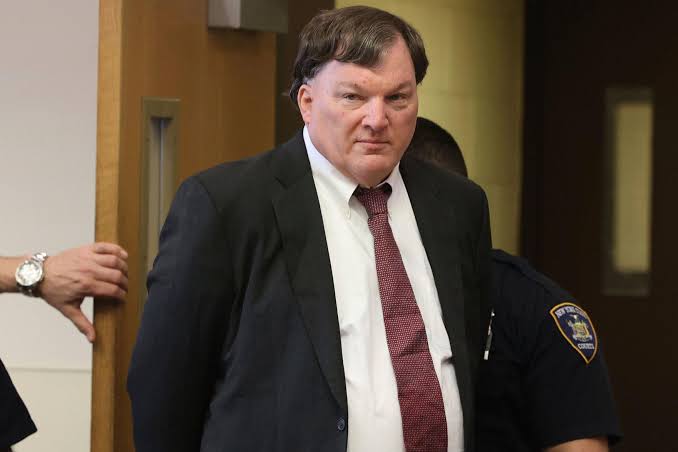
The Suffolk County courtroom that once held years of legal arguments and forensic revelations became, on Wednesday, a stage for raw grief as families of the Gilgo Beach serial killer’s victims directly confronted the man responsible for their loss. Rex A. Heuermann, a 62-year-old former Manhattan architect who admitted to killing eight women over a span of nearly two decades, stood quietly as relatives of his victims delivered emotional statements that cut through the formalities of sentencing. Many spoke not only of the lives taken, but of the enduring absence that has shaped their families for more than a decade.
One recurring sentiment echoed through the courtroom: time had not lessened the pain. Some relatives described birthdays, holidays, and milestones that passed without closure, while others addressed Heuermann directly, calling him a predator who had destroyed multiple generations of families.

AD: Capeesh Restaurant
The hearing marked the formal conclusion of a case that began with the discovery of human remains along Long Island’s Ocean Parkway and the Gilgo Beach area in 2010 and 2011, though some of the murders date back to the 1990s. Heuermann, who pleaded guilty in April 2026 to seven murders and admitted to an eighth, offered a brief statement in court. He acknowledged responsibility for the killings, speaking in a subdued tone after listening to hours of victim impact statements. At one point, he told the court, “I am responsible,” a rare moment of direct acknowledgment in a case defined for years by denial and investigation.
However, his words carried little relief. Several described feeling that justice, while formally achieved, could never equal the magnitude of their loss.
The weight of absence and final judgment
The emotional intensity in the courtroom reached its peak as relatives addressed Heuermann directly, some refusing to soften their language. One family member’s words “A million years isn’t enough” captured the tone of many of the statements, reflecting both grief and anger at the finality of the sentencing.

AD: Oysterian Sea Food Restaurant And Bar
Judge Timothy Mazzei, who presided over the case, imposed life sentences without the possibility of parole, condemning Heuermann’s actions in stark terms and ordering his removal from the courtroom following the proceedings. The sentence reflected the severity of a case that involved multiple victims, years of concealment, and what prosecutors described as a calculated pattern of targeting vulnerable women.
The murders, spanning from at least 1993 to 2010, primarily targeted women working in the sex trade. Prosecutors detailed how Heuermann used burner phones, deception, and careful planning to lure victims before strangling them.
Their remains were later discovered in remote areas along Long Island, including near Gilgo Beach, a discovery that eventually exposed one of the most notorious serial murder investigations in recent American history.
Investigators were ultimately able to link Heuermann to the killings through a combination of DNA evidence, cellphone records, and vehicle data. A key breakthrough reportedly came from DNA recovered from a discarded pizza crust, which helped tie him to crime scene evidence after years of stalled leads.
In court, prosecutors also highlighted the psychological toll on surviving relatives, noting that Heuermann’s actions extended beyond the victims themselves. One family member described years of unanswered questions and the lingering trauma of not knowing what had happened for nearly a decade after the first discoveries.
The sentencing effectively closes the criminal proceedings in a case that captivated national attention, but for many families, closure remains an abstract concept rather than a lived reality.
Confronting the illusion of normality
Throughout the hearing, prosecutors and family members returned to a central contradiction at the heart of the case: the image of an ordinary suburban professional versus the reality of a serial killer operating in secrecy for years.
Heuermann, who maintained a career as an architect in New York City, was described by prosecutors as someone who carefully compartmentalised his life. To the outside world, he appeared unremarkable a father, a professional, a neighbour while investigators later uncovered what they called a meticulously hidden double life.
District Attorney Ray Tierney emphasised that deception in his remarks, describing how the defendant “walked among us” while carrying out repeated acts of violence.
Victims’ relatives expanded on that theme in more personal terms. Some spoke of how the anonymity of their loved ones in life had made them vulnerable, while others argued that society had failed to protect women whose disappearances were initially dismissed or overlooked.
The case itself had been dormant for years before renewed investigative efforts in 2022 and 2023 revived interest and ultimately led to Heuermann’s arrest outside his Manhattan office. His conviction earlier this year brought an end to a 15-year investigation that spanned multiple law enforcement agencies and jurisdictions.
Yet even with a guilty plea and sentencing complete, the courtroom confrontation underscored a central reality: for the families, the justice system’s resolution does not erase the emotional void left behind.
Several relatives lingered in the courtroom, speaking quietly among themselves, holding photographs, and embracing. The atmosphere was less one of closure than of endurance a recognition that while the legal chapter had closed, the personal one continues indefinitely.
The Gilgo Beach murders reshaped public perception of safety on Long Island and exposed gaps in investigative coordination during the early years of the case. What began as a missing persons investigation evolved into one of the most significant serial murder cases in recent U.S. history.
With Heuermann now serving multiple life sentences without parole, the criminal justice system has reached its final step. But in the words of the families who faced him in court, the deeper sentence the loss, the unanswered questions, and the permanence of absence remains ongoing. The verdict and sentencing marked not an ending, but a formal acknowledgement of a reality they have lived with for years: that no legal outcome can restore the people who were taken from them, or fully account for the time stolen in uncertainty and grief.
In the aftermath of the proceedings, several relatives spoke about the paradox of closure in cases like this. While a conviction can bring factual resolution, it rarely resolves emotional reality. The absence of a daughter, sister, mother, or friend continues to shape daily life in ways that court documents cannot measure. . The sentencing simply confirmed what they had long feared and endured. The legal system may have reached its conclusion, but the personal reckoning continues without an endpoint, carried forward not in verdicts, but in memory, absence, and survival.

AD: Heritage And Restaurant Lounge Bar