
By Aaron Miller-
President Donald Trump has announced that the United States will grant Ukraine a license to produce Patriot air defense systems, marking one of the most significant shifts in Washington’s military support for Kyiv since the war with Russia began more than four years ago.
Meanwhile, a fresh round of strikes were launched against Iran on the ordesr of the U.S presidemt. Drama broke out on Tuesday after Iran targeted three tankers in the vital Strait of Hormuz waterway, which remains a flashpoint in the fragile truce.

AD: Capeesh Restaurant
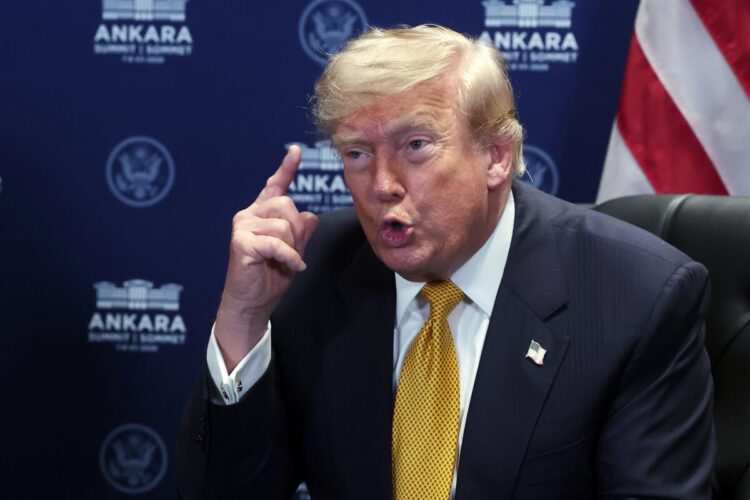
Trump had declared at the Nato summit in Turkey that the interim ceasefire was over, due to the latest flare-up in the Middle East, which has again led to a spike in oil prices.
The US hit more than 80 targets while Iranian forces retaliated by attacking American military sites in the Gulf. The American military said in a statement: “At the direction of the commander in chief, US Central Command forces have started conducting additional strikes against Iran to further degrade their ability to threaten freedom of navigation in the Strait of Hormuz.
In the meantime, the pledge, for patriot production for Ukraine was delivered during a meeting with Ukrainian President Volodymyr Zelenskyy on the sidelines of the NATO summit in Ankara, has the potential to reshape Ukraine’s long-term air defense strategy while sending a powerful political signal to allies and adversaries alike.

AD: Oysterian Sea Food Restaurant And Bar
Trump described the decision as a practical step that would allow Ukraine to strengthen its own defences without relying exclusively on foreign deliveries of missile interceptors, which have become increasingly scarce as global demand continues to rise.
Meeting with Ukrainian President Volodymyr Zelenskyy on the sidelines of the NATO summit in Turkey, Trump announced that the United States would grant Ukraine a license to manufacture Patriot air defence systems, describing the move as a major step in strengthening Kyiv’s ability to defend against Russian missile attacks.
“We’ll give them the right to make Patriots. We’ll show them how to do it,” Trump said, adding that he believed Ukraine could begin producing the systems relatively quickly with guidance from American defence manufacturers. He also emphasised the defensive nature of the weapon, saying it was the type of military capability he preferred to support
The announcement represents a notable policy departure from previous practices. In years, Ukraine has appealed to successive U.S. administrations for permission to manufacture Patriot interceptors domestically, arguing that local production would reduce dependence on overseas shipments while allowing faster replenishment during periods of intense Russian missile attacks. Previous requests have not resulted in approval, largely because of concerns surrounding technology transfers, production complexity, and security risks.
The Patriot system has become a crucial part of Ukraine’s air defense network, providing protection against some of the most advanced Russian missile threats, including ballistic missiles. Ukrainian officials have repeatedly credited Patriot batteries with helping defend major cities and critical infrastructure from large-scale aerial attacks.
However, It reported that shortages of Patriot interceptor missiles have created a growing challenge for Kyiv, with limited supplies leaving parts of Ukraine more exposed as Russia continues launching sustained missile strikes.
Trump’s announcement came during a NATO summit dominated by discussions over collective security, military spending and continued support for Ukraine as Russia maintains pressure across several fronts. Debates among alliance members have often focused on how quickly additional weapons can be delivered, Trump’s proposal introduces a longer-term solution by potentially allowing Ukraine to build parts of its own defensive capability.
The U.S. president struck a markedly warmer tone toward Zelenskyy than during previous encounters, praising the Ukrainian leader and suggesting that relations between the two governments had improved significantly.
“We’ve actually developed a very good relationship,” Trump said while discussing his meeting with Ukrainian President Volodymyr Zelenskyy during the NATO summit, describing the discussions as constructive and expressing confidence that negotiations to end the war could eventually move forward. According to reports, Trump said he believed both Ukraine and Russia wanted a resolution, while continuing to emphasise the importance of diplomacy alongside U.S. security support for Kyiv.
With Zelenskyy, the announcement represents more than a symbolic diplomatic victory. Since Russia’s full-scale invasion in 2022, Ukraine has repeatedly argued that developing domestic defense manufacturing is essential to sustaining a prolonged conflict.
Producing Patriot interceptors locally could eventually shorten supply chains, reduce logistical delays and improve operational readiness during periods of heavy missile bombardment. Defense experts have noted that turning Trump’s proposal into an operational production program would require significant planning, investment and coordination with U.S. defence manufacturers. Its reported that Trump’s announcement would allow Ukraine to produce Patriot systems under a licensing arrangement, with American defence companies expected to assist in the process.
While the move could strengthen Ukraine’s long-term defence capabilities, establishing domestic production of such an advanced missile defence system would likely require extensive industrial preparation and technical cooperation before large-scale manufacturing could begin.
Questions also remain over where production would take place. Russian long-range missile and drone strikes have consistently targeted Ukrainian defence infrastructure throughout the conflict, raising concerns that any new manufacturing facilities could become immediate military targets. Some experts suggest that elements of production may eventually be distributed among partner nations or protected industrial sites to reduce those risks.
Despite those uncertainties, Trump’s proposal has already sparked discussion across NATO capitals about expanding industrial cooperation rather than relying solely on direct military aid.
Several European governments have increasingly emphasised boosting defence production capacity as ammunition stockpiles across the alliance continue to face pressure from prolonged conflicts and heightened security commitments.
Although Trump’s announcement generated headlines, he acknowledged that the United States cannot immediately supply unlimited numbers of Patriot interceptors because domestic inventories remain under strain. Existing production lines are already working to replenish U.S. stockpiles while meeting commitments to allies around the world.
That reality explains why licensed production has become increasingly attractive to Ukrainian officials. Rather than waiting for additional shipments that may take months or years to arrive, Kyiv hopes domestic manufacturing could provide greater resilience against future missile campaigns.
The proposal also reflects Ukraine’s growing reputation as a defence manufacturing partner. During the meeting, Trump praised the country’s rapidly expanding drone industry and suggested that the United States could explore purchasing Ukrainian-made drones in the future, highlighting the evolution of Ukraine’s defence sector despite the ongoing war.
The broader geopolitical implications extend beyond Ukraine itself. Granting a production license signals Washington’s willingness to deepen defense-industrial cooperation with Kyiv even as diplomatic efforts to negotiate an end to the conflict continue. It also reinforces NATO’s message that long-term security assistance remains central to the alliance’s strategy.
Russia has yet to issue a comprehensive response to Trump’s announcement, though Moscow has consistently criticised Western military assistance to Ukraine, arguing that such measures prolong the conflict. The Kremlin has previously condemned deliveries of advanced missile systems and warned against expanding technology transfers to Kyiv.
Meanwhile, NATO leaders continued discussions over increased defense spending and industrial cooperation throughout the summit. The alliance has faced mounting pressure to accelerate weapons production as conflicts in Europe and the Middle East stretch existing supply chains and expose shortages in key defense capabilities.
Whether Trump’s pledge ultimately transforms Ukraine’s battlefield capabilities will depend on how quickly licensing agreements are finalised, how effectively American defence firms cooperate with Ukrainian industry, and whether production facilities can be established without becoming vulnerable to Russian attacks. Even under optimistic scenarios, analysts believe meaningful production would require substantial planning and sustained investment.
Nevertheless, the announcement represents one of the clearest indications yet that Washington is considering a more permanent approach to strengthening Ukraine’s air defenses. Rather than measuring support solely through weapons deliveries, the focus appears to be shifting toward enabling Ukraine to build and sustain its own military-industrial capacity.
The message from Ankara extended beyond immediate battlefield requirements. Trump’s promise suggested that future Western assistance may increasingly center on partnerships that enhance Ukraine’s long-term self-reliance rather than temporary emergency aid.

AD: Heritage And Restaurant Lounge Bar