
By Lucy Caulkett-
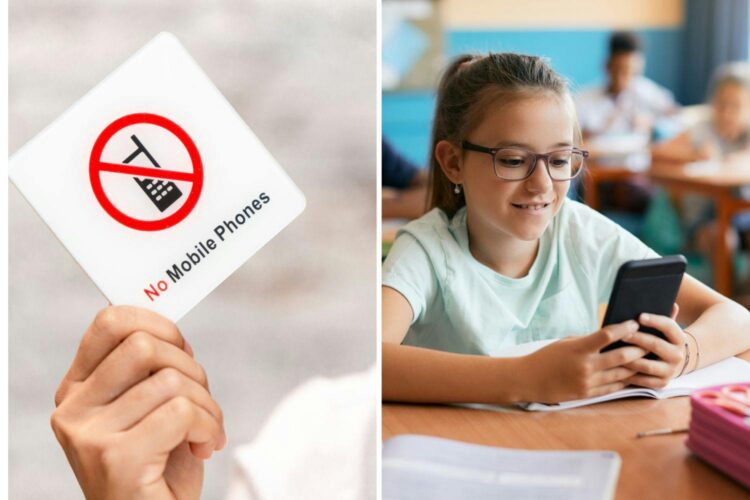
Schools across England should become completely mobile phone-free environments throughout the entire school day, the UK’s Education Secretary has urged, in the latest attempt to tackle classroom disruption, distraction and concerns over children’s wellbeing.
In a policy letter sent to headteachers this week, Bridget Phillipson set out expectations that pupils should not use mobile phones at any time during the school day including lessons, breaktimes and lunchtimes and that staff should lead by example by not using phones in front of pupils.

AD: Capeesh Restaurant
The proposal goes beyond existing guidance and signals a renewed push by the Department for Education (DfE) and Ofsted to ensure phone restrictions are consistently applied in all state primary and secondary schools.
While most schools already have some rules around mobile phones, the Education Secretary’s letter reveals a more ambitious nationwide approach that aims to make the phone-free day a default standard, with parents and teachers actively supporting the change.
According to DfE data, 99.8 % of primary schools and around 90 % of secondary schools already have mobile phone policies, but persistent pupil use without permission reveals a gap between policy and practice.

AD: Oysterian Sea Food Restaurant And Bar
The National Behaviour Survey (2024–25) found that 58 % of secondary school pupils reported phones being used without permission in at least some lessons, rising to 65 % among older Key Stage 4 students, illustrating the scale of the issue that policymakers want to address.
Teachers have welcomed clarity on expectations, but some unions and education leaders have warned that enforcement could be complicated, reiterating that implementation support is needed rather than punitive measures.
The Education Secretary’s letter also aligns with wider government discussions about children’s online safety, dovetailing with consultations under way on broader controls over children’s use of social media and device features beyond school hours.
In her communication to school leaders, Ms Phillipson stressed that mobile phones have become a driver of poor behaviour and classroom disruption, with students frequently checking devices for messages, social media and entertainment, even during learning time.
This view is backed by education and behaviour data showing that unauthorised phone use occurs in more than half of secondary lessons, undermining teacher authority and interfering with students’ ability to concentrate.
The policy itself is non-statutory guidance meaning it isn’t a legal ban but schools are expected to incorporate phone prohibitions into their behaviour policies.
The guidance explicitly recommends that pupils should not have access to mobile phones during lessons, between lessons, breaktimes or lunchtimes, with exceptions managed only in specific and well-defined circumstances. Staff are also advised not to use personal phones in front of pupils, reinforcing phone-free norms from the top down.
Proponents of the phone-free approach argue that reducing screen-related distractions benefits not only academic focus but also pupil wellbeing. DfE guidance highlights that restructuring the school day to remove phones can create more opportunities for face-to-face interaction, physical activity and social engagement, crucial elements of a healthy school experience.
In some parts of the country, local authorities like Dorset Council have already backed phone-free school days as part of a broader strategy to help children “focus, feel safe and thrive”.
Separately, ministers are exploring international policy parallels, such as the recent Australian social media ban for under-16s, which UK officials say they will study as part of an effort to strengthen how children interact with digital technologies outside school.
That consultation, led by the Department for Science, Innovation and Technology (DSIT) and the Department for Education, reflects the growing political consensus that mobile phones and addictive apps can have a powerful impact on young people’s mental health and behaviour.
Even so, critics argue the policy may be tackling the symptom rather than the cause of digital distractions. A major academic study published in Lancet Regional Health Europe found that restrictive phone policies alone did not significantly improve students’ grades or overall wellbeing, suggesting school bans need to be part of a wider strategy that includes online habits outside school and broader mental health support.
Debate in education circles also includes concerns about equity and enforcement. With thousands of schools varying widely in size, resources, and leadership capacity, some educators fear that a blanket expectation could strain staff time and capacity, discourage schools in challenging circumstances, or create a “postcode lottery” of inconsistent application without dedicated funding.
Despite these concerns, many parents and teachers support stronger action. Parents’ groups cite data from communications regulators that more than 30 % of children aged 8–17 have experienced hurtful or harmful online interactions, often via smartphones, making real-world learning environments more appealing for reducing exposure during critical daytime hours.
At schools that invested in lock-away systems such as pouches, leaders reported an 82 % reduction in sanctions and a 75 % fall in truancy, signalling a positive impact on behaviour. However, staff also acknowledged enforcement challenges with pupils sometimes bringing extra phones to hand in or finding ways to access devices during the day.
In addition to classroom benefits, officials argue that a phone-free day helps schools fulfil their broader duty to promote children’s safety and welfare, including reducing opportunities for cyberbullying during school hours and limiting access to harmful content.
Ofsted will now consider how schools manage phone policies when assessing behaviour standards, potentially making phone management a factor in school inspection outcomes.
Crucially, the Education Secretary’s push for phone-free environments has come at a time when parents and government alike are increasingly attentive to the psychological toll of screen use, including addictive features on social media platforms and the impact of constant connectivity on young people’s mental health.
These trends have helped propel the policy from isolated school initiatives into a national strategy discussion, with collaboration between education, digital safety and health experts.
But resistance persists. Some teaching unions and school leaders argue that without additional resources and support for enforcement, schools will struggle to implement the guidance effectively, potentially diverting attention from other pressing issues such as teacher retention, funding shortfalls and curriculum delivery. They caution that the focus should be on meaningful behaviour support rather than punitive measures alone.
Whether this phone-free push will yield the intended improvements in academic focus and pupil wellbeing remains to be seen, particularly given mixed evidence from educational research. Nevertheless, the Education Secretary’s call reflects a broader shift in how policymakers think about technology’s role in children’s lives and the responsibility of schools to manage that impact.

AD: Heritage And Restaurant Lounge Bar