
By Isabelle Wilson-
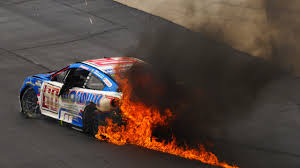
Chase Elliott and Ross Chastain were eliminated early from the NASCAR All-Star Race after separate crashes derailed both drivers’ chances in a chaotic, incident-heavy event at Dover Motor Speedway that saw multiple cautions, heavy attrition and a dramatically shortened field long before the final segment.
The race, which featured a revamped format with three segments and a cut-down field for the final sprint, quickly turned into survival racing rather than a showcase of speed. Several major incidents across the opening 75-lap segments collected more than half the field, setting the tone for a night where top contenders were vulnerable from the start.

AD: Capeesh Restaurant
Elliott, one of the sport’s most popular drivers and a former All-Star Race winner, was caught in multiple incidents early in the first segment. Although he attempted to continue after initial damage, his No. 9 Hendrick Motorsports Chevrolet sustained too much structural impairment to be repaired under All-Star rules, which prohibit backup cars. His race ended prematurely despite already being locked into the exhibition field through eligibility criteria.
Chastain’s exit came even earlier in the second segment after a multi-car crash on the opening laps of that stage. The Trackhouse Racing driver was collected in a chain-reaction incident that left his Chevrolet heavily damaged and unable to return to competition. Like Elliott, he was officially eliminated when repairs proved impossible within the structure of the event’s strict format.
The time the final 200-lap segment began, only a reduced group of competitors remained eligible for the $1 million prize, underscoring how quickly the race shifted from strategy to survival.

AD: Oysterian Sea Food Restaurant And Bar
Early Wrecks Define A Survival -Style All Star Format
The 2026 NASCAR All-Star Race at Dover Motor Speedway is built around a deliberately experimental format designed by NASCAR to increase on-track aggression and unpredictability, with the official NASCAR description outlining a three-segment structure featuring two 75-lap opening stages followed by a 200-lap final segment, alongside a full-field inversion of the top 26 finishers after the first segment and a system in which only a reduced group advances to the final race based on performance and eligibility criteria such as recent winners, former champions, and fan vote selection.
According to NASCAR’s official announcement, the inversion of the running order between the first two segments is intended to reshuffle track position and create constant restarts in unfamiliar traffic, while the elimination and advancement rules ensure that drivers must race aggressively early in order to secure a place in the final segment rather than conserving equipment for a traditional long-run strategy.
The governing body also notes that the structure places a heavier emphasis on short-run performance, pit execution, and track position across segments, which at Dover’s high-speed, concrete surface increases the likelihood of close-quarters racing and contact during restarts, particularly when combined with the absence of a conventional “open” qualifying race and the compressed format of the exhibition event.
Overall, NASCAR states that the design of the format is meant to reward performance across multiple sprint-style segments while producing a more unpredictable and entertainment-focused race environment, where early incidents and dramatic position swings can directly determine who competes for the final $1 million prize.
The opening laps alone featured a series of aggressive restarts and multi-car contact that quickly eliminated several contenders and damaged many others. Within minutes, the race had already produced caution flags and reshuffled track position, forcing drivers to either adapt or risk being taken out in incidents they did not start.
Elliott’s involvement began when he was caught in a chain reaction during an early restart that swept through the mid-pack. Despite his experience in high-pressure All-Star environments, he acknowledged after the incident that he “saw it getting crazy” and felt he should have avoided the situation sooner, reflecting the split-second nature of decision-making in pack racing conditions.
Chastain, meanwhile, was swept into trouble during the second segment when contact in tight racing conditions triggered a three-car crash. Known for his aggressive driving style, he had been running competitively before the incident but had no opportunity to recover once his car sustained terminal damage.
The scale of attrition meant that more than half the starting field was eliminated or heavily compromised before the final segment even began, leaving only a limited number of fully intact cars to compete for the win. The outcome reinforced a growing theme in modern NASCAR exhibition events: formats designed to encourage aggression often reduce the margin for error to near zero, particularly on short tracks where contact is frequent and restarts are constant.
WithElliott, the result was a frustrating early exit in a race where he had entered as one of the more experienced All-Star contenders. For Chastain, it was another reminder of how quickly races can unravel in tightly packed conditions, even for drivers accustomed to intense wheel-to-wheel competition.
While neither driver was in contention for the final prize, their early exits became one of the defining storylines of the night, highlighting both the unpredictability of the All-Star format and the thin line between contention and elimination in modern NASCAR exhibition racing.
What stood out most was how quickly a high-profile field can unravel under a structure built to encourage aggression, where short segments and frequent restarts leave little room for recovery once damage occurs. In a traditional points race, drivers might have had time to settle, repair minor issues, or adjust strategy over a longer distance, but the compressed All-Star format removed much of that flexibility, turning small mistakes into race-ending consequences.
With Elliott and Chastain, both known for their ability to navigate chaotic pack racing, the incidents underscored how even experienced drivers can be caught out when intensity is amplified across every lap. The early crashes not only ended their races but also shifted the competitive landscape of the event, opening opportunities for other contenders to advance into the final segment while two of the sport’s most recognisable names watched from the sidelines.
That contrast between contenders still fighting for the win and eliminated stars already out of the race captured the essence of the All-Star concept, where spectacle and volatility are built into the structure itself. The result also reinforced a growing theme in NASCAR’s modern exhibition approach: entertainment-driven formats inevitably increase risk.
With inversion rules, elimination stages, and aggressive restarts, drivers are effectively placed in constant high-pressure scenarios where track position can change in seconds and a single incident can erase an entire night’s opportunity. In that environment, survival often matters as much as speed, and consistency becomes harder to maintain even for elite drivers.

AD: Heritage And Restaurant Lounge Bar