
By Isabelle Wilson-
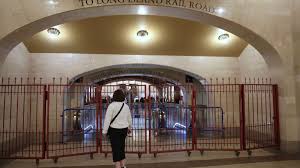
New York Governor Kathy Hochul is facing one of the biggest transportation crises of her tenure after a strike shut down the Long Island Rail Road (LIRR), the largest commuter rail system in North America, stranding hundreds of thousands of passengers and threatening severe economic disruption across the New York metropolitan region.
The shutdown, now entering its second day, began after five labor unions representing roughly half of the railroad’s workforce walked off the job following months of stalled negotiations with the Metropolitan Transportation Authority (MTA).

AD: Capeesh Restaurant
The dispute centers on wages, healthcare contributions and working conditions, with union leaders accusing the MTA of refusing to meet recommendations issued by federal mediators.
In an increasingly urgent appeal, Hochul called on both sides to immediately resume negotiations, warning that the strike was already creating widespread consequences for commuters, businesses and the regional economy. “Every hour this continues hurts working people,” the governor said during a weekend briefing in Manhattan, where transportation officials outlined emergency contingency plans.
According to state officials, nearly 250,000 to 300,000 riders depend on the LIRR each weekday to travel between Long Island and New York City. The strike marks the first complete LIRR shutdown in more than three decades and comes at a politically sensitive moment for Hochul, who is already under pressure over congestion pricing, rising living costs and concerns about public transit reliability.

AD: Oysterian Sea Food Restaurant And Bar
The governor urged commuters to work remotely if possible while the MTA deployed limited bus shuttles for essential workers. Officials acknowledged, however, that replacement transportation can handle only a fraction of normal rail traffic.
The LIRR, which connects Long Island suburbs with Penn Station in Manhattan, is considered a critical artery of the region’s economy. Transportation analysts warned that prolonged disruption could result in tens of millions of dollars in daily economic losses due to missed work hours, traffic congestion and reduced business activity in New York City.
The dispute has rapidly escalated into a political battle involving state officials, union leaders and even former President Donald Trump. Hochul has argued that the Trump administration prematurely ended federal mediation efforts that may have prevented the strike, while Trump allies have countered that state leadership mishandled the negotiations from the outset.
Meanwhile, the MTA insists it already presented a fair proposal that included substantial wage increases. MTA Chairman Janno Lieber said the agency’s offer matched what unions had previously requested and warned that conceding to additional demands could force fare increases or cuts elsewhere in the transit system.
Union representatives strongly reject that characterization. Labor leaders argue workers have effectively endured years without meaningful raises while inflation and housing costs in the New York region have surged. Some unions are demanding retroactive raises alongside larger salary increases for 2026, saying current compensation no longer reflects the realities of living in the metropolitan area.
Kevin Sexton of the Brotherhood of Locomotive Engineers and Trainmen said negotiators remain “far apart,” adding that workers felt they had exhausted all available options before striking.
Political Pressure Mounts Across the Region
Commuters scrambled to find alternate routes into New York City, traffic jams intensified on highways leading into Manhattan and suburban park-and-ride lots quickly filled to capacity. Businesses in Midtown reported staffing disruptions, while local officials on Long Island warned of broader impacts on schools, healthcare workers and retail operations.
Nassau County Executive Bruce Blakeman, a Republican and potential challenger to Hochul in the next gubernatorial race, demanded the temporary suspension of New York City’s congestion pricing toll during the rail shutdown. Blakeman argued that commuters forced to drive into Manhattan should not be penalized with additional fees while rail service remains unavailable.
Hochul responded that federal rules governing the congestion pricing program leave little room for temporary suspension. Instead, she reiterated calls for employers to expand remote work options until the strike is resolved.
The shutdown has also reignited broader debates about labor relations in public transportation systems. Unlike New York City subway workers, who are barred from striking under the Taylor Law, LIRR unions operate under federal railway labor laws that permit strikes after mediation procedures are exhausted.
Transit historians note that commuter rail strikes have repeatedly disrupted the northeastern United States over the decades, including major stoppages involving Metro-North, SEPTA and NJ Transit in previous eras.
The current crisis has also revived memories of the 2025 NJ Transit rail shutdown, when engineers walked off the job over similar pay disputes before a temporary agreement restored service. That strike demonstrated how dependent the region’s economy has become on uninterrupted commuter rail operations.
Frustration with riders is now growing by the hour. Travellers crowded onto already packed buses and subway lines throughout the weekend, while some Long Island residents reported spending several hours attempting to reach Manhattan by car. Social media platforms filled with complaints from commuters worried about upcoming workweeks if negotiations remain frozen.
The strike is also disrupting tourism and entertainment in New York City. Officials warned that attendance at sporting events, concerts and cultural venues could decline sharply if rail service remains suspended through the coming week.
Despite mounting pressure, neither side appears ready to compromise publicly. Union officials insist they are seeking only wage packages that keep pace with inflation, while the MTA argues that meeting all demands could destabilise the authority’s already fragile finances.
Transportation experts say the conflict highlights broader structural tensions facing public transit systems across the United States. Transit agencies are still recovering from pandemic-era ridership losses while confronting rising labour costs, ageing infrastructure and political battles over funding. Workers argue that staffing shortages and inflation have eroded compensation levels across the industry.
The LIRR dispute may ultimately require direct political intervention if negotiators fail to break the deadlock soon. Historically, governors and federal mediators have often stepped in aggressively during prolonged transportation strikes because of the economic stakes involved.However, the immediate future remains uncertain. No new formal bargaining sessions had been publicly scheduled as of Sunday evening, according to union representatives and transit officials.
Hochul, seeking to project urgency while avoiding further escalation, said the state remains prepared to facilitate negotiations “at any hour” if both parties agree to return to the table. Yet with commuters bracing for another chaotic Monday morning, pressure is mounting on all sides to find a solution before the disruption deepens into a full-scale regional crisis.

AD: Heritage And Restaurant Lounge Bar