
By Theodore Brown-
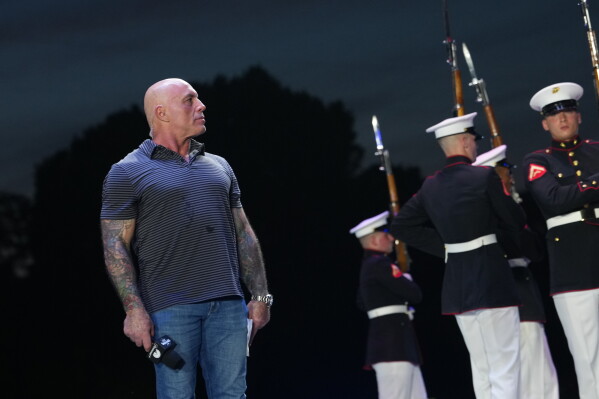
Donald Trump, marks his 80th birthday, stepping into the centre of a celebration that fused politics, entertainment, and combat sports into a single national broadcast.
The event, officially branded “UFC Freedom 250,” featured seven professional mixed martial arts fights, headlined by championship bouts that turned the White House grounds into a temporary arena of global attention.

AD: Capeesh Restaurant
Thousands of other mixed martial arts fans joined the U. S president to watch on as American fighter Justin Gaethje beat Spanish-Georgian opponent Ilia Topuria to win the lightweight championship in the main event.
The fight night – the first ever professional sporting event held at the presidential residence – was delayed by an hour amid fears of thunderstorms.
According to reporting from major outlets, more than 4,000 attendees filled the South Lawn and surrounding viewing areas, including military personnel, political allies, and invited guests, while millions more tuned in through streaming platforms and broadcast partners. The staging itself was unprecedented: steel towers, LED screens, and reinforced platforms constructed over several days transformed the historic residence into something closer to a pay-per-view coliseum than a seat of government.

AD: Oysterian Sea Food Restaurant And Bar
Fighters like Ilia Topuria and Justin Gaethje prepared for the main event bouts, the spectacle carried an unusual dual identity part sporting milestone, part political theatre.
UFC President Dana White, a long-time Trump ally, framed the event as a historic convergence of American culture and athletic entertainment, while critics described it as a deliberate blurring of state symbolism and commercial branding.
Inside the Octagon atmosphere, the familiar rituals of fight night unfolded with amplified intensity. Walkout music echoed across the South Lawn, security checkpoints stretched through nearby streets, and rows of VIP seating faced the cage from a vantage point usually reserved for diplomatic ceremonies and press briefings. But this night, the White House had been reimagined as a stage for controlled violence and curated spectacle, with the president positioned at its symbolic centre.
The event was not only a sporting experiment but a deliberate extension of Trump’s long-standing affinity for UFC culture. Reporting on the lead-up to the event highlighted how deeply the sport has been embedded in his public persona, with appearances at UFC arenas dating back decades and frequent public associations with the organisation’s fan base.
On his 80th birthday, that relationship reached its most literal expression: the presidency itself hosting a cage fight. Supporters framed it as a bold reimagining of national celebration, aligning with the broader “Freedom 250” theme tied to the upcoming 250th anniversary of the United States. The event’s branding tied historical commemoration to contemporary entertainment culture, merging patriotic symbolism with modern combat sport aesthetics.
The atmosphere surrounding the event was far from uniformly celebratory. Political criticism circulated throughout the day, with opponents arguing that staging a commercial fighting event on federal grounds blurred ethical boundaries and diminished the institutional dignity of the presidency. Legal challenges attempting to block the event were ultimately unsuccessful, allowing the spectacle to proceed as planned.
Coverage of Washington, D.C. security patterns shows that large events and protests around the White House frequently create a physically divided public space, where demonstrators are contained behind barricades and fencing while officials and invited audiences operate inside heavily secured perimeters. During major protest periods, authorities have repeatedly installed reinforced fencing and crowd-control barriers around the White House complex, creating designated zones for public gathering that separate protesters from restricted federal grounds.
In parallel, reporting on planned UFC events at the White House highlights the creation of layered security perimeters, road closures, and controlled viewing zones, with external spectators separated from the main arena space on the South Lawn by extensive federal security infrastructure.
Together, this reflects a consistent pattern in Washington where public demonstrations and high-profile events unfold in “split” environments: outside the barriers, crowds are managed and restricted into designated spaces, while inside, tightly choreographed events proceed under strict internal rules of movement, timing, and security coordination that define their own self-contained operational logic.
Broadcast partners framed the event as a landmark in sports entertainment history, noting its unprecedented location and production scale. Some reports estimated production costs exceeding tens of millions of dollars, with elaborate staging designed to position the event as both a sporting milestone and a cultural statement.
The contrast between setting and activity remained unavoidable. The White House, traditionally associated with diplomacy, crisis management, and statecraft, had been temporarily rebranded as a venue for global entertainment. With supporters, it was proof of Trump’s instinct for spectacle and media dominance. For critics, it raised fundamental questions about the boundaries between governance and performance.
Through the time the main card reached its final bouts, the South Lawn had become indistinguishable from any major arena hosting a pay-per-view championship night. The difference lay not in the violence inside the cage, but in the symbolism surrounding it: the fusion of executive power and sporting spectacle, staged under the open sky of America’s most recognisable residence.
Fireworks lit the Washington skyline at the event’s conclusion, and the narrative extended beyond the fights themselves, spilling into the city’s wider political imagination like smoke drifting across the Potomac. While some, the spectacle marked a radical reinvention of presidential imagery, where the White House was no longer just a backdrop for solemn addresses or diplomatic receptions, but a stage for mass entertainment calibrated for global broadcast.
In that framing, Trump’s 80th birthday celebration appeared as a deliberate collapse of boundaries between governance and performance, where the aesthetics of combat sports and televised spectacle replaced the traditional choreography of state ceremony.
Whether viewed as innovation or provocation, the event redefined the visual language of presidential ritual, replacing polished restraint with raw spectacle, and institutional formality with the intensity of combat under floodlights.
The South Lawn, ordinarily associated with press conferences and diplomatic arrivals, had been reimagined as an arena where controlled violence became the central form of entertainment, refracting political authority through the lens of sport.
Supporters described the night as a bold modernisation of national symbolism, arguing that it reflected a media-driven era in which leadership must compete for attention in the same arena as entertainment and sport. Critics, by contrast, saw a dangerous erosion of institutional gravity, where the presidency risked becoming indistinguishable from commercial spectacle.
Crowds dispersed and the temporary infrastructure began to dismantle, the contrast between the event and its setting became even more pronounced. The White House, returned gradually to its usual rhythms, carried the residue of its transformation in memory rather than structure.
The lights dimmed, the fencing came down, and the Octagon was removed, yet the imagery lingered: a national landmark temporarily converted into a venue of choreographed combat, broadcast fireworks, and curated intensity.
In that afterglow, the celebration stood less as a singular event than as a question about the future of political ritual itself how far public institutions can stretch before they become indistinguishable from the spectacles they stage, and whether ceremony in the modern age is still capable of existing without performance as its dominant language.

AD: Heritage And Restaurant Lounge Bar