

By Sammy Jones-
Global healthcare giant Johnson & Johnson (J&J) now faces legal action from thousands of people in the UK who accuse the company of knowingly selling talcum powder contaminated with asbestos for decades.
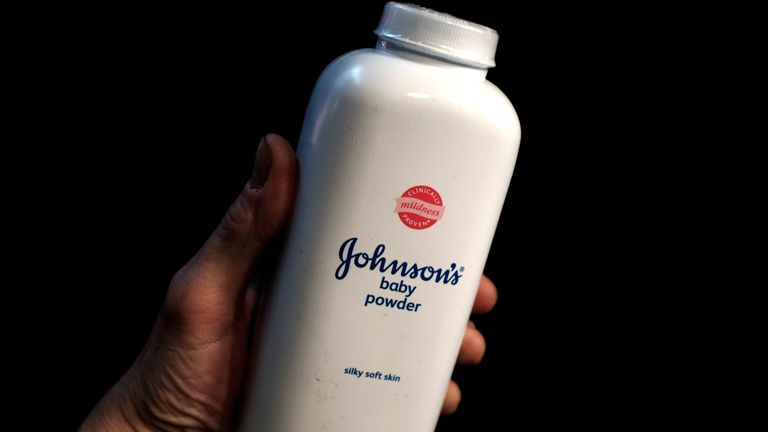
Johnson & Johnson denies its baby powder contained asbestos. Pic: Reuters
More than 3,000 claimants allege they or a family member developed forms of ovarian cancer or mesothelioma from using the company’s signature Johnson’s baby powder between 1965 and 2023. This J&J talcum powder lawsuit seeks significant damages in the High Court in London against both J&J and Kenvue UK, the separate business that split from J&J in 2023.

AD: Capeesh Restaurant
The core of the legal action asserts that J&J’s product was dangerously contaminated with carcinogenic fibres, including asbestos. Crucially, the lawsuit alleges the corporation concealed this immense health risk from the public for years.
J&J initially ceased selling its talc-based baby powder in the US market in 2020 before switching to a cornstarch alternative. The company then implemented this global change in 2023. Despite these changes, Kenvue swiftly issued a statement vehemently denying the allegations, maintaining that J&J baby powder “did not contain asbestos, and does not cause cancer.” The claimants, nevertheless, push forward with the J&J talcum powder lawsuit.
The claimants’ representative, Michael Rawlinson KC, presented evidence asserting that commercially exploited talc deposits worldwide rarely exist without asbestos contamination. Rawlinson alleged in court documents that reports from talc mines, J&J’s own research, and existing scientific literature would have clearly informed the company about the presence of asbestos contamination.

AD: Oysterian Sea Food Restaurant And Bar
The legal team claimed the company deliberately “suppressed information that might indicate that baby powder was contaminated with asbestos.” Moreover, the claimants alleged the firm lobbied regulators to ensure the continued sale of its product and sponsored studies designed to “downplay the dangers” to human health.
J&J is already facing tens of thousands of similar J&J talcum powder lawsuit cases across America, where claimants allege cancer diagnoses following their use of baby powder and other talc products. Last week, an American court ordered J&J to pay a staggering $966 million (£720m) to the family of a woman who died from mesothelioma.
This amount stands as one of the largest awards ever directed against the firm, although it may face reduction on appeal. It is important to note that damages awarded by UK courts generally tend to be much more restricted than those seen in US litigation.
The human impact of this litigation is evident in the testimonies of the claimants. Janet Fuschillo, 75, who was diagnosed with ovarian cancer seven years ago, said she had used J&J’s baby powder since the 1960s. “I used talc on myself and all four of my children because we were told it was pure, and it was good for you,” she remarked.
Another claimant, Patricia Angell, described her late husband, Edward, who died in 2006, aged 64, just weeks after receiving a mesothelioma diagnosis. “He would come home from work and shower every day and use J&J’s talc,” she recounted, adding that “Talc was mentioned on Edward’s autopsy report, along with asbestos strains found in contaminated talc.”
According to the NHS, mesothelioma, a form of cancer, is almost always caused by asbestos exposure, typically forming in the lungs after microscopic fibres are inhaled.
A spokesperson for Kenvue reiterated the firm’s position: “We sympathise deeply with people living with cancer. We understand that they and their families want answers—that’s why the facts are so important.”
They stressed that the safety of Johnson’s baby powder is supported by years of testing conducted by independent and leading laboratories, universities, and health authorities around the globe. The spokesperson concluded that the high-quality cosmetic grade talc used in the product was compliant with all necessary regulatory standards.

AD: Heritage And Restaurant Lounge Bar


