

By Lucy Caulkett-
A worrying and hazardous trend is rapidly spreading across Russia, targeting young people through viral videos on platforms like TikTok. An unlicensed weight-loss drug, deceptively branded as “Molecule,” has become widely available, promising users instantaneous and effortless weight reduction.

22-year-old Maria suffered serious side effects after trying the unlicensed weight loss drug promoted on TikTok. Pic: Maria
Disturbingly, this supposed dietary supplement contains a banned, high-risk pharmaceutical ingredient, causing severe psychological and physical health crises among its primary demographic. This potent cocktail of easy access and social media promotion has created a public health emergency, forcing authorities to confront the dangers of the Russian Illegal Weight Loss Pill being consumed by teenagers and young adults seeking rapid body transformation.

AD: Capeesh Restaurant
Twenty-two-year-old Maria from St Petersburg shared her harrowing experience after purchasing the pill from a popular online retailer. She followed the instructions, taking two pills daily, and after only two weeks, her health deteriorated dramatically.
Her mouth became intensely dry and she lost her appetite completely, describing an absolute lack of desire to eat or even drink. Maria began experiencing severe anxiety and increasingly negative, intrusive thoughts.
She noted the pills were having a profound and unsettling effect on her mental state, leaving her constantly nervous and physically biting her lips and chewing her cheeks. Her case is sadly not unique; other TikTok users reported a catalogue of alarming side effects, including severe insomnia, debilitating tremors, and drastically dilated pupils.

AD: Oysterian Sea Food Restaurant And Bar
At least three school children have reportedly required intensive hospital care after taking the pills, underscoring the immediate and critical danger this unregulated substance poses to youth.
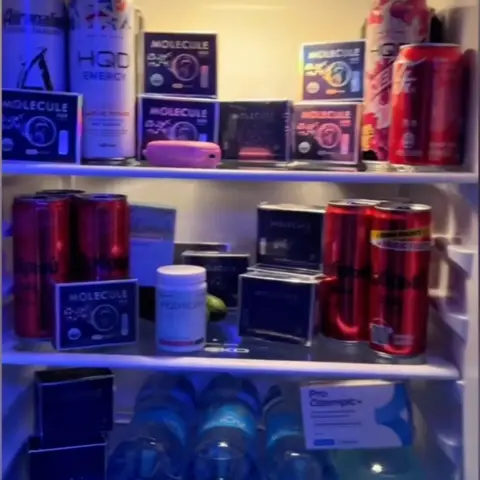
TikTok Clips shared on TikTok show fridges lined with soft drinks and blue boxes of Molecule. Pic: TikTok
The promotion of the Russian Illegal Weight Loss Pill has expertly leveraged the powerful, image-conscious culture of social media. Young people’s feeds quickly filled with enticing captions and unrealistic promises, such as “Take Molecule and forget food exists” and “Do you want to sit in the back of the class in oversized clothes?”
Clips displaying refrigerators stocked not with food but with blue boxes featuring “Molecule Plus” labels and holograms went viral, normalizing the pill’s use. Teenagers subsequently shared their intensely personal “weight-loss journeys” online, creating a supportive but ultimately toxic echo chamber that encourages use.
The harrowing personal stories continue to emerge from across the vast country. In April, a schoolgirl residing in Chita, Siberia, required immediate hospital care after overdosing on Molecule. Local reports indicated she desperately tried to lose weight quickly, hoping to achieve an idealized body shape in time for the summer. Another schoolgirl’s mother told local media her daughter was admitted to intensive care after consuming several pills simultaneously.
In May, a 13-year-old St Petersburg boy needed emergency hospitalization after suffering frightening hallucinations and intense panic attacks. He had reportedly asked a friend to buy him the pill because he endured incessant teasing at school regarding his weight. Endocrinologist Ksenia Solovieva from St Petersburg warns forcefully against the dangers.
She stated that “self-administration of this drug is very unsafe,” emphasizing the acute potential for overdose risks, particularly because “we do not know how much of the active ingredient such ‘dietary supplements’ may contain.”
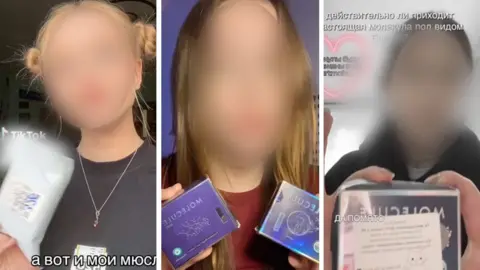
Teenagers and young people showing unlicensed weight loss pills sold as dietary supplements from popular marketplaces on their TikTok accounts. Pic: TikTok
The packaging for these “Molecule” pills often lists misleading “natural ingredients,” such as fennel seed extract or dandelion root, to disguise the true contents. Russian journalists at the newspaper Izvestiya submitted pills purchased online for testing earlier this year. Their findings were alarming: the pills contained sibutramine, a powerful pharmaceutical substance.
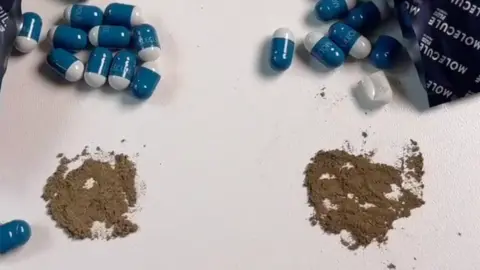
The pills contain substance called sibutramine, which is banned in many countries. Pic: BBC
Sibutramine was originally used as an antidepressant in the 1980s and later repurposed as an appetite suppressant. However, comprehensive international studies later revealed that sibutramine significantly increased the risk of serious health events like heart attacks and strokes, all while providing only marginal weight loss benefits.
Consequently, many developed nations quickly banned the drug. It was formally banned in the US in 2010 and remains illegal for over-the-counter use across the UK, the European Union, China, and numerous other countries.
In Russia, the substance is still utilized for treating clinical obesity but is strictly restricted to adults and requires a medical prescription. Purchasing and selling sibutramine without the necessary prescription constitutes a criminal offense under Russian law.
Nonetheless, individuals and small businesses continue to sell it illegally online, often in doses far higher than legally recognized medication and without requiring any prescription whatsoever. The pills remain easily accessible, costing approximately £6–7 ($8–9) for a 20-day supply, making them exponentially cheaper than recognized weight-loss injections like Ozempic, which command prices up to £160 ($210) for a monthly pen in the Russian market.
This alarming situation surrounding unlicensed diet pills in Russia sadly echoes similar problems faced elsewhere. Earlier reporting detailed a significant effort by law enforcement to tackle the illicit trade of weight-loss pharmaceuticals closer to home.
The article, “UK Authorities Deliver Major Blow in Fight Against Counterfeit Weight Loss Jabs,” highlighted how organized crime networks are increasingly exploiting the demand for slimming drugs globally. That investigation demonstrated the complex, interconnected challenges authorities face when attempting to control the cross-border sale and distribution of powerful, unlicensed medication, whether in pill form or as counterfeit injections.
Combating the unregulated trade of the Russian Illegal Weight Loss Pill has proven to be an uphill battle for law enforcement. Russian courts regularly hand out prison sentences to individuals caught purchasing and reselling Molecule pills, yet authorities struggle to comprehensively control the illegal online market.
In April, the government-backed Safe Internet League officially reported the growing trend involving young people to the appropriate authorities. This action prompted several major online marketplaces to promptly remove Molecule from their sales listings. However, the sellers quickly adapted, and the product soon reappeared online under a new name, “Atom,” in virtually identical packaging.
The government recently passed a new law allowing officials to block websites selling “unregistered dietary supplements” without requiring a prolonged court order. Unfortunately, sellers are easily circumventing this measure by disingenuously categorizing the pills as “sports nutrition” instead of supplements.
On TikTok, consumers can find retailers marketing Molecule through listings that appear deceptively innocent, such as advertisements for muesli, biscuits, or even lightbulbs. Some retailers have ceased attempting to hide the product entirely, selling it under its real name.
The manufacturing source of these pills remains dangerously unclear, making quality control impossible. The BBC previously located some sellers with production certificates claiming factories in Guangzhou and Henan in China.
Other vendors assert they source the pills from Germany. Certain packets even state they were produced in Remagen, Germany, but the BBC has since confirmed that no such pharmaceutical company is listed at the given address.
Kazakh vendors supplying Molecule to Russians admitted they purchased stock from friends or warehouses in the capital Astana but failed to name the original manufacturer. This lack of traceability means consumers have no reliable way of knowing exactly what concentration of drug they are receiving.
The dangerous marketing of Molecule has penetrated sensitive online spaces, as online eating-disorder communities become platforms for its promotion. Users skilfluly employ coded terms and specialized hashtags to slip past content moderation, ensuring the pill remains visible to vulnerable groups.
Endocrinologist Ksenia Solovieva warns that this easily accessible appetite suppressant is exceptionally hazardous for young people with existing eating disorders or those struggling with relapse.
Adding crucial weight to these professional concerns, Russian influencer Anna Enina, who has millions of followers and has openly discussed her past use of unlicensed weight-loss pills, publicly cautioned her massive subscriber base: “As someone who has struggled with an eating disorder… the consequences will be dire. You’ll regret it tenfold.” This strong message underscores the devastating psychological and physical toll of using the drug.
Maria, the victim from St Petersburg, now actively discourages other young women and girls from attempting to use Molecule on weight-loss forums, having realized the consequences firsthand. She even reached out to one teenage user’s parents to alert them to the immediate danger.
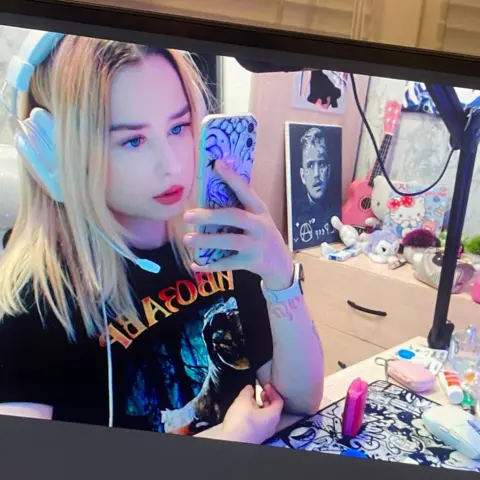
Maria from St Petersburg now discourages others from trying Molecule. Pic: BBC
Nevertheless, Molecule remains tragically popular online, an ever-present, dangerous reminder of her ordeal on her own social media feed. Reviewing information on global drug safety can be crucial in this situation, which is available on the World Health Organization website.

AD: Heritage And Restaurant Lounge Bar
