

By Aaron Miller-
Tesla shareholders have given the green light to a staggering compensation plan that could potentially deliver Elon Musk a package worth more than $1 trillion (£761bn).
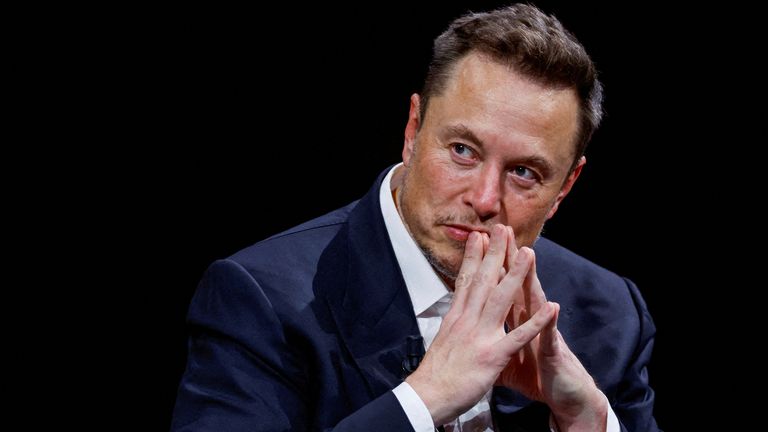
Elon Musk. Pic: Reuters
This landmark decision, approved by 75% of the company’s investors, officially enshrines the largest corporate pay package in global history. The approval signals the board’s unwavering commitment to keeping the visionary CEO at the helm during what they describe as the company’s most critical phase of technological transformation.

AD: Capeesh Restaurant
The immense payout is entirely performance-based, meaning Musk must successfully guide the electric vehicle giant through a series of extremely ambitious operational and financial hurdles over the next ten years to unlock the rewards. Should the technology titan achieve all objectives, his personal net worth could easily surpass the inflation-adjusted peak wealth of legendary figures like John D. Rockefeller, securing his status as the richest person in recorded history.
This approved Elon Musk Tesla Pay Package outlines requirements that are nothing short of monumental, demanding exponential growth and radical technological breakthroughs. The agreement stipulates that Musk must deliver 20 million Tesla vehicles over the next decade. This output target represents more than double the total number of vehicles the company successfully churned out over the entirety of its previous twelve years of operation. Clearly, such a colossal goal requires an extraordinary scaling of production capacity and manufacturing efficiency across the global enterprise.
Beyond vehicle production, the plan tasks Musk with dramatically increasing both the company’s valuation and its operating profits, demonstrating sustained financial performance far beyond current expectations. Perhaps the most technologically ambitious requirement centers on the company’s push into robotics. Musk must oversee the successful roll-out of one million AI-powered robots, a goal that seems highly speculative given Tesla has yet to commercially release even a single unit of its proposed humanoid robot, Optimus. Therefore, this specific metric truly ties the compensation directly to the company’s ability to innovate outside its core automotive business.

AD: Oysterian Sea Food Restaurant And Bar
Significantly, the Elon Musk Tesla Pay Package also requires Musk to formulate a clear and detailed succession plan, identifying and preparing the individual who will eventually replace him as the Chief Executive of Tesla. As the company successfully completes each of these defined steps, Musk receives additional company shares, steadily raising his ownership stake from its current 13% to nearly 29% overall. Even if the CEO falls short of some of these seemingly Herculean targets, he still stands to gain a substantial financial reward, underscoring the high-risk, high-reward nature of this deal for the shareholders.
The Tesla board remains adamant that only Musk possesses the unique combination of vision, leadership, and public profile necessary to transform the company’s lofty ambitions into reality. Now is unquestionably the moment Tesla aims to fundamentally innovate, aggressively develop its self-driving capabilities, expand deeply into robotics, and wholly embrace the disruptive growth of artificial intelligence (AI).
A significant portion of Tesla’s immense market value is tied directly to the public perception of this future-forward ambition, a vision almost entirely embodied by its CEO. Financial services firm Wedbush strongly supported the package, asserting that more shares are “critical to keep Musk at the helm to lead Tesla through the most critical time in the company’s history.” They argued that the company’s biggest asset remains Musk, especially as the current AI revolution positions autonomous technology and robotics front and centre for the business’s future growth.
Figures recently published by Forbes magazine confirm the 54-year-old executive already commands a staggering net worth of $493 billion (£375bn), meaning he possesses more money than anyone else currently on the planet. Yet, he is not the historical record-holder for wealth—at least, not yet. That specific title currently belongs to the legendary railroad titan John D. Rockefeller, whose colossal wealth, when accurately adjusted for inflation to 1913 values, equated to approximately $630 billion (£480bn).
If Musk achieves the maximum payout from this newly approved compensation plan, he will definitively claim the mantle of history’s richest person, surpassing this threshold comfortably. This monumental financial incentive highlights the board’s desperate desire to align Musk’s personal wealth generation with Tesla’s most profound strategic moves.
Despite the overwhelming shareholder approval, the Elon Musk Tesla Pay Package faced fierce opposition from influential voices in the financial advisory world. Major investor advice firm Institutional Shareholder Services (ISS) issued a strong warning against the ten-year pay agreement. They argued that the plan severely reduces the board’s future ability “to meaningfully adjust future pay levels in the event of unforeseen events or changes in either the performance or strategic focus of the company over the next decade.” This lack of flexibility, according to critics, represents a significant governance risk.
Furthermore, ISS expressed concerns that the extremely high value attached to each performance tranche could potentially “undermine Musk’s desire to achieve all goals and create significant value for shareholders,” suggesting the goals themselves “lack precision.” Another major advisory firm, Glass Lewis, echoed these governance concerns. Musk, characteristically, responded to these institutional warnings with disdain, famously describing ISS and Glass Lewis as “corporate terrorists.” The controversy surrounding the unprecedented financial scale of the package fueled speculation that Musk might choose to walk away from the business altogether if the shareholders had failed to approve the agreement.
Ultimately, the shareholders decided that the extraordinary risk associated with the deal was justified by the potential for unparalleled returns driven by Musk’s unparalleled focus. The complex relationship between the CEO and his various ventures often drives intense market reactions.

AD: Heritage And Restaurant Lounge Bar


