
By Tim Parsons-
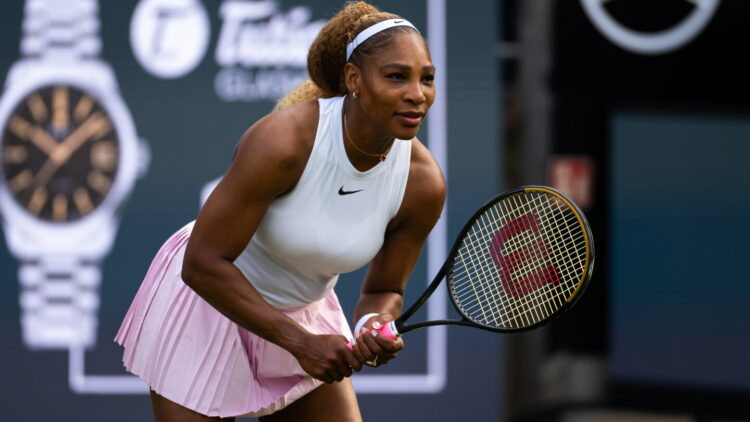
Wimbledon is preparing for one of its most seismic centre-court storylines in recent memory, as Serena Williams is set to return to the singles draw after accepting a wild card invitation from the All England Club.
The decision, confirmed by tournament organisers this week, has sent ripples through the tennis world, rekindling memories of her dominance on grass and raising fresh questions about what a return however brief might look like at the sport’s most historic venue.

AD: Capeesh Restaurant
The All England Club has long reserved wild cards for players whose presence elevates the tournament beyond rankings alone, and Williams’ inclusion fits that tradition in the most headline-grabbing way possible. According to Wimbledon’s official communications, wild card selections are designed to recognise past champions and players whose participation adds “exceptional interest and significance” to the Championships.
Few names in modern tennis carry that weight more emphatically than Williams, a seven-time Wimbledon singles champion whose legacy on Centre Court is already etched into the sport’s mythology. Her return arrives in a climate of anticipation rather than certainty. Williams has largely stepped away from competitive singles since her farewell at the US Open in 2022, but she has never fully closed the door on occasional appearances. Insiders close to the tournament describe the wild card invitation as both symbolic and competitive. A recognition of her enduring draw and a belief that, if she chooses to compete, she can still shape the narrative of any draw she enters.
The announcement immediately reshaped early Wimbledon storylines. Ticket demand surged within hours, while broadcasters quietly began adjusting programming plans for potential marquee matches. A tournament that already markets itself as tennis’ most prestigious stage, Williams’ return adds a layer of global attention usually reserved for finals week. There are few arenas in sport that carry memory quite like Wimbledon’s Centre Court, and even fewer athletes who have defined it as decisively as Williams.

AD: Oysterian Sea Food Restaurant And Bar
Her first title there came in 2002, and over the next two decades she built a grass-court legacy that combined power, precision, and psychological dominance. Her last Wimbledon singles title in 2016 remains one of the defining performances of her late-career surge.
Organisers at the All England Club have historically leaned on that legacy when framing Williams’ place in the tournament’s broader history. In archival materials and official retrospectives, Wimbledon has repeatedly highlighted her as one of the defining champions of the modern era. Her presence, even outside competition, has often been treated as a cultural event within the sport itself.
This year, however, the tone is different. A wild card entry signals not ceremony but participation. If she takes to court, Williams will not be there as an ambassador or guest of honour, but as a competitor one whose ranking, absence, and age make her both an underdog and an enigma. The Women’s Tennis Association has been careful in its public reaction, framing the development as part of tennis’ broader ecosystem of returning champions and evolving careers.
The WTA has noted in recent communications that players increasingly move between retirement, exhibition play, and selective competition, reflecting what it calls a “fluid competitive lifecycle” in modern tennis. Williams’ possible return fits squarely into that shifting reality.
The implications are immediate and complex. A Wimbledon draw featuring Williams would instantly become the most scrutinised of the season. Younger competitors who grew up watching her, it represents a rare chance to share a competitive stage with an icon whose presence once defined the sport’s upper limits.
Yet questions remain about readiness. Grass courts demand timing and movement that can be unforgiving even for fully active players, and Williams’ competitive rhythm has been largely absent from tour-level play. Analysts have been cautious in their expectations, suggesting that even a first-round appearance would be less about outcome and more about spectacle and legacy.Still, in tennis, legacy has a way of becoming performance. Williams’ history at Wimbledon suggests she has never been content with symbolic appearances alone.
The return that reshapes the tournament narrative
Sports broadcasters in the United Kingdom and abroad have already begun repositioning their coverage strategies, anticipating that Williams’ matches if scheduled would command primetime attention regardless of round or opponent. Which has long possessed broadcasting rights to Wimbledon in the UK, has highlighted the tournament’s capacity to create “globally defining sporting moments” in its tennis coverage commentary.
The All England Club itself has remained characteristically restrained, offering no speculation on draw placement or match scheduling. Yet the timing of the announcement arriving just weeks before the Championships suggests deliberate narrative staging. Wild cards are typically finalised closer to the event, but rarely do they carry this level of global anticipation.
Inside tennis circles, debate has already shifted from whether Williams should return to how her return would function competitively. Some see it as a final chapter in a storied career; others view it as an open-ended continuation of a presence that never fully left the sport’s consciousness.
Williams herself has often resisted definitive language about retirement, preferring ambiguity over closure. That ambiguity now becomes part of Wimbledon’s storytelling. If she takes the court, Williams will do so in a tournament that has evolved significantly since her last appearance.
The women’s game has grown deeper, faster, and more physically demanding, with a new generation of champions redefining baseline power and defensive range. Yet few would argue that any of them command the same gravitational pull that Williams brings simply by walking into a stadium. In Wimbledon, the gamble is minimal and the reward is enormous.
A wild card entry carries no guarantee of deep runs or headline victories, but it guarantees attention global, sustained, and emotionally charged. In that sense, Williams remains what she has always been: not just a competitor in the draw, but a force that reshapes it.

AD: Heritage And Restaurant Lounge Bar