
By Ben Kerrigan-
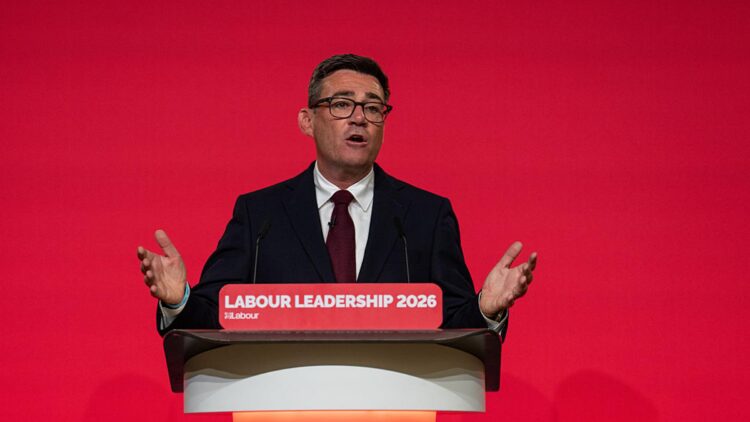
LONDON, July 20 — Britain entered another chapter of political change on Monday as Andy Burnham formally became the country’s new Prime Minister, taking office after King Charles III invited him to form a government following his election as leader of the governing Labour Party. The transition marks yet another dramatic shift in British politics, making Burnham the latest occupant of 10 Downing Street in a decade marked by unprecedented leadership turnover and growing public impatience with Westminster. Burnham’s arrival in Downing Street follows the resignation of Sir Keir Starmer and comes at a critical moment for Labour, which has struggled to reverse declining public support amid mounting pressure from Nigel Farage’s Reform UK. The new Prime Minister inherits an economy still grappling with the cost-of-living crisis, overstretched public services, sluggish economic growth and an electorate increasingly sceptical of traditional politics.
Standing outside Number 10 in a noticeably understated debut, Burnham dispensed with the customary lectern and spoke largely without notes, presenting himself as a leader determined to reconnect government with ordinary people. His message was one of urgency rather than celebration. Declaring that Britain required “a circuit breaker,” Burnham pledged immediate action to ease household pressures before unveiling what he described as a comprehensive ten-year national plan later this year. Among his first commitments was an instruction to civil servants to begin work immediately on ending homelessness across the United Kingdom, signalling that social justice would sit at the centre of his administration.

AD: Capeesh Restaurant
Within hours of taking office, Burnham also held his first conversation with United States President Donald Trump, underlining that foreign affairs would move quickly alongside his domestic agenda. According to officials familiar with the discussion, Burnham invited Trump to visit Manchester, an invitation the American president reportedly welcomed despite previously dismissing Burnham as “the mayor of a town.”
For Burnham, however, Manchester has never been merely a town.His stewardship of Greater Manchester over nearly a decade transformed him into one of Britain’s most recognisable regional political leaders and arguably Labour’s most successful elected mayor. Governing a city-region of approximately three million people, Burnham built a national reputation by championing devolution, fighting for greater investment outside London and placing local communities at the centre of policymaking.
His political standing rose dramatically during the COVID-19 pandemic when he openly challenged Boris Johnson’s Conservative government over financial support for areas placed under strict lockdown restrictions. His insistence that northern communities deserved equal treatment resonated far beyond Greater Manchester, earning him widespread public recognition as an outspoken advocate for regional fairness. Under his mayoralty, Greater Manchester became the first English city-region outside London to bring its bus network back under public control, a landmark transport reform that Burnham frequently cited as proof that devolved government could deliver tangible improvements for citizens. The success of the Bee Network has since become one of his defining political achievements and strengthened his argument that essential public services should prioritise accessibility over profit.

AD: Oysterian Sea Food Restaurant And Bar
Long before entering local government, Burnham had established himself as one of Labour’s most experienced parliamentarians.First elected as Member of Parliament for Leigh in 2001, he quickly advanced through government, serving in several senior cabinet positions under Prime Ministers Tony Blair and Gordon Brown. He held portfolios including Chief Secretary to the Treasury, Secretary of State for Culture, Media and Sport, and later Secretary of State for Health. His period as Health Secretary remains particularly significant. Burnham became a prominent advocate for safeguarding the founding principles of the National Health Service, repeatedly arguing that healthcare should remain publicly accountable and universally accessible. Even after leaving Westminster in 2017 to contest the inaugural Greater Manchester mayoralty, the NHS remained closely associated with his political identity.
He also emerged as one of Labour’s leading voices in the long-running campaign for justice for the victims of the Hillsborough disaster. Families affected by the 1989 tragedy frequently praised Burnham for using his ministerial influence to press for transparency and accountability, a role that enhanced his reputation as a politician prepared to champion unpopular causes in pursuit of justice.
These experiences now provide Burnham with unusually broad credentials as he assumes Britain’s highest office. Unlike several recent prime ministers whose experience came largely from Westminster, Burnham combines senior Cabinet experience with nearly a decade of executive leadership governing one of Europe’s largest metropolitan regions.
Political analysts argue that this dual background could shape a markedly different premiership. Rather than governing exclusively through Whitehall, Burnham has consistently argued for devolving power to local authorities, allowing regions greater control over transport, housing, health and economic development. In his first address as Prime Minister, he again criticised decades of excessive centralisation, suggesting that Britain’s political and economic renewal would require fundamentally redistributing power away from London. His rise also represents an extraordinary political comeback.
After leaving Parliament to become Mayor of Greater Manchester, Burnham appeared to have stepped away permanently from frontline national politics. Yet his popularity steadily increased as Labour’s standing weakened under Starmer. Opinion surveys repeatedly showed Burnham outperforming other senior Labour figures on key issues including the NHS, taxation and living standards. Within Labour itself, many members increasingly viewed him as the party’s strongest electoral asset should another leadership contest emerge.
That speculation intensified throughout the past year before eventually culminating in Starmer’s resignation and Burnham’s uncontested ascent to the party leadership.Now he faces the daunting task of translating personal popularity into national political success. Labour’s electoral challenge remains formidable. Although the party still commands a parliamentary majority, recent polling has indicated growing dissatisfaction with the government’s performance and a significant surge in support for Reform UK under Nigel Farage. Burnham’s appointment reflects Labour’s belief that changing its leader can reset public perceptions before the next general election, which is not due until 2029.
Financial markets and investors are already watching closely for signals about the economic direction of the new administration.Attention has centred on Burnham’s choice of Chancellor and whether his government will maintain fiscal discipline while funding ambitious programmes aimed at reducing inequality and boosting regional growth. Reports suggest cabinet appointments are expected to reflect what Burnham has described as Labour’s “broad church,” balancing experience with political renewal.
In his opening remarks, Burnham sought to reassure both markets and voters by stressing practical delivery over ideological confrontation.He acknowledged widespread public frustration with politics, admitting governments had too often failed to meet expectations. Instead of promising instant transformation, he spoke of rebuilding trust through competence, honesty and collaboration.
His decision to prioritise homelessness symbolised that approach. Ending rough sleeping has long been one of Burnham’s defining objectives in Greater Manchester, where his “A Bed Every Night” initiative sought to provide emergency accommodation and longer-term support for vulnerable people. Expanding that ambition nationwide now becomes one of the earliest tests of his premiership. Burnham has also pledged swift measures to ease the financial pressures facing households, with further announcements expected within days.
Officials have indicated these may include targeted cost-of-living assistance before the broader ten-year economic strategy is unveiled later this year. Internationally, Burnham’s government is expected to pursue close cooperation with Washington while seeking stronger engagement with European partners. His invitation to President Trump to visit Manchester carries symbolic significance, reflecting Burnham’s longstanding emphasis on showcasing Britain’s regions rather than concentrating diplomatic attention exclusively in London. As he entered Downing Street, Burnham also confronted the constitutional realities of his new office. Among his first responsibilities was the signing of the confidential Letters of Last Resort, instructions prepared for Britain’s nuclear submarine commanders in the event of a catastrophic attack that destroys the government. The sombre ritual serves as a reminder of the immense responsibilities transferred with the office of Prime Minister.
Burnham’s premiership begins at a time when Britain remains politically fragmented, economically constrained and socially divided. But hid supporters believe his experience bridging local and national politics uniquely equips him for the challenge.
Whether negotiating transport reform in Greater Manchester, defending the NHS in Westminster or campaigning for Hillsborough families, Burnham has cultivated an image of persistence, pragmatism and accessibility that distinguishes him from many recent national leaders. Those qualities will now face their greatest test.
The immediate weeks ahead will determine not only the composition of Burnham’s Cabinet but also whether his promise of a political “circuit breaker” can restore confidence in a government confronting economic uncertainty, geopolitical instability and growing public impatience. The stakes could scarcely be higher. The arrival of Andy Burnham marks not simply another change of prime minister, but the beginning of a fresh attempt to redefine the direction of the country after one of the most turbulent decades in modern British political history

AD: Heritage And Restaurant Lounge Bar