
By Isabelle Wilson-
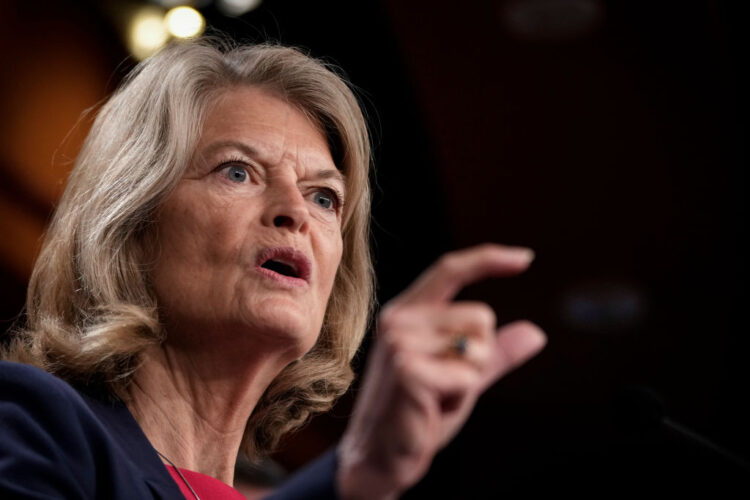
A fierce clash among Republicans erupted this week after President Donald Trump made controversial remarks suggesting that people with learning disabilities should not serve as president, prompting sharp rebukes from within his own party most notably from Sen. Lisa Murkowski of Alaska. The GOP lawmaker, whose son has dyslexia, didn’t hold back, sharply questioning whether her own child would be barred from the nation’s highest office under the president’s comments and setting off a broader debate over ability, inclusion and leadership.
On Monday, March 16, 2026, Trump spoke to reporters in the Oval Office and, while attacking his political rival California Governor Gavin Newsom, stated that a person with a learning disability should not be president. “Honestly, I’m all for people with learning disabilities, but not for my president … I think a president should not have learning disabilities,” Trump said, using the governor’s well‑known reputation for dyslexia as the target of his critique.

AD: Capeesh Restaurant
The comments reverberated quickly through political circles in Washington, but it was Murkowski’s reaction that sparked particularly sharp headlines.
The Alaska Republican a senator who has at times bucked her own party and voted to convict Trump after the January 6 Capitol attack directly confronted the ableist implication of the remark.
“Should my son not run for president?” Murkowski said when asked how she felt about Trump’s statement, adding that her son, who has dyslexia, is “one of the smartest guys I know.” She argued emphatically that having a disability should not automatically disqualify anyone from consideration for public office.

AD: Oysterian Sea Food Restaurant And Bar
Murkowski is far from alone in her discomfort with the president’s language. In recent months, other Republican lawmakers have made headlines for publicly breaking with Trump over comments or rhetoric widely viewed as disparaging toward people with disabilities or other vulnerable groups.
For example, an Indiana state senator announced he would oppose his state’s congressional redistricting plan after what he described as an ableist “slur” from the White House, citing his own daughter’s Down syndrome in opposition to comments that demeaned individuals with intellectual disabilities.
The reaction illustrates a growing tension within the Republican Party between Trump’s increasingly combative and unconventional style and traditional GOP figures who are uncomfortable with rhetoric they consider dismissive or exclusionary.
Though Republican officials have historically stressed inclusion and opportunity, Trump’s blunt comment forced some lawmakers to grapple publicly with how far political discourse should go when it touches on sensitive issues of health, disability and public service.
Democratic leaders also seized on the controversy to highlight Trump’s remarks as discriminatory and out of step with American values of fairness and equality. Governor Newsom himself responded, encouraging people with learning disabilities to see them as strengths rather than weaknesses, and reminding them not to be discouraged by remarks even if they come from the president.
With Murkowski, who represents a state known for its fiercely independent political culture, the moment underscored her long‑standing willingness to speak out against Trump even when other Republicans remain silent.
Her critique was not framed as partisan she stressed that her objection came from personal conviction and a belief that the nation should uphold the principle that leadership potential is not determined by neurological differences.
Observers in Washington say that this episode could deepen existing fractures within the GOP as the 2026 midterm elections approach and as the party continues to weigh Trump’s influence over its policy agenda and public image.
Broader Debate Over Leadership And Disability
Beyond the intra‑party fallout, the incident has ignited a wider discussion about disability and leadership in public office. Advocates argue that individuals with learning differences and other non‑visible disabilities are often unfairly underestimated or excluded from professional and political opportunities, despite their proven talents and accomplishments.
Trump’s remarks served as a stark reminder of how ableist rhetoric in politics can reinforce stigma, shaping public perceptions of competence and discouraging participation.
Experts and organisations, including the National Center for Learning Disabilities, the United Nations, and the ADD UK Leadership Academy, have emphasised that inclusive policies, awareness campaigns, and active representation are essential to ensuring people with disabilities can pursue leadership roles on an equal footing.
These efforts highlight that leadership capability is not defined by neurological or cognitive differences, and that systemic biases not individual ability often limit opportunity.
Critics of the president’s remarks stress that they undermine the achievements of many leaders who have succeeded despite, or even because of, their learning differences. Some proponents of disability advocacy point to historical figures who faced similar challenges, arguing that a range of cognitive styles can enrich leadership perspectives rather than detract from them.
At its core, the controversy has broadened beyond a personal clash to touch on fundamental questions about inclusion and equality in public life. Whether Murkowski’s criticism will spur deeper reflection within her party remains to be seen, but her blunt question “Should my son not run for president?” has become a rallying point for a broader call to reexamine how society defines capability and leadership in the 21st century.
In the current polarised political climate, the incident highlights how a single remark can provoke widespread debate not only about policy but also about the core values that underpin American democracy and the criteria by which leaders are judged.
When a sitting or former president publicly questions the suitability of individuals with learning disabilities for public office, it forces the nation to confront long-standing biases about ability, competence, and opportunity. The debate extends beyond partisanship, touching on the principles of inclusivity, equal representation, and merit-based leadership that have historically defined American governance.
Public reactions to the comment reveal the tension between personal perception and systemic barriers. Disability advocates, political commentators, and ordinary citizens alike have emphasised that leadership qualities cannot be measured solely by cognitive norms or neurotypical standards.
Instead, they argue, effective governance relies on vision, judgment, empathy, and the ability to inspire and unify communities traits that individuals with learning differences often demonstrate in abundance. The controversy also sheds light on how political rhetoric shapes public discourse, as statements from influential figures can legitimize prejudice or reinforce stigmas that affect marginalized populations long after the initial remark is made.
Moreover, the incident has prompted broader reflection on who is deemed “qualified” to hold the highest offices. It raises questions about accessibility and equity in political participation, highlighting that structural biases ranging from public perception to institutional gatekeeping continue to shape the opportunities available to aspiring leaders with disabilities.
In an era defined by heightened scrutiny, social media amplification, and instant public feedback, even a single comment can trigger nationwide discussions about fairness, representation, and the kind of leadership Americans expect.

AD: Heritage And Restaurant Lounge Bar