
By Gabriel Princewill-
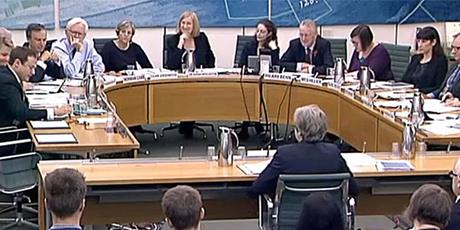
A controversial proposal to restrict the right to jury trial in England and Wales has come under intense scrutiny from MPs, amid warnings that the reforms could entrench inequality within the justice system and further erode public confidence. During the first evidence session on the Courts and Tribunals Bill, members of the House of Commons Justice Select Committee heard stark concerns from legal experts that the measures risk creating a two-tier system of justice—one in which a defendant’s past could determine not only how they are judged, but whether they are judged by a jury at all.
At the heart of the debate lies a proposal to significantly curtail jury trials for less serious offences. Under the bill, only the most serious cases would automatically qualify for trial by jury, while the majority would be decided by magistrates. The government has framed the reforms as a pragmatic response to mounting pressures on the court system, including backlogs, delays, and rising costs. However, critics argue that the implications for fairness and equality before the law are profound.

AD: Capeesh Restaurant
One of the most striking points raised during the session was the suggestion that defendants with previous convictions might, paradoxically, be more likely to receive a jury trial than those of previously good character. Legal commentators explained that individuals with criminal records are more likely to face charges that meet the threshold for jury trial under the proposed system, while first-time defendants accused of less serious offences could find themselves routed into magistrates’ courts without the option of a jury.
This dynamic, MPs were told, could invert traditional assumptions about fairness. Rather than protecting the rights of those with the least experience of the criminal justice system, the reforms could leave them with fewer procedural safeguards. The symbolism is powerful: individuals who have lived law-abiding lives may be denied access to what many regard as a cornerstone of justice—the right to be judged by one’s peers.
Witnesses warned that such an outcome risks undermining the principle that justice should not only be done, but be seen to be done. Jury trials have long been regarded as a critical mechanism for ensuring public participation in the legal process and maintaining confidence in verdicts. Removing that option for a broad swathe of cases could, they argued, create a perception that justice is being streamlined at the expense of fairness. The government’s case for reform rests heavily on the need to address systemic pressures within the courts. Backlogs in criminal cases have grown significantly in recent years, exacerbated by the pandemic and chronic underfunding. Delays in bringing cases to trial have left victims waiting for justice and defendants in prolonged uncertainty.

AD: Oysterian Sea Food Restaurant And Bar
By shifting more cases to magistrates’ courts, ministers hope to accelerate the resolution of cases and reduce the burden on the Crown Court. Magistrates’ courts are generally faster and less resource-intensive, making them an attractive option for handling lower-level offences. However, critics question whether efficiency should come at the cost of fundamental rights.
During the session, MPs probed whether alternative solutions—such as increased investment in court infrastructure, the recruitment of more judges, and the expansion of court capacity—had been sufficiently explored. Some expressed concern that the proposed changes represent a short-term fix to a long-term problem, one that could have unintended consequences for the integrity of the justice system.
Richard Atkinson, former Law Society president, said: ‘If you are a heavily convicted person, you’re likely to get a longer sentence and will get a jury trial. If you’re a person of good character with the same set of facts, you may find yourself not facing a sentence as long and you will not get a jury trial. The loss of character, the impact on your employment and ability to hold yourself high in your local community is really important, but that’s not going to be a factor in determining allocation.
Someone who’s saying “I didnt’ do it, I’ve never done anything wrong in my life” will be told “judge only”. Someone who has a string of previous convictions and told “if you did do this you’re going to prison for a long time” will get a jury. That can’t be a logical outcome when looking at justice issues.”
Central to the proposed reforms is an expanded role for magistrates, who would be tasked with hearing a greater proportion of criminal cases. Magistrates, who are typically volunteers rather than legally trained professionals, play a vital role in the justice system. However, their increased prominence under the bill has raised questions about consistency and expertise.
While magistrates are supported by legal advisers, critics argue that complex cases—even those deemed less serious—may benefit from the scrutiny of a jury. The collective deliberation of twelve jurors, drawn from diverse backgrounds, is seen by many as a safeguard against bias and error. Replacing that process with decisions made by a smaller panel of magistrates could, some fear, reduce the robustness of verdicts.
Proponents of the reforms counter that magistrates are experienced and capable, and that many cases currently heard by juries could be handled effectively at this level. They argue that the changes would allow the system to function more efficiently without compromising justice. Yet, the debate highlights a fundamental tension between expediency and principle.
Diversity and Representation Concerns
Beyond the issue of jury trials, the committee also heard concerns about the lack of diversity within the judiciary. The continued near-absence of Black judges in senior positions was described as a “red flag,” raising questions about representation and trust in the legal system.
Witnesses argued that diversity is not merely a matter of optics, but of legitimacy. A judiciary that does not reflect the society it serves may struggle to command confidence, particularly among communities that already feel marginalised. The combination of reduced jury participation and limited diversity on the bench could, critics warned, exacerbate perceptions of inequality.
MPs were told that efforts to improve diversity have been slow and insufficient, and that more proactive measures may be needed. This includes addressing barriers to entry within the legal profession and ensuring that pathways to judicial appointment are accessible to a broader range of candidates.
Historical Significance of Jury Trials
The debate over jury trials touches on deep historical roots. The right to trial by jury is often seen as a fundamental element of the British legal tradition, with origins tracing back centuries. It is closely associated with the idea of civic participation and the protection of individual liberties against state power.
For many, the prospect of limiting jury trials represents a significant departure from this tradition. Critics argue that once such rights are curtailed, they may be difficult to restore. The gradual erosion of jury trial could, they suggest, alter the character of the justice system in ways that are not immediately apparent.
Supporters of reform, however, contend that the system must evolve to meet contemporary challenges. They point out that jury trials are not universally required in all cases and that many jurisdictions operate effectively with different models. The question, they argue, is not whether jury trials are valuable, but how they can be used most appropriately within a modern system.
The proposals have sparked a lively political debate, with MPs from across the spectrum expressing a range of views. Some have voiced strong support for measures that promise to reduce delays and improve efficiency, while others have raised concerns about the potential impact on fairness and public trust.
Public reaction has also been mixed. While there is broad recognition of the need to address court backlogs, there is also a deep-seated attachment to the principle of jury trial. For many, it represents a tangible connection between the legal system and the public—a way of ensuring that justice is not administered solely by professionals, but by society as a whole.
Legal organisations and advocacy groups have been particularly vocal in their criticism, warning that the reforms could disproportionately affect vulnerable groups. They argue that individuals without legal experience or resources may be especially disadvantaged in a system that limits access to juries.
As the Courts and Tribunals Bill continues its passage through Parliament, the scrutiny of MPs is likely to intensify. The evidence session marks only the beginning of what is expected to be a rigorous examination of the proposals, with further hearings and debates to come.
The outcome of this process will have far-reaching implications for the justice system in England and Wales. At stake is not only the efficiency of the courts, but the principles that underpin them. Balancing the need for reform with the preservation of fundamental rights will be a central challenge for lawmakers.
The concerns raised during the committee session serve as a reminder that changes to the justice system are rarely straightforward. They involve difficult trade-offs and competing priorities, and their effects can resonate far beyond the courtroom. In the words of one observer, the question is not simply whether the system can be made to work more efficiently, but whether it can do so without losing the qualities that make it just. As MPs continue their deliberations, that question will remain at the forefront of the debate, shaping the future of justice for years to come.

AD: Heritage And Restaurant Lounge Bar