

By Charlotte Webster-
Billions of pounds are being squandered by the government’s Home Office on housing asylum seekers in hotels, according to a scathing report released this week by the influential Home Affairs Committee. The committee’s investigation delivers a damning assessment of the department’s response to rising demand, confirming that the projected cost of accommodation for the 2019–2029 period has dramatically tripled.
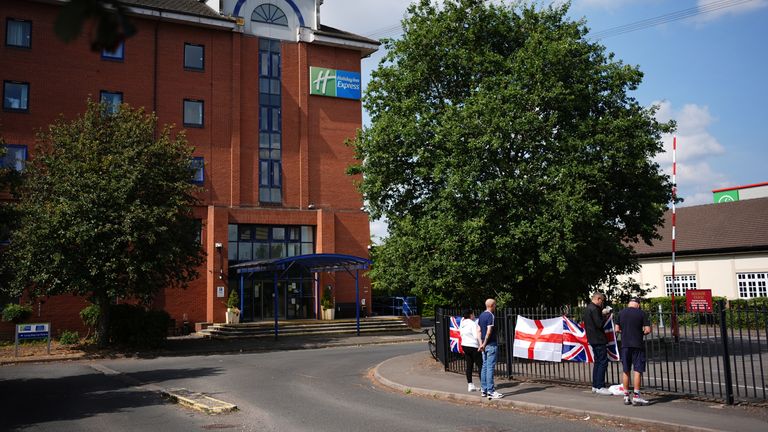
Demonstrators outside the Castle Bromwich Holiday Inn in Birmingham. Pic: PA
The initial expected expenditure of £4.5 billion has exploded into a staggering £15.3 billion liability. This unprecedented financial escalation stems directly from two major factors: a “dramatic increase” in overall demand following the COVID pandemic and the rising number of individuals arriving via small boats across the Channel. Such figures expose a fundamental failure of strategic planning at the very heart of the UK’s migration policy.

AD: Capeesh Restaurant
The report specifically criticizes the Home Office for adopting a chaotic, short-term approach instead of developing a sustainable long-term strategy. Furthermore, this chaotic response demonstrates the department has consistently failed to meet the challenges presented by the unprecedented influx.
The committee stresses that without a clear, credible plan for moving away from commercial hotels and towards alternative, cheaper accommodation, the government faces substantial risks. Primarily, they risk “under-delivery” of their promises, which consequently undermines public trust still further in the government’s ability to manage public funds effectively.
Dame Karen Bradley, who chairs the committee, did not mince words, calling for the government to “get a grip” on the system immediately to control costs and learn from its operational mistakes. She warned plainly that failing to develop a long-term strategy leaves the department “doomed to repeat them.”

AD: Oysterian Sea Food Restaurant And Bar
Ultimately, the vast scale of the Home Office Asylum Hotel Waste has forced taxpayers to absorb costs that could have been significantly mitigated through proactive planning and contract enforcement. The report underscores how repeatedly cutting corners in its response to pressure has led directly to this colossal financial burden. The primary goal remains clear: ending the housing of asylum seekers in expensive hotels by 2029.

Protests in Essex. Pic: AP
The Home Affairs Committee reserved some of its harshest criticism for the Home Office’s abysmal handling of contracts awarded to asylum accommodation providers. Shockingly, the report details that the department has failed to reclaim tens of millions of pounds in excess profits owed to the public purse.
This gross financial mismanagement involves contracts covering the decade from 2019 to 2029. This failure to fine hotels for poor performance or to claw back excessive returns from providers represents a crucial element of the systemic Home Office Asylum Hotel Waste. By failing to enforce contractual terms vigorously, the department effectively subsidized the high profits of private contractors at the expense of the taxpayer.
The contracts contained a vital 2026 break clause and are scheduled to expire fully in 2029. The committee views these deadlines as crucial “opportunities to draw a line under the current failed, chaotic and expensive system.” They urgently demand a shift toward an alternative model that offers greater effectiveness and ensures better value for money. Poor contract governance, as detailed in the report, allowed private businesses to profit excessively while the public felt the burden of increasing costs.
Dame Karen Bradley confirmed the department has consistently focused on short-term, reactive responses, a tactic that guarantees high expenditure and minimal efficiency. Instead of imposing fines or demanding better service, the Home Office simply allowed the waste to accumulate, resulting in the massive projected £15.3 billion cost. Rectifying this deep-seated issue requires immediate transparency and a wholesale revision of procurement processes to prevent continued Home Office Asylum Hotel Waste.
The damaging consequences of the Home Office’s accommodation strategy extend far beyond financial mismanagement, directly impacting social cohesion across the country. The report strongly criticised the department for its severe lack of engagement and transparency with local residents and communities, which holds legitimate concerns regarding the establishment of asylum hotels in their areas.
This vacuum of information and dialogue has dangerously allowed “misinformation and mistrust to grow,” tragically leading to tensions and sometimes instigating public disorder. Members of the committee pressed the government to prioritise closing hotels where “significant community cohesion issues” have been documented.
This includes sites like the Bell Hotel in Epping, Essex, where demonstrations flared after a migrant, Hadush Kebatu, was charged and subsequently jailed for sexual assault. This lack of engagement not only fuels divisive agendas but also critically undermines the ability of local partners to promote social harmony effectively.
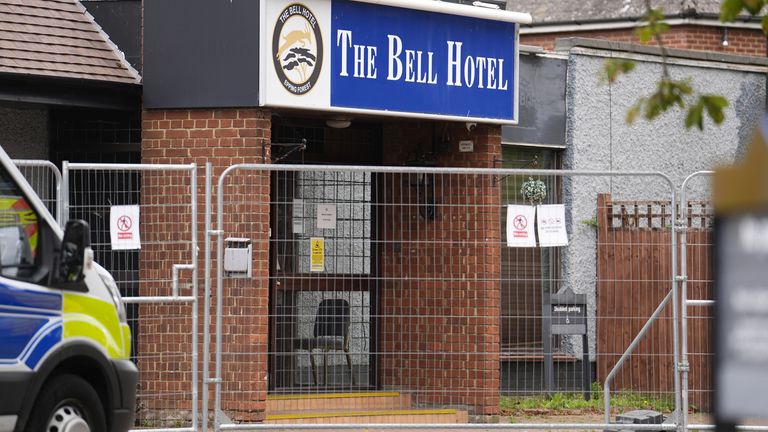
The Bell Hotel in Epping. Pic: PA
Communities Secretary Steve Reed vigorously defended the government’s current efforts, telling Sky News they were “working at pace to fix the problems we inherited.” Mr Reed highlighted efforts to expand the number of caseworkers examining asylum cases, which is a key measure for expediting decisions and reducing accommodation time.
He also pointed to active conversations within government about utilizing disused military bases and other properties as significantly cheaper alternatives to hotels. He conceded, however, that acquiring these sites, constructing the necessary accommodation, and then moving people takes time.
Despite the report’s devastating findings, the government claims it has “already saved £1 billion” by closing some hotels and slashing costs. A Home Office spokesperson reiterated this commitment, stating, “The government is furious about the number of illegal migrants in this country and in hotels,” promising to “close every single asylum hotel” to save billions.
The committee ultimately called for a future accommodation system built on fairness and flexibility, emphasizing that communication with local communities must be significantly improved to counteract the negative narrative fostered by the enduring Home Office Asylum Hotel Waste.
The Home Affairs Committee’s findings present a profound challenge to the Home Office. They demand immediate, structural change to address the spiralling £15.3 billion cost and the associated social breakdown caused by the continuing Home Office Asylum Hotel Waste.

AD: Heritage And Restaurant Lounge Bar


