
By Ben Kerrigan-
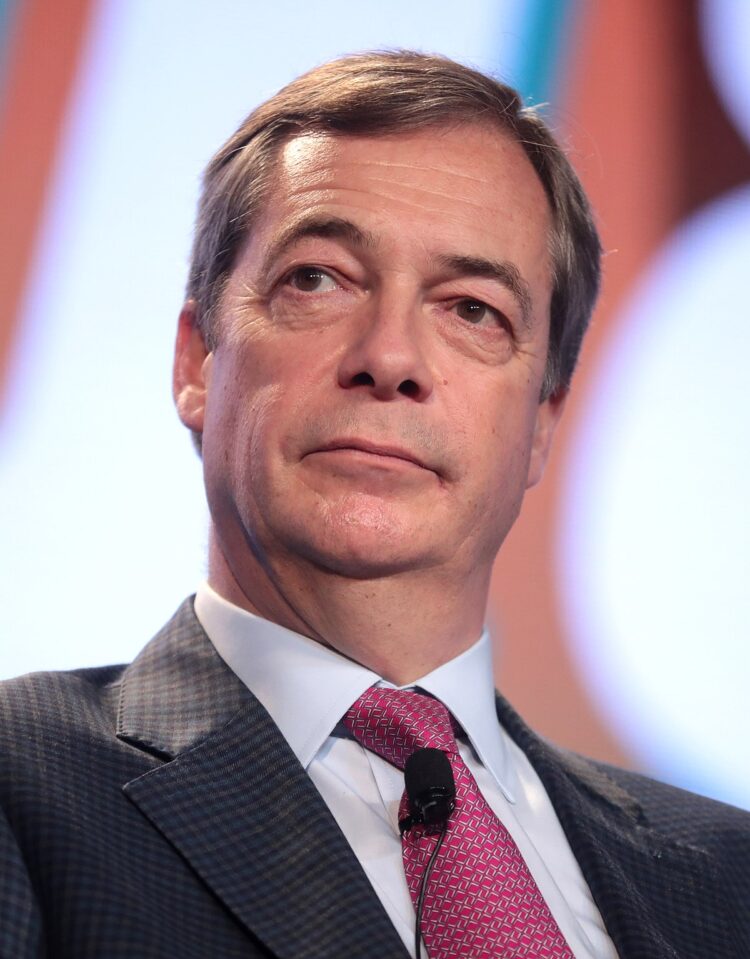
Nigel Farage’s Reform UK party has seen has won more than 300 seats by taking almost a third of seats contested for. The Green Party has won the Hackney mayoral election, ousting Labour.
Nearly 60 of the 136 council results from a sprawling set of local and regional contests pointing towards a fragmented landscape. Results so far indicates major losses in Tameside, Hartlepool and Wigan, with over a thousand Labour seats poised to be lost in what is building up to be a major blow for the labour party..

AD: Capeesh Restaurant
While large parts of the country were still waiting for declarations — including all results from Scotland and Wales — the emerging trends across England suggested a political system continuing to splinter in ways that could reshape the national debate long before the next general election.
Unlike a general election night, where the shape of the outcome is often clear by dawn, this year’s patchwork of contests offered a slower and more uneven flow of results. Councils declared at different times, mayoral races remained unresolved in several regions, and many voters across Britain had not yet seen the final outcome in their areas. Yet despite the incomplete nature of the count, analysts and party strategists were already drawing conclusions from the early data.

AD: Oysterian Sea Food Restaurant And Bar
At the centre of the story was Reform UK, which appeared to have translated growing national frustration into tangible electoral gains. The party was leading in overall vote share in the areas declared so far, echoing the momentum it demonstrated during last year’s local elections. Reform candidates were not merely posting symbolic performances; they were winning seats in meaningful numbers, capturing roughly a third of the council positions declared in early counting and establishing themselves as a serious force in English politics.
The scale of the Reform advance immediately reignited debate about the long-term stability of Britain’s traditional two-party system. For decades, Westminster politics has largely revolved around Labour and the Conservatives alternating in power, with smaller parties exerting influence only in particular regions or moments of national upheaval. But the latest results painted a far more fractured picture, with support splintering across at least five major political forces.
Behind Reform came a crowded field made up of Labour, the Conservatives, the Liberal Democrats and the Green Party of England and Wales, each competing for slices of an increasingly divided electorate. No party appeared close to establishing dominant popularity, and the absence of a clear national frontrunner suggested deep voter uncertainty about the country’s political direction.
The early results for Labour were especially troubling. The governing party entered the elections defending more seats than any other major party, making losses inevitable to some extent. However, the scale of the setbacks quickly became difficult to dismiss as routine midterm turbulence.
Labour had already lost a little under half of the seats it was attempting to defend in the declared areas, prompting immediate questions about whether voter dissatisfaction with the government was setting in faster than party strategists had anticipated.
Senior Labour figures moved swiftly to frame the results in the context of historical precedent. The party’s core argument was familiar: governments often perform poorly in local elections held midway through a parliamentary term, and such contests are not always reliable predictors of what will happen at the next general election.
There is historical evidence to support that claim, at least in part. Midterm elections frequently provide voters with an opportunity to register protest votes against governing parties without directly changing national leadership. Local contests can also be shaped by regional issues, turnout disparities and tactical voting patterns that do not necessarily carry over into a nationwide campaign.
Yet critics inside and outside Labour pointed out that the comparison has limits. In several previous electoral cycles — including 2011, 2015, 2017 and 2021 — governing parties managed either to hold steady or improve their local election position rather than suffer major reversals. What made the current results more alarming for Labour was not simply the fact that the party was losing seats, but the apparent speed and breadth of the decline.
The losses also arrived against a backdrop of broader anxiety about public services, economic pressures and political trust. Although Labour returned to power promising renewal and stability, many voters continue to express frustration over living costs, stretched healthcare systems, housing shortages and sluggish economic growth.
Opposition parties have sought to channel that frustration in different ways, but Reform in particular appears to be benefiting from a growing sense among sections of the electorate that neither of the traditional governing parties fully represents their concerns.
The picture remained complicated and, in some respects, equally worrying. While attention focused heavily on Labour’s setbacks and Reform’s gains, the Conservatives themselves were not yet showing signs of a sweeping recovery. Instead, they appeared to be part of the “trailing pack” behind Reform, competing in an increasingly crowded political field where support is fragmenting rather than consolidating.
That dynamic raises difficult strategic questions for both major parties. Reform’s rise threatens to pull votes disproportionately from traditional Conservative supporters in some regions, particularly among voters concerned about immigration, national identity and distrust of Westminster institutions. But Labour, too, appears vulnerable to voter apathy and fragmentation, especially in areas where support for the Greens or Liberal Democrats is growing.
The Liberal Democrats continued to position themselves as beneficiaries of disillusionment with both larger parties, particularly in suburban and rural areas where tactical anti-government voting remains strong. Meanwhile, the Green Party of England and Wales showed further signs of expanding its local government footprint, capitalising on younger voters and environmentally focused constituencies increasingly willing to break with traditional party loyalties.
Taken together, the results underscored a broader transformation underway in British politics. The old assumptions of stable party coalitions and predictable electoral swings are becoming harder to sustain. Instead, Britain appears to be moving toward a more fragmented political environment in which voter allegiances are fluid, regional differences are sharper and smaller parties wield greater influence.
Political scientists have increasingly argued that the fragmentation visible in recent elections reflects deeper structural changes rather than temporary protest voting. Traditional class-based voting patterns have weakened considerably over the past two decades, while debates over Brexit, identity, immigration and cultural values have reshaped political loyalties in ways that cut across older party lines.
The rise of Reform UK is perhaps the clearest expression of that shift. Building on themes that emerged during the Brexit referendum years, the party has sought to present itself as an anti-establishment alternative to what it portrays as a disconnected political class. Its electoral growth suggests that significant portions of the electorate remain receptive to populist and insurgent political messaging even after the formal completion of Brexit.
Party officials from Reform hailed the early results as evidence that they are becoming a permanent fixture of British politics rather than merely a protest movement. Supporters celebrated gains that only a few years ago would have seemed improbable for a party operating outside the traditional Westminster power structure.
However, challenges remain for Reform despite its momentum. Translating strong local election performances into parliamentary success under Britain’s first-past-the-post electoral system is notoriously difficult. Smaller parties can accumulate substantial national vote shares while still struggling to win large numbers of seats in the House of Commons. Reform’s leadership will therefore need to demonstrate that its support is geographically concentrated enough to become electorally decisive in future general elections.
Labour strategists, meanwhile, sought to calm nervous MPs and activists by insisting that local election cycles often produce distorted results. They argued that voters frequently use local contests to send messages without intending to change national government and warned against overinterpreting incomplete early data.
Privately, however, there was growing acknowledgement within Labour circles that the results could not simply be dismissed. Losing nearly half of defended seats, even in difficult electoral terrain, represented a serious political warning sign. The concern for ministers is not merely the numerical losses themselves, but the perception they create of a government struggling to maintain momentum.
The slower pace of declarations also added an unusual layer of uncertainty to the political atmosphere. With no results yet from Scotland or Wales and several English contests still undeclared, party headquarters across Westminster remained cautious about issuing definitive conclusions. Election analysts repeatedly stressed that the national picture could still evolve significantly once the full set of results became available.
Even so, the trends already visible appeared unlikely to disappear entirely. Reform’s advance, Labour’s losses and the broader fragmentation of voter support were emerging consistently across multiple regions. Whether those patterns deepen or stabilise in the coming hours may shape political strategy for months to come.
The elections also highlighted the increasingly complex challenge facing pollsters and campaign planners attempting to understand modern British voting behaviour. In an era of fragmented loyalties and volatile public opinion, local dynamics can shift rapidly and unpredictably. Voters who once maintained long-standing party affiliations now appear far more willing to switch allegiance between elections or divide their support across different levels of government.
That volatility creates both danger and opportunity for all parties involved. Electoral coalitions for governing parties can weaken faster than expected if public confidence falters. For insurgent movements like Reform, it opens pathways to rapid growth that might previously have been impossible under Britain’s entrenched political traditions.
As counting continued into the day, attention increasingly turned to what the results might mean for the wider political landscape heading toward the next general election. While local elections do not offer a direct forecast of national outcomes, they often shape political narratives, influence leadership debates and alter perceptions of momentum.
At the very least, the early picture suggested that Britain’s political system is entering another period of significant instability and transition. The electorate appears restless, divided and increasingly resistant to traditional political loyalties. No party currently commands overwhelming national enthusiasm, and the fragmentation visible in the results may become one of the defining features of British politics in the years ahead.
The final outcome of this patchwork electoral test remains incomplete. More results are still to come, and Scotland and Wales have yet to weigh in. But even before the full picture emerges, one conclusion is already difficult to avoid. Britain’s political landscape is becoming more fractured, more competitive and far less predictable than the era of stable two-party dominance that once defined Westminster politics.

AD: Heritage And Restaurant Lounge Bar
-
Share On
- Categories
- Date