
By Gavin Mackintosh-
Ten years after the referendum that redrew Britain’s political map and altered its place in the world, one of the country’s most internationally minded institutions is reflecting on a night that changed everything.
The London School of Economics (LSE)saw Brexit as merely a political event to be observed from a distance. It was a moment that struck at the heart of what many within the institution believed Britain had become after decades of European integration. The referendum campaign challenged assumptions about identity, globalisation, expertise and openness that had shaped not only the university itself but much of Britain’s academic establishment.
Now, a decade on from the historic vote to leave the European Union, former Head of the European Institute, Kevin Featherstone, has offered a revealing glimpse into how the institution navigated one of the most divisive political moments in modern British history and how Brexit continues to shape the country’s culture, politics and relationship with Europe.
In the years leading up to the June 2016 referendum, LSE had become one of the world’s most international universities. Students arrived from every corner of Europe, academics moved freely between countries, and the idea of Britain existing outside the European Union seemed to many within higher education not only unlikely but deeply counterintuitive.
As Featherstone recalls, the overwhelming mood among staff and students was one of support for continued membership. “In many ways the campaign for Brexit represented the antithesis of what LSE has felt itself to stand for,” he reflected. “Openness and diversity, with a strong internationalist orientation.” That sentiment was not unique to LSE. Universities across Britain found themselves at the centre of a referendum campaign that often placed experts, institutions and traditional authorities under intense scrutiny. Economists warned of risks to growth.
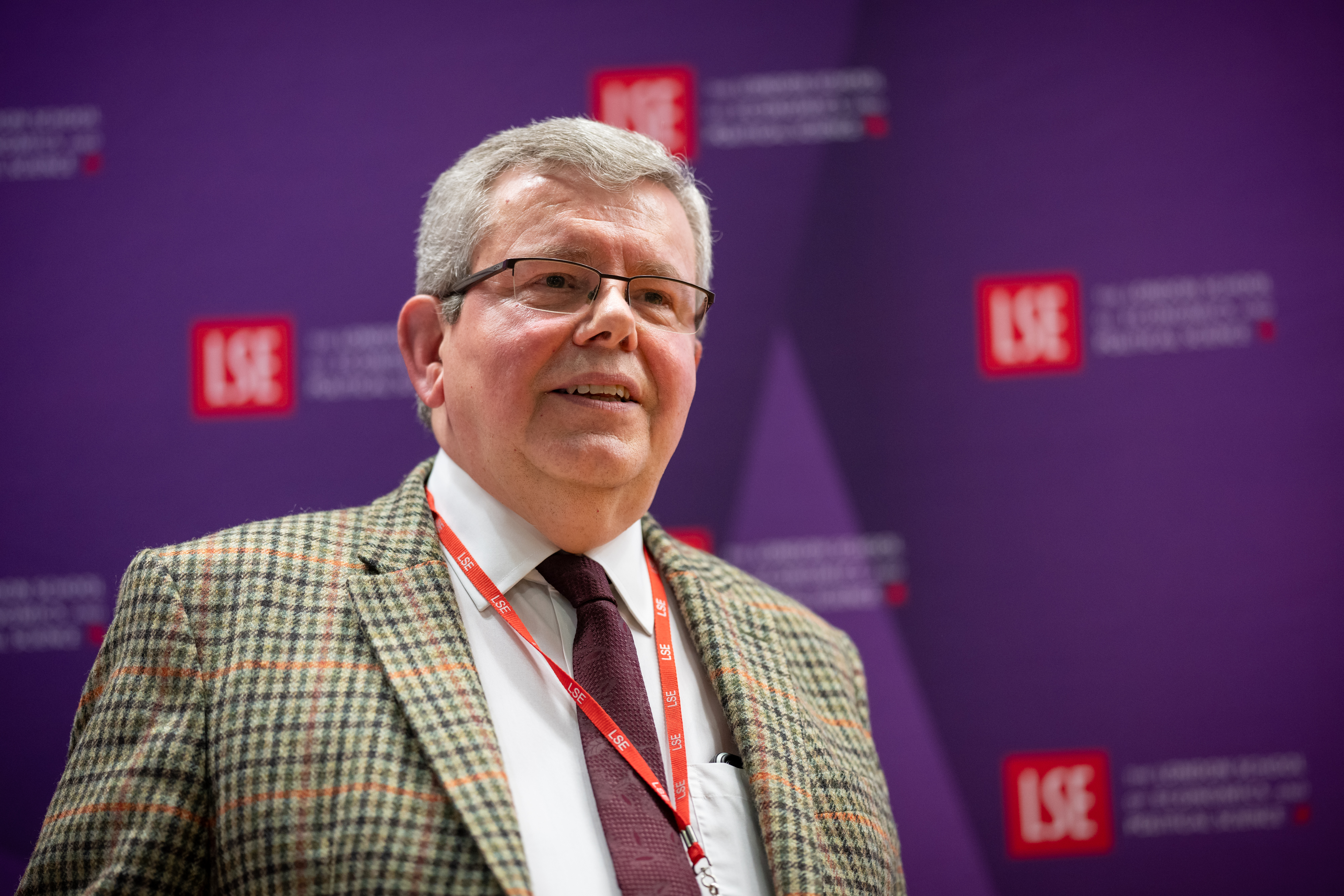
Former Head Of European Institute: Kevin Furtherstone Image:LSE
Universities warned about the implications for research collaboration, student mobility and international recruitment. But many voters increasingly viewed such warnings with scepticism. The campaign exposed a widening gulf between parts of Britain’s professional and academic classes and sections of the electorate who felt disconnected from the benefits of globalisation and European integration.
That tension was felt acutely at LSE, Featherstone recalls . ”The institution found itself walking a delicate line between providing evidence-based analysis and avoiding accusations of political campaigning. The atmosphere became so sensitive that the Electoral Commission reportedly contacted the university to examine whether public events organised before the referendum campaign had been formally announced could be construed as favouring one side of the debate. Questions were even raised in Parliament”.
One Conservative MP, who would later become a government minister, reportedly requested details of how the politics and economics of the European Union were taught within the university curriculum. The scrutiny reflected the febrile political climate that had engulfed Britain. Universities, long accustomed to presenting research and evidence as part of public debate, suddenly found themselves portrayed by some campaigners as participants rather than observers.
Before the official campaign began, the university launched its Commission on the Future of Britain in Europe. Drawing together experts from across multiple disciplines, the initiative sought to assess the likely consequences of Britain leaving the European Union. The model mirrored previous policy commissions conducted by the university.
Featherstone told The Eye of Media.Com: ”Teams of specialists examined eleven different policy areas, weighing the evidence and evaluating the risks associated with withdrawal. Their conclusion was cautious but clear. “The evidence of this Report is measured,” the commission concluded. “It suggests the least risky vote is for the UK to remain in the European Union.” Such conclusions reflected the broad consensus among economists and policy specialists at the time.
Yet they also highlighted one of the defining features of the referendum itself. The growing rejection of expert opinion as a decisive factor in political decision-making. If the campaign represented one defining chapter of Brexit, referendum night became another. As polling stations closed on 23 June 2016, LSE hosted one of the most prominent public events in London. Organised by European Institute academics Iain Begg and Sara Hobolt, the gathering attracted political scientists, economists, journalists and members of the public eager to witness history unfold.
‘The panel featured an impressive range of voices, including Patrick Dunleavy, Matt Goodwin, Anand Menon, Simon Hix, Alan Sked and Tony Travers. Tickets sold rapidly, turning the university’s Sheikh Zayed Theatre into one of the capital’s focal points for election-night analysis. International media descended on the campus. With no official national referendum reporting centre, broadcasters and foreign correspondents saw the university as a natural venue from which to interpret events. Television crews lined corridors. Journalists conducted live interviews from the lobby.
”Academics found themselves speaking simultaneously to audiences across Europe, North America and beyond. Featherstone remembers the chaos and excitement of the evening.
At one point, while being interviewed by Greek television, he found himself jostled by colleagues rushing between media appearance. Inside the packed theatre, legal scholar Conor Gearty guided audiences through the incoming results as constituencies declared through the night.
Like many watching, those gathered believed that Remain would ultimately prevail. “We went to bed believing Remain had narrowly won,” Featherstone recalled. By morning, Britain had voted to leave. The shock reverberated far beyond Westminster. For universities, the result raised immediate questions. Would European students continue to choose Britain? Would academic partnerships survive?
‘What would happen to research funding and international collaboration? Could institutions built around the free exchange of ideas continue to thrive outside the political framework that had underpinned much of European integration? In the months that followed, LSE transformed itself into one of the country’s principal centres for Brexit analysis.
Together with Tony Travers, Featherstone helped establish a university-wide programme examining Britain’s transition out of the European Union and the policy consequences that would follow. Private seminars brought together leading British and European figures. Civil servants attended executive training programmes designed to help government departments understand the implications of Brexit. A dedicated Brexit blog quickly became one of the university’s most successful public-facing initiatives.
‘A new course examining the politics of Brexit was introduced almost immediately and public events attracted ministers, diplomats, academics and journalists seeking serious discussion at a time when much of the country appeared exhausted by the subject. Indeed, one television journalist reportedly told then LSE Director Minouche Shafik that the university had become virtually the only place where a serious national conversation about Brexit was taking place. That observation highlights one of the referendum’s enduring legacies. While Brexit dominated headlines for years, many Britons became reluctant to discuss it openly.
”Families had been divided and friendships had been strained. Communities had split along lines of age, education, geography and identity. For many, Brexit became less a policy question than a cultural fault line.
Within institutions such as LSE, debate continued because the consequences continued. Contrary to some fears, the university did not experience an immediate collapse in applications from European students. Interest remained strong, even as new visa regimes and higher tuition costs complicated recruitment. Instead, Brexit encouraged adaptation.
The European Institute broadened its perspective, shifting from a primary focus on Britain’s place within Europe towards a wider examination of Europe and the world. New international partnerships emerged, including dual-degree programmes with institutions in China, Italy and the United States. More broadly,
Brexit accelerated LSE’s transformation into an increasingly global institution. Perhaps the most profound changes have been cultural rather than institutional. According to Featherstone, one of the most striking legacies of Brexit is the way Britain now talks about Europe. Before the referendum, Europe was frequently discussed as a shared political space in which Britain participated. Since Brexit, public discourse increasingly refers to Europe as something external—almost foreign.
The shift may appear subtle, but its significance is considerable. Britain remains geographically European. Its economy remains deeply interconnected with the continent. Its security, trade and diplomatic interests continue to be tied closely to neighbouring states. Yet the language of public debate increasingly positions Europe as an “other.” It is this cultural dimension of Brexit that many academics regard as particularly important.
On Tuesday, a Professor of European Politics and Foreign Affairs at Kings College London further analyses Brexit, stressing exaggerated claims before Britain’s referendum of 2016, insisting that the short term treasury forecast was widely wrong, and that voters did not get what they were promised, adding that the EU is now weaker because it lost one of its largest member states which was a significant contributor to its economic heft and a country with unique military-diplomatic assets. He goes on to say that ”if Donald Trump alienates us still further and if it starts to look like the special relationship really doesn’t have a future, that puts pressure on us to look elsewhere”.
Although economic statistics can be measured and trade flows can be quantified. GDP forecasts can be debated, but questions of identity, belonging and political culture often prove more enduring. Indeed, some observers argue that Brexit’s most significant legacy may not be found in customs arrangements or regulatory frameworks but in the way Britons understand themselves and their country’s place in the world.
That reality ensures Brexit remains far from a settled historical event. A decade after the referendum, the questions it raised continue to shape research, teaching and public debate.
Britain’s relationship with Europe remains under constant discussion. Political parties continue to wrestle with the consequences of the vote.
Younger generations are growing up in a country whose international orientation has been fundamentally altered. Whilst LSE reflects on the turbulent events of June 2016, one lesson stands out. Brexit was never simply a vote about membership of a political union. It was a moment that forced Britain to confront competing visions of its future, its identity and its place in an increasingly interconnected world. Ten years on, that conversation is still unfinished.
-
Share On
- Categories
- Date