
By Tony O’Reilly-
The UK Government is poised to issue a long-awaited formal apology to survivors of historic forced adoptions, marking a significant moment in Britain’s reckoning with one of the most painful chapters in its post-war social history.
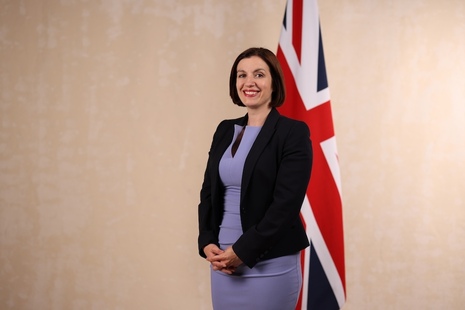
Education Secretary Bridget Phillipson(pictured) has confirmed that the Government will make a “full apology on behalf of the state” to those affected by the practice, which saw an estimated 185,000 children taken from unmarried mothers and adopted between 1949 and 1976 in England and Wales. The announcement represents a major shift in official policy and follows years of campaigning by survivors, adoptees, advocacy groups and parliamentarians who have argued that the state played a direct role in a system that inflicted lifelong trauma on thousands of women and children.

AD: Capeesh Restaurant
Roughly 185,000 children were taken from unmarried mothers and forcefully adopted between 1949 and 1976 in England and Wales.
Speaking before the Education Select Committee, Ms Phillipson described forced adoption as a “shameful period” in British history and pledged that those affected would finally receive the recognition they have sought for decades.
“The Prime Minister will have more to say on this shameful period in our history, reflecting the gravity of what has happened,” she told MPs.

AD: Oysterian Sea Food Restaurant And Bar
“But here and now, let me say to all of those affected, you will get the apology that you so profoundly deserve.”
Her remarks were welcomed by campaigners who have long argued that previous expressions of regret fell short of acknowledging the state’s role in facilitating forced separations between mothers and their children.
Hidden National Tragedy
For much of the post-war period, unmarried pregnancy carried a profound social stigma. Women who became pregnant outside marriage frequently faced intense pressure from families, churches, medical professionals and social services to surrender their babies for adoption.
Many were sent away to mother-and-baby homes, where they were isolated from their communities and encouraged—or, according to survivors, coerced—into giving up their children.
Numerous women have recounted being told they were unfit to raise their babies, denied meaningful alternatives, and pressured into signing consent forms under emotional distress. Others describe having little understanding of the legal consequences of the documents they were asked to sign.
The impact on adoptees has also been profound. Many spent decades searching for their biological families, while mothers often endured lifelong grief, trauma and unanswered questions about the children they lost.
Although adoption itself was lawful, critics have long argued that the manner in which many adoptions occurred amounted to systemic coercion and represented a grave violation of women’s rights and family life.
The Government’s forthcoming apology follows years of mounting pressure from Parliament and human rights organisations. A landmark report by Parliament’s Joint Committee on Human Rights (JCHR) in 2022 concluded that thousands of unmarried women had effectively been “railroaded” into unwanted adoptions and called for a formal state apology.
The committee found compelling evidence that women were subjected to significant social and institutional pressures that deprived them of genuine choice. It urged ministers to acknowledge the suffering caused and to take meaningful steps toward redress. However, the previous Conservative Government stopped short of issuing a formal apology.
Responding to the committee’s recommendations in 2023, ministers said they were sorry “on behalf of society” for the way women had been treated but argued that a formal state apology was inappropriate because the Government did not believe the state had actively supported the practice.
That position drew strong criticism from campaigners and parliamentarians alike.
The JCHR described the response as “disappointing,” arguing that evidence clearly demonstrated state involvement through social services, public institutions and government-regulated adoption systems. The current Government’s approach appears to reflect a broader acceptance that public authorities were deeply intertwined with the practices that enabled forced adoption.
Earlier this year, Education Minister Josh MacAlister acknowledged that the state had played a significant role in sustaining the system.
Giving evidence to MPs, he noted that children were removed from mothers in institutions that were sometimes state-run, under systems overseen by social workers employed by public authorities. He also highlighted how official practices reinforced the prevailing social attitudes of the era, allowing the system to continue for decades.
That acknowledgement has been viewed by campaigners as an important departure from previous government positions that sought to draw a distinction between societal pressures and state responsibility. While survivors have welcomed the prospect of a formal apology, many argue that words alone will not be enough.
In a report published earlier this year, the Education Committee recommended that any apology should encompass a broader historical period than the commonly cited 1949–1976 timeframe.
MPs heard evidence suggesting that coercive adoption practices pre-dated 1949 and continued after the passage of the Adoption Act 1976, which introduced reforms intended to strengthen safeguards and consent procedures.
The committee also called for practical measures to support survivors and adoptees, including improved access to records and specialised trauma-informed services to help families navigating reunions and contact after decades of separation.
Campaigners have repeatedly highlighted the emotional difficulties faced by mothers and adoptees attempting to reconnect after many years apart, often with little professional support.
One of the most contentious issues remains whether financial compensation should accompany the apology. The Education Committee stopped short of recommending an immediate compensation scheme but urged ministers to conduct a comprehensive review of international approaches to redress. MPs pointed to developments in other jurisdictions where governments have gone beyond symbolic apologies.
In the Republic of Ireland, legislation introduced in 2022 established financial compensation for eligible survivors of mother-and-baby institutions. Northern Ireland has also moved toward establishing redress arrangements for survivors, while Australia has implemented various compensation and support measures in response to historical forced adoption practices.
The committee warned against what it described as “symbolic or incomplete action,” urging ministers to develop a survivor-led response that addresses the long-term consequences of forced adoption. For many affected families, the debate over compensation is not solely about money but about recognition of the enduring harm caused by policies and practices that separated mothers from their children.
A Long Awaited Moment
The forthcoming apology will place Westminster alongside the devolved governments in Scotland and Wales, both of which have previously issued formal apologies to those affected by forced adoption. The announcement represents a significant milestone for survivors who have spent decades campaigning for acknowledgement,
However, many stress that the apology should be viewed as the beginning rather than the end of the process. The legacy of forced adoption continues to shape lives across Britain. Mothers who lost children still carry the trauma of separation. Adoptees continue to search for answers about their origins and identities. Families remain divided by decisions made under social pressures that many now regard as profoundly unjust.
The Government faces a broader challenge: as it seeks to confront this painful history, that is ensuring that recognition of past wrongs is accompanied by meaningful support, access to records, and a lasting commitment to those whose lives were irrevocably altered by one of the most controversial social policies of the twentieth century.
The apology will be historic, and may become a catalyst for deeper healing and justice may depend on what follows next.

AD: Heritage And Restaurant Lounge Bar