
By Ben Kerrigan And Sheila McKenzie-
King Charles III recently made a decisive and historic choice, confirming the formal process to strip Prince Andrew of his royal titles and require him to vacate the Royal Lodge. This forceful action, announced by Buckingham Palace, transcended a mere family dispute; it was a fundamental necessity for the Monarchy’s Modernization.
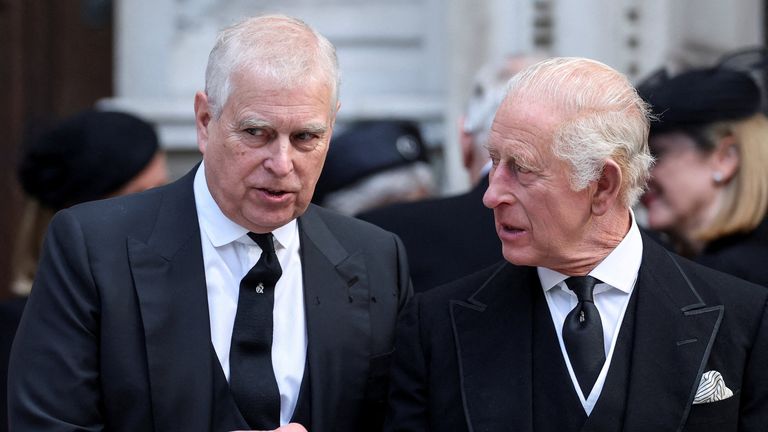
Andrew with King Charles earlier this year. Pic: Reuters
The King’s strategy is clear: he must actively and publicly demonstrate that the institution’s integrity takes precedence over the comfort of any individual member. Andrew’s association with convicted paedophile Jeffrey Epstein had created an unmanageable crisis of confidence, demanding a clean and final break to protect the long-term standing of the Crown.

AD: Capeesh Restaurant
The decision was carefully calibrated to address years of mounting public indignation. The former Prince was widely seen as a damaging liability. His continued presence and status directly undermined the core values the new monarch seeks to promote. This final censure, which effectively removes Andrew from his public and residential entitlements, allows the monarchy to continue its urgent journey toward Monarchy’s Modernization.
The King will personally fund his brother’s private accommodation at Sandringham. This move ensures Andrew remains financially supported while symbolically severing the financial link to the taxpayer, a critical public relations win.
A clear signal of the King’s governing priorities is evident from the steps he is taking. He prioritized public morality and the strategic goal of a streamlined monarchy over traditional family sentiment. The decision was not taken lightly but represented the inescapable political reality of the 21st century.

AD: Oysterian Sea Food Restaurant And Bar
The King acted not only as Andrew’s brother but also as the sovereign protector of the Crown’s reputation. Such a firm action was imperative to prevent the scandal from continually eroding the national respect essential for the ongoing success of the Monarchy’s Modernization.
Public opinion reached a critical boiling point over the scandal’s financial dimensions, adding immense pressure to the Crown. Prince Andrew had resided in the massive 30-room Royal Lodge on the Crown Estate, paying only a symbolic “peppercorn rent.”
This arrangement became a lightning rod for criticism. Citizens angrily questioned why a disgraced, non-working royal should occupy such a valuable, publicly maintained asset. The perception of public funds subsidizing an individual linked to such serious allegations was politically toxic.
The ongoing controversy was continuously fuelled by damaging leaks and renewed media scrutiny. These reports constantly reminded the public of Andrew’s past indiscretions, his disastrous BBC interview, and his out-of-court settlement with Virginia Giuffre.
The family of Ms. Giuffre, who spoke out powerfully following the King’s decision, emphasized the global scale of the issue. They proclaimed that “an ordinary American girl… brought down a British prince,” underscoring the shift in power from inherited status to public accountability. The relentless media focus meant King Charles was left with no choice but to terminate the association completely.
Consequently, the King moved to eliminate the financial embarrassment. Removing Andrew from Royal Lodge resolves the issue of subsidized housing. It projects a crucial image of fiscal responsibility and accountability. This step is a vital component of the King’s effort towards Monarchy’s Modernization. It sends an unmistakable message that entitlement without service is unacceptable in the contemporary monarchy.
The King’s actions align perfectly with his long-articulated strategic goal of achieving Monarchy’s Modernization through a “slimmed-down” institution. This vision centres on having fewer, high-performing royals who actively demonstrate value to the nation. Prince Andrew’s removal decisively eliminates a major distraction and allows the focus to return to the core working family members. This focus is essential for securing the Crown’s relevance in a rapidly changing world.
The decision also solidifies the position of the heir, Prince William, who reportedly desired a rapid and final resolution to the matter. William, in particular, is concerned with projecting an image of stability and ethical leadership for his own generation and family. The definitive action on Andrew supports William’s future reign and reinforces the institutional hierarchy. Although Andrew technically remains eighth in the line of succession, his constitutional significance is effectively zero.
Lord Chancellor David Lammy will execute the final constitutional step, formally removing Andrew from the peerage roll. This bureaucratic act finalizes the constitutional severing. However, royal commentators confirm that even his place in the line of succession is meaningless. As commentator Alastair Bruce explained, Parliament remains sovereign.
The legislature holds the ultimate authority to determine who ascends to the throne. Therefore, the removal of Andrew’s titles represents a complete and irreversible end to his public royal life, successfully advancing the critical goal of the Monarchy’s Modernization.

AD: Heritage And Restaurant Lounge Bar


