
By Theodore Brown-
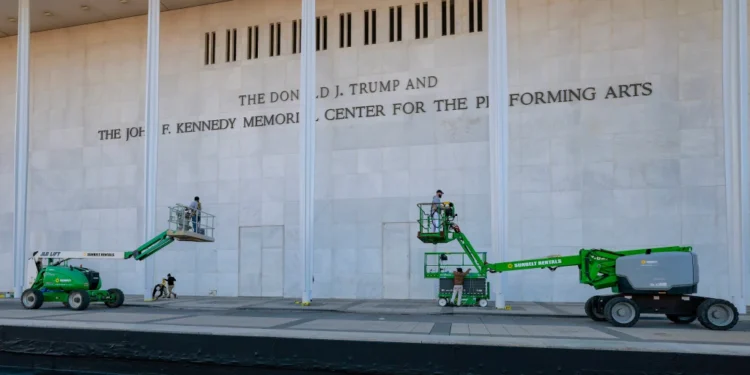
The Kennedy Center in Washington, D.C. is intensifying its effort to persuade lawmakers, donors, and the public that its iconic building is in urgent need of a comprehensive renovation, using a highly visible campaign of guided tours, technical walkthroughs, and targeted briefings to showcase what it describes as decades of structural wear and infrastructure decline.
The initiative comes at a politically sensitive moment for the institution, which is preparing for a planned multi-year closure while simultaneously facing criticism that the scale of the proposed overhaul may be driven as much by politics and institutional restructuring as by physical necessity.

AD: Capeesh Restaurant
At the center of the campaign is a deliberate effort by Kennedy Center leadership to move the conversation from abstract assessments to direct observation.
Rather than relying on engineering reports or internal audits alone, officials are now physically guiding congressional staff, donors, and other stakeholders through areas of the building that they say illustrate the severity of its condition. The message is clear: the problems are not cosmetic or isolated, but embedded in the structure itself.
The most visible part of the Kennedy Center’s strategy is a series of tours led by its new leadership, including executive figures who are presenting the building’s condition as evidence of urgent need.

AD: Oysterian Sea Food Restaurant And Bar
Visitors are shown signs of water intrusion, deteriorating expansion joints, aging marble, and worn exterior materials, with additional attention given to behind-the-scenes infrastructure such as HVAC systems, parking structures, and loading docks. These spaces, rarely seen by the public, are being used to underscore what officials describe as systemic aging across the facility.
The tours began during a congressional recess and have already included bipartisan groups of congressional staff, as well as representatives connected to Washington’s city administration. According to reports, the outreach is designed to ensure that lawmakers responsible for oversight and funding have firsthand exposure to the conditions the institution says justify a full-scale renovation and extended closure.
Kennedy Center leadership has framed the initiative as a transparency effort, arguing that public debate over the renovation has been shaped by speculation rather than direct inspection of the building’s condition.
Through bringing decision-makers into mechanical rooms, service corridors, and structural areas, officials hope to strengthen the case that piecemeal repairs would be insufficient to address long-standing degradation.
The broader context, however, has made the effort more contentious. The planned two-year closure set to begin in July has already sparked political debate and legal challenges from preservation groups who argue that any major reconstruction should undergo stricter review processes and clearer congressional authorization.
Critics of the plan say that while maintenance needs in a decades-old public building are expected, the framing of the structure as approaching systemic failure may be overstated.
Some preservation advocates argue that the emphasis on dramatic deterioration risks overshadowing the fact that many issues inside the building are consistent with routine aging infrastructure found in large public venues across the country.
Even so, Kennedy Center officials continue to emphasize that the building’s condition reflects not only age but also decades of heavy use, evolving technical demands for modern performances, and the increasing cost of maintaining legacy systems originally designed for a different era of cultural production.
While the Kennedy Center advances its case for renovation, the debate has increasingly moved beyond engineering concerns into the realm of politics and governance.
It highlights how the planned closure and reconstruction have become closely tied to questions of institutional control, board authority, and political influence over one of the United States’ most prominent cultural landmarks, raising concerns about how decisions over its future are being shaped at the highest levels.
The overhaul is part of a broader wave of high-profile building and infrastructure decisions in Washington that reflect shifting political priorities as much as technical or architectural needs.
The closure has intensified national debate over public stewardship and responsible management of federally significant cultural institutions, framing the issue as one of accountability as much as renovation
It similarly underscores how the project reflects wider questions about how major cultural assets are funded and governed, especially when long-term closures and large-scale reconstructions require political and public approval.
Recent reporting highlights that the renovation plan has already triggered legal action from preservation organisations, which argue that the scale of the proposed changes may exceed what is permitted under federal preservation law governing the site.
These groups contend that significant reconstruction of the building should require formal approvals and environmental and architectural reviews before any long-term closure proceeds.
The Kennedy Center itself is undergoing internal restructuring as it prepares for the transition period leading into the planned shutdown. Staffing adjustments and organizstional changes have been reported across multiple departments, reflecting the institution’s effort to align operations with the demands of a prolonged closure and eventual reopening phase.
Supporters of the renovation argue that the scale of intervention being considered is necessary to preserve the Kennedy Center’s role as a national cultural hub.
They point to the building’s age, the complexity of its performance infrastructure, and the need to upgrade systems that support modern productions. Without substantial investment, they warn, the institution risks falling behind global standards for major performing arts venues.
Yet the controversy surrounding the project reflects a deeper tension about what the Kennedy Center represents. Once widely regarded as a largely apolitical cultural institution, it has become a focal point for debates about governance, public funding, and the relationship between cultural infrastructure and political influence.
That shift has intensified scrutiny of whether the renovation is primarily a response to physical deterioration or part of a broader institutional transformation.
The Kennedy Center is attempting to solidify support by making its case as tangible as possible inviting observers to see, touch, and assess the building’s condition firsthand. Whether that strategy ultimately persuades skeptics or further fuels debate may determine not only the future of the renovation, but also the future identity of one of America’s most prominent cultural landmarks.

AD: Heritage And Restaurant Lounge Bar