
By James Simons-
Hundreds of asylum seekers have been moved out of government-funded hotels and into army barracks as part of a major restructuring of the UK’s asylum accommodation system, the Home Office has confirmed, in a decision that underscores growing political pressure to end the long-running use of hotels for refugee housing.
The announcement includes the closure of 11 asylum hotels across England, Scotland and Northern Ireland, with further closures expected in the coming weeks.

AD: Capeesh Restaurant
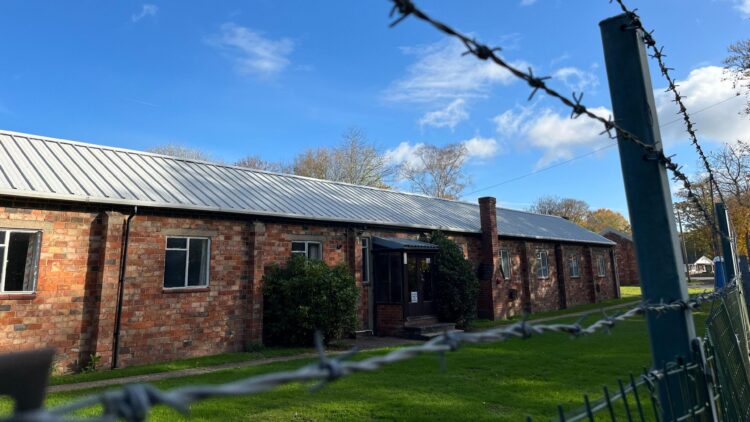
Around 350 asylum seekers have already been transferred to the Crowborough military training camp in East Sussex, where officials describe accommodation as “basic but functional,” marking a renewed reliance on Ministry of Defence sites as an alternative to hotel use.
The policy shift follows repeated commitments from ministers to phase out the use of hotels for asylum accommodation, a system originally intended as a short-term contingency measure but which became entrenched amid rising arrivals and processing backlogs.
The use of hotels expanded significantly due to insufficient dispersed accommodation, with the number of people housed in hotels rising from around 9,500 in 2020 to nearly 47,500 by March 2023 as pressure on the asylum system increased and stays lengthened amid a growing backlog of claims. Analysis of Home Office figures also confirms that hotel use peaked at just over 400 sites in summer 2023, housing around 56,000 people at its highest point before later falling as governments sought to reduce reliance on emergency accommodation.

AD: Oysterian Sea Food Restaurant And Bar
Its reported that ministers have repeatedly pledged to bring down hotel use, framing it as both a cost-saving priority and a political commitment to end what has been described as an expensive and controversial part of the asylum system.
The Home Office says the latest moves are part of a wider strategy to reduce reliance on emergency accommodation and bring the system under greater control, particularly as asylum claims continue to outpace processing capacity. However, the decision to use military facilities has immediately reignited debate over whether such sites are appropriate for long-term civilian housing.
The relocation of asylum seekers to barracks such as Crowborough is part of a broader government plan to use former military sites as temporary accommodation while claims are assessed. Officials argue that these sites offer more structured and secure environments than hotels, with clearer oversight and purpose-built management systems.
The use of army bases for asylum accommodation is not new. In recent years, sites including former training camps and barracks in East Sussex and Scotland have been repurposed to house single adult men arriving on small boats. According to government fact sheets, these sites are intended as “contingency accommodation” while longer-term housing solutions are developed.
The latest expansion comes as ministers seek to fulfil repeated pledges to end the use of asylum hotels by the end of the current Parliament, with Prime Minister Sir Keir Starmer confirming the policy as a central commitment of his government’s asylum reforms.
He has said he “completely understands” public concern over the use of hotels and has repeatedly expressed support for their closure, framing the move as both a response to local frustration and a measure aimed at reducing the significant costs associated with asylum accommodation and addressing system pressures
But the transition has not been without controversy. Local authorities and residents near military sites have raised concerns about consultation, security, and the impact on surrounding communities. In several locations, protests have taken place opposing the establishment of asylum accommodation facilities, reflecting the intensity of debate around migration policy across the UK.
Critics argue that shifting people from hotels to barracks does not resolve underlying structural pressures in the asylum system. Charities and refugee organisations have warned that military-style accommodation risks creating isolated environments that may be unsuitable for vulnerable individuals, particularly those who have experienced trauma during their journeys to the UK.
The Refugee Council has previously argued that such sites are “not designed for long-term human habitation” and may be more expensive to operate than hotels once security and staffing costs are taken into account, a claim the government disputes.
The latest moves come amid intensifying political pressure over immigration and asylum policy, with the use of hotels becoming one of the most contested issues in UK domestic politics.
The government has faced sustained criticism over the cost of hotel accommodation, which at its height was estimated at millions of pounds per day, as well as concerns about conditions, length of stays and community impact.
Ministers have argued that the hotel system was originally intended as a short-term emergency measure but became entrenched due to rising numbers of arrivals and delays in processing claims. Officials say reducing reliance on hotels is essential to restoring public confidence in the immigration system and ensuring more efficient use of public funds.
However, opposition parties and refugee advocacy groups have questioned whether the current strategy represents a coherent long-term solution. They point out that while hotel numbers may be falling, the underlying pressure on accommodation capacity remains, with tens of thousands of asylum seekers still housed in temporary arrangements across the country.
Recent government data suggests that hotel use has begun to decline, with closures accelerating over the past year, but the system still accommodates a significant population awaiting decisions on their claims.
The expansion of military accommodation has also drawn scrutiny over its scalability. While barracks can provide short-term capacity, critics argue they are not designed for prolonged civilian use and may face logistical challenges if numbers rise again.
Local councils in areas affected by new accommodation sites have expressed concern about the speed of implementation and the level of consultation with communities. Some have warned that repeated policy shifts risk creating instability in local planning and public services.
Meanwhile, political opponents have seized on the announcement as evidence that the government is struggling to balance border control commitments with humanitarian obligations. They argue that moving asylum seekers between different forms of temporary accommodation does not address delays in the asylum decision process, which remains the key driver of pressure on housing capacity.
With asylum seekers themselves, the changes mean continued uncertainty. Many remain unable to work while their claims are processed and are dependent on state-provided accommodation, whether in hotels, shared housing or military facilities.
Support organisations have highlighted the psychological toll of prolonged instability and frequent relocation, warning that constant movement between sites can hinder integration and well being.
With Home Office presses ahead with closures and relocations, the debate over how the UK manages asylum accommodation is likely to intensify further. While ministers present the shift to military sites as a necessary step toward ending hotel use, critics say it simply replaces one form of temporary housing with another, leaving unresolved questions at the heart of the system’s long-term sustainability.

AD: Heritage And Restaurant Lounge Bar