
By Kenneth Williams-
A U.S federal judge has postponed the sentencing of Purdue Pharma, the maker of the powerful prescription painkiller OxyContin, in a move designed to allow victims of the U.S. opioid crisis to attend the hearing in person.
The decision adds another procedural twist to a case that has already spanned years of litigation, bankruptcy proceedings, and one of the largest corporate accountability battles in modern American legal history.

AD: Capeesh Restaurant
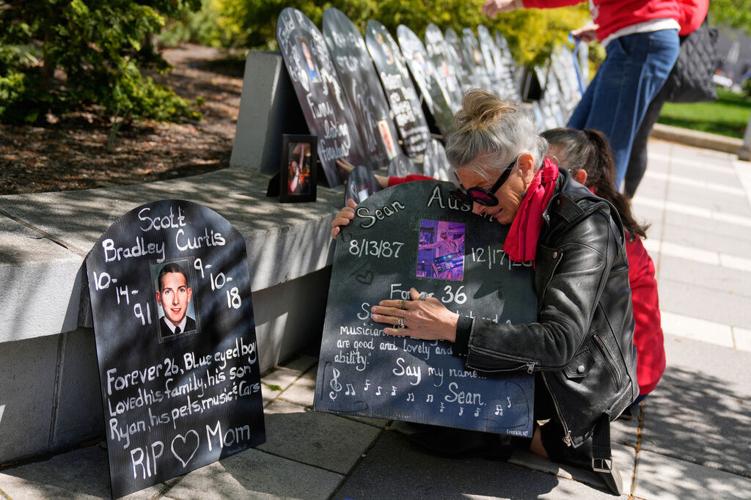
U.S. District Judge Madeline Cox Arleo was scheduled to deliver sentencing in the Purdue Pharma case via videoconference on Tuesday as part of proceedings set in the District of New Jersey. However, according to reports, she postponed the hearing until next week after observing opioid crisis victims gathered outside the courthouse in Newark.
The judge said the court should allow those directly affected by the epidemic to attend in person, moving the sentencing to ensure their physical presence at what is expected to be a significant moment in the long-running case.
The sentencing is expected to formalise a criminal penalty requiring Purdue Pharma to forfeit approximately $225 million to the U.S. Department of Justice as part of a broader settlement tied to its role in the opioid epidemic.

AD: Oysterian Sea Food Restaurant And Bar
That agreement stems from a 2020 plea deal in which the company admitted to federal criminal charges connected to misleading marketing practices and failures in controlling diversion of OxyContin into illegal markets.
The hearing is widely seen as a final procedural step before the company’s long-awaited bankruptcy settlement can be fully implemented, unlocking billions of dollars in compensation payments and public health funding across the United States.
The judge’s decision to postpone sentencing highlights the continuing centrality of victim testimony in a case that has become symbolic of the broader opioid crisis, which has been linked to hundreds of thousands of deaths across the United States since the late 1990s.
Court filings and official case updates confirm that victims of the crisis were scheduled to submit written impact statements ahead of the original hearing, with a limited number selected to speak remotely. However, Judge Arleo said that witnessing grieving families outside the courthouse underscored the importance of allowing in-person attendance.
According to the U.S. Department of Justice case docket, victim participation in the sentencing process has been tightly structured, with strict deadlines for written statements and limited oral testimony slots. The court previously indicated that only a small number of speakers would be permitted to address the judge directly during sentencing proceedings.
Purdue Pharma pleaded guilty in 2020 to three federal criminal charges related to its opioid sales practices, including conspiracy to defraud regulators and failure to maintain effective controls against drug diversion. Prosecutors said the company misled authorities about its monitoring systems and incentivised high-volume prescribing through financial arrangements with doctors.
The sentencing now expected to take place next week will likely trigger the final legal steps in a sprawling bankruptcy settlement that has already been approved in principle after years of negotiation and court challenges.
A key feature of the broader agreement includes up to $7 billion in contributions from members of the Sackler family, who owned Purdue Pharma. Those funds are intended to support state and local governments, addiction treatment programmes, and certain individual victims of opioid addiction.
Recent reporting from court proceedings indicates that the settlement could begin distributing funds as early as May 2026 if final approval proceeds without further delay.
The Purdue Pharma case is part of a wider wave of opioid-related litigation that has reshaped pharmaceutical accountability in the United States. The company’s 2019 bankruptcy filing triggered thousands of lawsuits from states, municipalities, and individuals alleging that its marketing of OxyContin played a central role in fuelling widespread addiction.
Since then, the legal process has moved through multiple iterations of proposed settlements, appeals, and even a U.S. Supreme Court intervention that temporarily blocked earlier agreements involving liability protections for the Sackler family. That ruling forced renegotiations and contributed to delays that extended the case for years.
Under the current framework, Purdue Pharma will effectively cease to operate in its existing form and transition into a new structure designed to channel future profits into addiction treatment and prevention effortsl. Company ownership will be dissolved as part of the restructuring process.
Despite these developments, the case remains deeply controversial among victims and advocacy groups. While many have accepted settlement compensation, others argue that financial payments cannot adequately reflect the scale of harm caused by the opioid crisis or replace the need for individual accountability.
Public reaction has been particularly intense in communities heavily affected by opioid addiction, where overdose deaths have devastated families over multiple generations. Some victim groups have criticised the settlement structure for distributing large portions of funds to state governments rather than directly to individuals.
Court documents show that more than 54,000 claimants voted in favour of the settlement, with a small minority opposing it, though legal representatives for victims have continued to voice concerns about fairness and transparency in how funds will ultimately be distributed.
Outside the courthouse this week, victims and advocacy groups emphasised that their presence at sentencing is about recognition as much as compensation. Many described the process as one of the few remaining opportunities to speak directly within a legal system that has largely been shaped through negotiations between corporations, governments, and bankruptcy courts rather than traditional trials.
The sentencing delay, while procedural in nature, has therefore taken on symbolic significance. It reflects the ongoing tension between legal efficiency in resolving mass litigation and the desire of affected families to have their voices heard in person at key judicial moments.

AD: Heritage And Restaurant Lounge Bar