
By Ben Kerrigan-
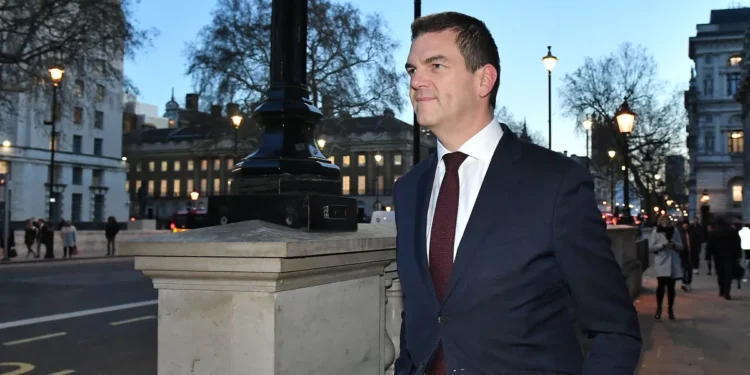
Olly Robbins’ appearance before MPs on the Commons Foreign Affairs Committee has already reshaped the political fallout surrounding the controversial appointment of Peter Mandelson as US ambassador.
But beneath the surface of his testimony lies what senior officials and political observers are calling an “unexploded bomb”: evidence suggesting that key national security warnings were handled in ways that were not fully disclosed to ministers, and potentially not fully understood at the highest levels of government.

AD: Capeesh Restaurant
Robbins, the former permanent secretary at the Foreign Office, gave several hours of testimony in which he defended his handling of the vetting process while simultaneously alleging that Downing Street exerted “constant pressure” to accelerate Mandelson’s clearance despite unresolved concerns flagged during security checks.
What has made his evidence particularly volatile is not just what he said, but what he appeared to confirm indirectly: that the formal chain of ministerial awareness may have broken down at a crucial stage of one of the most sensitive diplomatic appointments in recent years.
Robbins’ appearance was expected to clarify how Lord Mandelson was granted security clearance despite initial vetting concerns raised by UK Security Vetting officials. Instead, according to reports, his evidence added new layers of complexity, particularly around pressure from No 10 and the handling of risk assessments during the appointment process.

AD: Oysterian Sea Food Restaurant And Bar
He told MPs that there had been “constant chasing” from Downing Street during the vetting process, suggesting that officials were under sustained political pressure to complete Mandelson’s clearance quickly after his appointment was publicly announced.
This detail alone has intensified scrutiny over whether administrative procedures designed to insulate national security decisions from political influence were, in practice, compromised.
At the heart of the controversy is the question of how much risk information was escalated beyond civil service decision-makers and whether ministers were given a full understanding of the vetting outcome before proceeding with the appointment.
Robbins’ allies maintain that the system operates on strict confidentiality, meaning that detailed security findings are rarely shared beyond authorised vetting officials. However, critics argue that while this may be standard procedure, the scale and sensitivity of Mandelson’s appointment should have triggered higher levels of ministerial oversight.
The result is a widening gap between procedural justification and political accountability, with Robbins positioned at its centre. The most politically sensitive aspect of Robbins’ testimony relates to what he did not communicate to senior ministers and whether that omission materially changed the outcome of Mandelson’s appointment.
Robbins’ evidence has triggered concerns within government that Downing Street was not fully briefed on the severity or nature of the initial vetting concerns when decisions were made to proceed with the ambassadorial appointment.
The so-called “unexploded bomb” in his evidence refers to the implication that while a formal vetting process was followed, key warnings may have been effectively contained within administrative channels rather than escalated into political decision-making forums where they might have altered the trajectory of the appointment.
Robbins has not admitted wrongdoing, but his testimony acknowledged that decisions were taken within a framework where political urgency and administrative caution were in direct tension. That tension, according to parliamentary observers, is where the unresolved risk now lies.
Some MPs have interpreted Olly Robbins’ evidence as suggesting that Lord Mandelson’s appointment may have been publicly announced before security vetting had fully concluded, raising concerns about the sequencing between political decision-making and formal clearance processes.
While this sequencing is not unprecedented in Whitehall practice, it has drawn renewed scrutiny due to the sensitivity of senior diplomatic roles and their implications for national security and intelligence-sharing relationships.
Appointments and vetting processes often operate on separate tracks within Whitehall, with ministers typically relying on officials to manage clearance procedures while political announcements may proceed in parallel.
This structural separation has prompted renewed debate over whether current safeguards are sufficient for high-profile international postings.
Further complicating matters is Robbins’ claim that he faced “constant pressure” from No 10 during the process. That assertion, while not independently verified in full detail, has already prompted calls for a deeper inquiry into the decision-making chain behind the appointment.
The implication is not necessarily that rules were broken, but that the interaction between political expectation and administrative process may have created conditions where cautionary signals were softened, delayed, or compartmentalised.
The broader concern emerging from Robbins’ evidence is institutional rather than purely personal. Senior civil servants and former officials have long warned that the UK’s system of security vetting relies heavily on trust between departments, ministers, and intelligence professionals.
Robbins’ testimony has brought into focus how fragile that trust can become when political urgency intersects with sensitive appointments.
Since parliamentary committees are still awaiting full disclosure of vetting documentation, this means that MPs are operating with incomplete information as they attempt to reconstruct the timeline of events.
That information gap is critical. Without full access to the underlying security assessments, Parliament is left interpreting the process through competing testimonies rather than verified documentary evidence.
This has fuelled speculation that Robbins’ evidence, while not explosive in itself, may be the trigger for further disclosures that could reshape the political narrative around the Mandelson appointment entirely.
Former diplomats have suggested that even if no rules were formally breached, the perception of impropriety or incomplete disclosure could have lasting consequences for trust in future high-level vetting processes. The reason Robbins’ evidence is being described in some political circles as an “unexploded bomb” is that its full impact is still unfolding rather than producing a single, immediate political resolution.
Instead of closing the issue, his testimony has generated multiple ongoing lines of inquiry, with MPs continuing to examine inconsistencies in the vetting process, the timing of ministerial awareness, and the handling of security advice within Whitehall.
This highlights that Robbins’ evidence has intensified scrutiny rather than settled it, with parliamentary committees still requesting additional documents and cross-examining officials as part of an expanding investigation into how the appointment process was managed.
These include whether ministers were adequately informed, whether civil servants felt pressured to expedite clearance decisions, and whether existing vetting protocols are sufficient for senior diplomatic roles in an increasingly sensitive geopolitical environment.
Each of these questions carries potential institutional consequences. If Parliament concludes that the system allowed critical risk information to be siloed away from decision-makers, reforms to vetting transparency and ministerial briefing procedures could follow.
Downing Street has strongly rejected claims of improper influence, insisting that established procedures were followed and that no minister interfered directly in security vetting decisions.
That denial, however, has done little to settle the political temperature. Instead, it has created a standoff between competing interpretations of the same process: one emphasising procedural correctness, the other highlighting structural vulnerability.

AD: Heritage And Restaurant Lounge Bar