
By Gabriel Princewill-
The need to help children with dyslexia is today flagged by The Eye Of Media.Com, following a growing number of children in the Uk diagnosed with the condition. There is therefore an urgency to raise awareness, and broaden the level of expertise in this area.
Research suggests that dyslexia hampers hundreds of thousands of children in the UK each year, yet there is an untapped pool of expertise necessary to help manage the multiple struggling children in several schools in the UK and abroad. Many suffer in silence, and even ignorance, without the right support for it. Dyslexia has many forms, and even manifests through severe apathy to reading or intellectual development.

AD: Capeesh Restaurant
Dyslexia is a neurodevelopmental learning difference, not a problem with intelligence or effort. It mainly affects how the brain processes written language, especially phonological processing (connecting sounds to letters, decoding words
Spelling and reading fluency
Brain-imaging studies show that people with dyslexia tend to use different neural pathways for reading than non-dyslexic readers. This difference is present from early development, not something caused by poor teaching, lack of motivation, or low intelligence.

AD: Oysterian Sea Food Restaurant And Bar
There’s no single “cause” of dyslexia—it’s a combination of brain wiring + genetics.
Dyslexia often runs in families and can be genetic.
If a parent has dyslexia, the likelihood for a child is significantly higher
Multiple genes are involved in the cause of dyslexia, meaning that it is polygenic, not one single “dyslexia gene”)
Dyslexia is a strong possibility where several people in a family struggle with reading/spelling despite being bright in other areas.
It is estimated that dyslexia affects between 5% and 10% of school-aged children worldwide, making it one of the most common learning differences in the classroom. Despite this, many children remain unidentified until later in their school life, often after years of frustration. Studies consistently show that as many as 80% of children who struggle significantly with reading have dyslexia, yet only a fraction receive targeted early support.
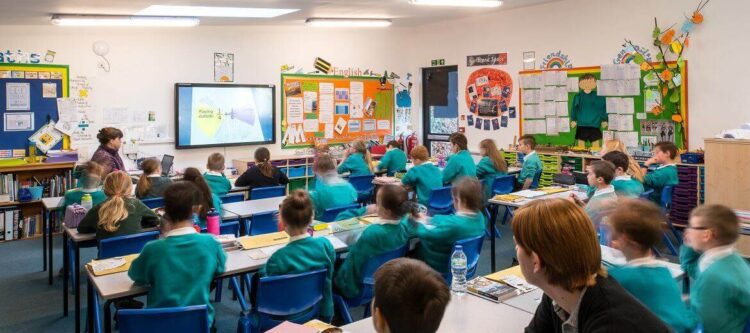
The question therefore is no longer whether schools should support dyslexic learners, but how the education system can be reshaped to do so effectively. Across policy circles, teacher-training programmes, and classrooms, a consensus is emerging. This is that children with dyslexia can thrive when the system adapts to meet their needs.
Experts agree that the biggest barrier to supporting dyslexic children is late detection. Many education systems still rely on informal teacher observations rather than structured assessments, this thereby contributing to widespread under-recognition.
Research suggests that around 60% of dyslexic children are not identified until after the age of eight, even though intervention before that age is strongly linked to better long-term outcomes.
Prominent psychologist, Claire Daly, told The Eye Of Media.Com: ‘Dyslexia is real, well documented, and affects around one in ten pupils by best estimates. But I have met many young people who describe themselves as “probably dyslexic” because they have been struggling for years with reading or spelling and have internalised a sense of failure.
Academics say sometimes that difficulty is neurological, and other times it reflects vocabulary deprivation or inconsistent teaching. Sometimes it is rooted in avoidance patterns built through discouragement’.
The crucial point is this. A pupil’s self-identification is not a nuisance, a misunderstanding, or a defence mechanism. It is a signal that they feel something is wrong. The task for educators is not to validate or dismiss prematurely, but to engage carefully.
If a pupil does not have dyslexia, the answer is not “you are fine.” The answer is “you are struggling and you deserve support.” Whether the difficulty is neural, emotional, instructional, or cultural does not matter in terms of dignity. We must not divide children into “genuine dyslexics” and “lazy readers.” That framing harms both groups”.
Universal early screening is increasingly viewed as a solution. Screening, typically conducted between ages five and seven, does not diagnose dyslexia but identifies early markers such as difficulties with phonological awareness or slow letter recognition.
Studies have shown that early screening programmes can reduce later reading failure by up to 50% when combined with timely intervention, signalling how transformative early action can be. Some countries are ahead of the curve.
In Scotland, early literacy tracking helps teachers identify irregular reading development. In parts of the United States, kindergarten phonics assessments are standard practice. Where screening is consistent, children receive support years earlier than in systems that wait for failure before intervening.
Yet, screening alone is not enough. Long waiting lists for formal assessments and shortages of educational psychologists still present roadblocks. In some regions, families report waiting six to twelve months for a full dyslexia assessment, a delay that can significantly impact a child during crucial learning years.
Dyslexia organisations are increasingly calling for clear national pathways, faster referrals, and accessible diagnostic services. The aim is simple: no child should lose valuable learning time due to slow or inconsistent identification processes.
Once dyslexia is identified, classroom instruction becomes the frontline of support. A robust body of research points to the process that works. Structured, systematic, phonics-based instruction is consistently shown to be the most effective approach for dyslexic learners, according to decades of literacy science.
Structured Literacy, which emphasises phonics, phonological awareness, vocabulary, comprehension strategies, and explicit spelling instruction — is supported by strong evidence.
In controlled studies, children with dyslexia receiving structured literacy interventions have improved reading accuracy by as much as 40% over the course of a school year, compared with far smaller gains through whole-language approaches.
Multisensory methods amplify this progress by engaging sight, sound, and movement together, in the process assisiting students in strengthening the neural pathways needed for reading.
Research from specialist literacy programmes has shown that multisensory instruction can boost retention of letter-sound connections by up to 60%, demonstrating the power of integrating different learning channels.
Despite this evidence, adoption is inconsistent, and many teacher-training programmes still offer minimal preparation, depending on the exposure of the teacher trainers in this area.
A review of initial teacher training courses in several English-speaking countries found that trainee teachers received, on average, fewer than four hours of instruction specifically on dyslexia or reading disorders. This leaves educators underprepared to recognise or respond to dyslexic learners in their classrooms.
The result is that many children experience avoidable setbacks. Misunderstood or unsupported, they may be labelled inattentive or lazy — labels that severely damage their confidence. Surveys of dyslexic adults reveal that more than half recall feeling “stupid” in school despite average or above-average intelligence, reflecting the long-term emotional toll of inadequate support.
In order to break this cycle, dyslexia advocates call for mandatory literacy and neurodiversity training for all teachers. Several countries are moving in this direction. In Australia, teacher training reforms now require evidence-based reading instruction proficiency. In the U.S., more than thirty states have introduced legislation mandating Structured Literacy in early grades.
Specialist support is another essential piece of the puzzle. Educational psychologists, dyslexia-trained reading specialists, and speech and language therapists provide tailored intervention for dyslexia sufferers. Yet shortages remain widespread. In some school districts, a single educational psychologist may serve more than 1,000 pupils, making consistent support difficult.
Experts say assistive technology is helping bridge this gap. Tools such as text-to-speech software, audiobooks, speech-to-text dictation, and dyslexia-friendly fonts are increasingly used in classrooms. Evidence suggests that students using text-to-speech technology can improve reading comprehension by 20% to 30%, enabling them to engage with grade-level content while still developing decoding skills.
Normalising these tools benefits all students, not just those with dyslexia, and signals a shift toward a more inclusive learning environment.
Building a Compassionate School Culture
While teaching methods and testing policies are essential, the school environment itself plays a crucial role. Dyslexia is not solely an academic difference; it shapes a child’s sense of identity and confidence. Without an inclusive culture, even the best teaching methods can fall short.
Awareness is the starting point. When teachers and students understand what dyslexia is — and what it is not — misconceptions fade..
Research from neurodiversity organisations shows that schools implementing awareness programmes see a 25% reduction in stigma-related bullying, demonstrating the cultural impact of education.
Classroom practices also matter. Allowing alternatives to reading aloud for some children, offering extra time for written tasks, and assessing students in varied ways help dyslexic learners participate fully. Group activities and project-based learning highlight strengths often associated with dyslexia, such as creativity, problem-solving, and spatial reasoning.
Parental involvement strengthens support. When teachers maintain open communication with families, children benefit from consistent strategies at home and school. Workshops and resources enable parents to become effective advocates and partners in their child’s learning journey.
Ultimately, teacher empathy is the most transformative force. One supportive adult can change a child’s academic trajectory. Studies show that children with strong teacher relationships are 40% more likely to develop resilience and maintain confidence despite learning challenges, underscoring the emotional power of connection.
Some schools have embraced strengths-based education, which emphasises abilities rather than focusing solely on deficits. Many dyslexic individuals excel in visual reasoning, entrepreneurship, and creative thinking. By celebrating this diversity of talent, schools help reshape dyslexia from a perceived weakness into a profile of unique strengths.
Supporting children with dyslexia requires more than goodwill — it demands early identification, evidence-based teaching methods, skilled staff, and emotionally supportive environments. When these elements align, the education system becomes a powerful force for equity and opportunity.
Children should never feel left behind or misunderstood. With the right support, dyslexic learners can flourish academically and personally, not despite their differences, but because the education system recognises and supports them. A future where every child can succeed begins with understanding, science, and the belief that every learner — dyslexic or not — deserves the tools to thrive.

AD: Heritage And Restaurant Lounge Bar