

By David Young–
The highly anticipated launch of Atlas, the new AI-integrated web browser developed by OpenAI, has garnered an enthusiastic conceptual response but a notably critical assessment regarding its actual functionality.
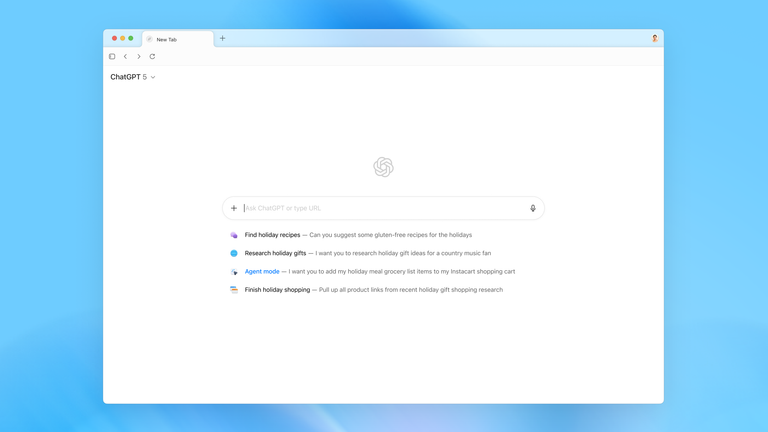
OpenAI’s new browser, Atlas. Pic: OpenAI
Designed as a direct, existential challenge to Google Chrome, Atlas aims to supplant Google’s most profitable business segment by embedding a powerful AI assistant directly into the browsing experience. Unfortunately, initial testing by leading AI experts paints a picture of a product still in its infancy, suffering from significant performance shortcomings. This contrast between grand ambition and clunky execution dominates the first round of feedback for the new application.

AD: Capeesh Restaurant
Pic: iStock
The most innovative element of Atlas is its sophisticated AI agent, a feature Dr. Andrea Barbon from the University of St Gallen called the “most exciting part.” This cutting-edge feature, currently available in a limited “preview mode,” allows the AI to literally take control of the user’s computer interface.
Dr. Barbon detailed his experience, explaining that once the user activates the agent, the system begins “clicking around on the website to perform the task that you requested.” While the concept of a browser completing tasks automatically is revolutionary, the practical execution left testers deeply disappointed.
Dr. Barbon admitted he stopped using the browser within minutes. He recounted attempting to navigate complex workflows on several websites, observing that “ChatGPT was just not able to handle it, not at all.” His conclusion was stark and decisive: “I closed the browser and I didn’t uninstall it, but I could – I’m not going to use it, right?” He indicated a return to the product would only happen “if they release versions that are actually working,” setting a high bar for future updates.

AD: Oysterian Sea Food Restaurant And Bar
The consistent theme emerging from the early feedback focuses squarely on the AI agent’s inability to reliably execute multi-step processes.
Dr. Junade Ali, a fellow at the Institution for the IET, provided a particularly vivid metaphor for the agent’s awkward performance. He summarized his assessment by saying, “To put it bluntly, it felt at times like watching a $12$-year-old use my computer.”
Dr. Ali observed the agent repeatedly “struggle around a little bit to try and do the task in the most effective way and it would sometimes get stuck.” This difficulty in completing non-linear or complex actions confirms the agent remains in a distinctly “primitive” stage of development. Testers believe the core concept is “really neat,” but the current implementation lacks the reliability required for daily use.
OpenAI released a precautionary statement alongside the browser launch, acknowledging these very issues. The company described the agent mode as an “early experience and may make mistakes on complex workflows,” reassuring users they are “rapidly improving reliability, latency and complex task success.” This admission confirms the technical challenges faced by the AI model when interacting with the vast, unpredictable landscape of the modern internet. The AI needs perfect, predictable site navigation to function seamlessly, yet the web is anything but predictable.
Despite the technical immaturity highlighted in every OpenAI Atlas AI Agent Review, the mere fact that OpenAI is attempting to automate browsing tasks signifies a massive shift in technological focus. The immediate challenge for the developer now shifts from proving the concept to proving its functional competence, a hurdle they must clear quickly to maintain momentum against their established rival.
Despite being underwhelmed by the current performance of the browser, experts universally agree that OpenAI has already caused severe problems for Google.
Dr. Ali noted that OpenAI’s various products, particularly ChatGPT used as a search engine replacement, have already made a “massive dent” in the volume of web traffic that Google typically monetizes. People increasingly prefer a synthesized answer over a list of links, and this behavioral trend has already disrupted Google’s advertising revenue stream significantly.
Consequently, the release of Atlas simply intensifies an ongoing confrontation. Dr. Barbon believes Google will certainly “integrate more AI into Google Chrome” as a response, making the entire competition a race of execution. “It really depends on who is faster at achieving a working prototype,” he summarized, maintaining that OpenAI has not yet delivered a functional winner.
This technological rivalry is forcing a profound societal reconsideration of how information is consumed, a change Dr. Luke Roberts from the Centre of Science and Policy at the University of Cambridge calls the “shift from the attention economy to the answer economy.”
He argues that while technology historically focused on capturing user attention, the next major shift involves people simply wanting the quickest possible answer. An AI-integrated browser accelerates this shift, but Dr. Roberts warned that the ease of access comes with a significant risk. As AI synthesizes answers quicker than ever, users may become complacent, failing to scrutinize the source and veracity of the provided information. He concluded that “there’s some really big shifts about to happen that we’re going to need to really think quite deeply as a society” regarding information consumption. This critical OpenAI Atlas AI Agent Review ultimately suggests that while the future of browsing is AI-driven, the technology must first mature to a usable state before that future can truly begin.

AD: Heritage And Restaurant Lounge Bar


