

By James Simons–
The familiar ritual of “spring forward, fall back” marks its centennial this year, yet the debate over the practice has never been more intense. This weekend, the clocks in the UK will revert from British Summer Time (BST) to Greenwich Mean Time (GMT), granting an extra hour of sleep but ushering in shorter, darker evenings.

The clocks going back means shorter evenings in the UK. Pic: iStock
However, this seemingly simple adjustment carries a hidden, significant cost, fueling a political and scientific movement focused on Scrapping Daylight Saving (DST) permanently. Numerous health organizations and experts now argue that the proven negative effects on human physiology and mental well-being far outweigh any perceived benefit of seasonal time adjustment.

AD: Capeesh Restaurant
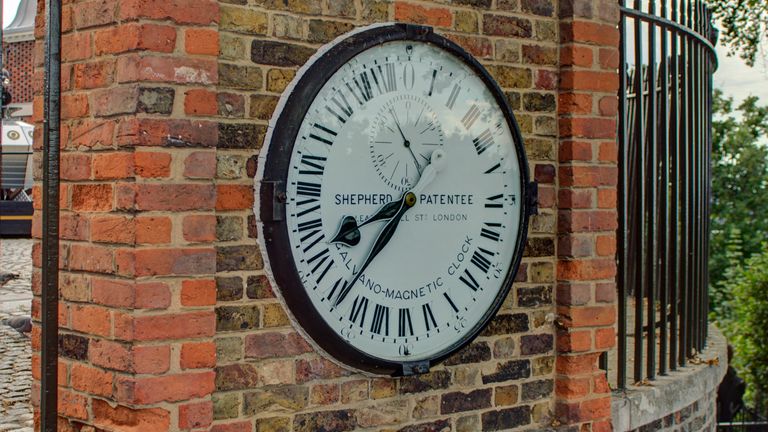
The Greenwich meridian clock at the Royal Greenwich Observatory in London. Pic: iStock
Scientific data consistently illustrates how even small annual adjustments to the sleep schedule can wreak havoc on the body’s internal timing mechanisms. Sleep and dream researcher Charlie Morley warns that the switch causes a wide array of demonstrable health issues for both the body and the mind.
Studies have frequently indicated the negative impact of temporary sleep loss. For example, research cited by the American Heart Foundation found an alarming 24% increase in heart attacks on the day immediately following the spring shift to DST, proving the physiological stress of sleep deprivation. Although the autumn shift back provides a brief reprieve, the continuous, systemic disruption is a source of chronic stress.
A 2016 Finnish study further supported this finding, reporting 8% more hospital admissions for the most common type of stroke during the two days after the springtime change. This medical evidence forms the core argument for Scrapping Daylight Saving and adopting a standard, year-round time.

AD: Oysterian Sea Food Restaurant And Bar
The history of Daylight Saving Time is surprising, not starting with farmers as often believed. Its conceptual origins trace back to the 1890s, thanks to George Hudson, a New Zealand entomologist. He tirelessly campaigned for extended evening sunlight, allowing him more time after work to study his beloved insects. While his suggestion was the first time seasonal time changes were seriously discussed, the man credited with bringing DST to the UK was British inventor William Willett.
Willett published a compelling pamphlet in 1907 titled The Waste Of Daylight, expressing his frustration with not maximizing the summer evening light. Initially, he proposed an elaborate system where clocks would jump forward by 80 minutes in four incremental steps across April, reversing the same way in September. Despite his dedication, Willett died before the proposal became law.
Instead, Germany became the world’s first nation to adopt DST in 1916, during the First World War, implementing it as a measure to conserve vital coal and fuel resources. The UK quickly followed suit only a few weeks later. Decades later, the global appetite for DST is low, lending weight to the argument for Scrapping Daylight Saving.
According to the Pew Research Center, only about one-third of the world’s countries currently practice DST. While regions like most of Europe, North America, and parts of Australia participate, many countries, particularly those near the equator, find the practice unnecessary due to minimal seasonal light variation. Iceland, notably, is one of the few European exceptions, avoiding the time change because its high latitude naturally results in such extreme variations in daylight throughout the year.
The political momentum for Scrapping Daylight Saving remains persistent; for instance, US politicians like President Donald Trump and Senator Marco Rubio have loudly described the ritual of changing time twice a year as simply “stupid.”
Beyond the physical stress of cardiovascular events, the clock change creates a significant mental health burden, strengthening the case for Scrapping Daylight Saving. Researchers confirm that losing just one hour of sleep in the spring significantly increases the activity in the amygdala, the brain’s fear centre.
Mr. Morley explains that this increased activity, which can jump by 60% with extremely short sleep, makes people more prone to irritation, conflict, and feeling that “everything is annoying, threatening, or in conflict.” This directly correlates to increased grumpiness and tetchiness in the population following the springtime shift.
Conversely, when clocks revert in the autumn, the immediate loss of an hour of evening daylight exacerbates conditions like Seasonal Affective Disorder (SAD), a depressive illness characterized by a seasonal pattern. Mental health charity Change notes that the limited light exposure in the evenings often deepens feelings of isolation and significantly disrupts established sleep cycles. This reduced availability of natural light, especially after the workday ends, directly impacts the production of mood-regulating hormones.

Pic: iStock
Therefore, the consistent disruption and the associated loss of light exposure both in the morning (spring forward) and the evening (fall back) present compelling medical justification for Scrapping Daylight Saving to stabilize the populace’s sleep architecture and psychological well-being.
The biannual time adjustment is a logistical nightmare for synchronized global industries, providing yet another powerful argument for Scrapping Daylight Saving. For high-profile industries like finance and aviation, precise international coordination is mandatory, requiring complex, continual schedule adjustments to account for the twice-yearly time difference between nations using and those not using DST.
For the everyday worker, the time shift creates more mundane but disruptive issues. Shift workers, for instance, gain a non-contractual hour of work in the autumn but lose a paid hour in the spring, leading to potential payroll complications and contractual disputes.
However, the sports world, particularly global football, faces the most visible scheduling headaches. Premier League, Champions League, Europa League and Conference League fixtures are broadcast simultaneously across dozens of countries, requiring standardized global kick-off times. The annual DST changes mean that countries not observing the shift—such as China, Japan, and many nations in Africa and South America—must change their viewing time by one hour relative to the UK every spring and autumn.
If a Champions League game traditionally kicks off at 8pm BST in October, it moves to 9pm in a country like Nigeria or Qatar when the UK switches to GMT. These shifts force broadcasters and fans in non-DST regions to continually reset their viewing schedules, causing confusion and disrupting established fan routines. The global disruption across industries strongly suggests that Scrapping Daylight Saving would promote logistical harmony.
The British Sleep Society continues to pressure the government, arguing that the negative effects on sleep health and the circadian system demand immediate action.
For individuals concerned about the upcoming change, sleep researcher Charlie Morley offered practical advice, emphasizing that compensating for lost sleep is fundamentally impossible. Instead, he recommends “front loading sleep”—achieving high-quality, sufficient rest before entering a period of anticipated poor sleep, such as the period following the shift. Simple daily habits can also help mitigate negative effects: seeking natural sunlight first thing in the morning, maintaining consistent meal times, minimizing caffeine intake, and engaging in regular exercise.
Mr. Morley also provided a “golden rule” for napping: keep the duration between 20 and 60 minutes, and ensure the nap ends at least six hours before your intended bedtime. This strict timing prevents the depletion of adenosine, the “tiredness chemical,” allowing it enough time to build up so you are sufficiently tired when you want to fall asleep. The ongoing debate over Scrapping Daylight Saving hinges on whether the small convenience of an extra hour of evening light in summer justifies the documented health risks and the persistent logistical disruption.
Ultimately, the question remains whether the minor convenience of slightly longer summer evenings warrants the substantial documented health risks and the persistent global scheduling chaos that comes with refusing to consider Scrapping Daylight Saving once and for all.

AD: Heritage And Restaurant Lounge Bar


