
By Charlotte Webster-
Passengers evacuated from the hantavirus-stricken cruise ship MV Hondius have begun flying home from Spain’s Canary Islands, as international health authorities race to contain fears surrounding a rare viral outbreak that has already claimed three lives and triggered one of the most complex maritime health responses in recent years.
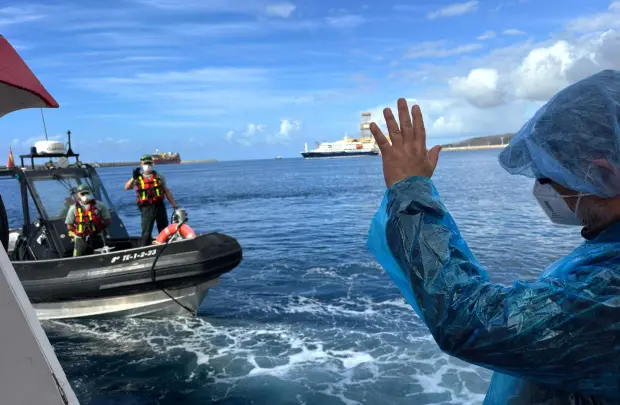
The Dutch-flagged expedition vessel arrived off the coast of Tenerife on Sunday after days of uncertainty at sea, with more than 140 passengers and crew members from over 20 countries undergoing tightly controlled disembarkation procedures supervised by Spanish authorities and the World Health Organisation.

AD: Capeesh Restaurant
Governments including the United Kingdom, France, the United States, the Netherlands, Germany, and Australia coordinated special evacuation flights to return citizens home under quarantine and medical observation.
The outbreak aboard the MV Hondius has centered on the Andes strain of hantavirus, a rare but potentially deadly virus usually linked to rodents and their droppings. Health officials say the outbreak resulted in at least six confirmed infections and two suspected cases during the expedition voyage, which departed from Ushuaia, Argentina, in early April for a tour of Antarctica and isolated South Atlantic islands.
Three passengers died during the voyage, prompting alarm among global health authorities and triggering an unprecedented international containment effort.

AD: Oysterian Sea Food Restaurant And Bar
Spanish emergency teams wearing full protective suits escorted passengers from the vessel in small groups after the ship docked at Port of Granadilla in Tenerife. Travelers were transferred directly to military aircraft, charter flights, and isolated medical transport vehicles before departing the islands. Officials stressed that passengers had minimal contact with the public during the operation.
According to Spanish authorities, the evacuation process was designed to minimise any risk of transmission while ensuring passengers could safely return to their home countries for monitoring. The World Health Organization described the operation as highly coordinated and emphasised that the broader public risk remained low despite international concern surrounding the outbreak.
The first evacuees included Spanish and French nationals. French officials later confirmed that one passenger developed symptoms consistent with hantavirus during the repatriation flight, although authorities cautioned that additional testing would be required before confirming infection.
British passengers were flown to the United Kingdom aboard a government-chartered aircraft before being transferred to specialized medical facilities for quarantine and observation. Reports indicated that some evacuees would undergo monitoring for up to 42 days because of the virus’s unusually long incubation period.
Health authorities in the United States also arranged evacuation procedures for American passengers aboard the vessel. Several countries announced that returning travellers would remain under medical surveillance and could face mandatory isolation depending on symptoms and test results.
The outbreak has drawn widespread international attention not only because hantavirus infections are rare, but because the Andes strain involved in the incident is one of the few forms of the virus known to allow limited human-to-human transmission. Most hantavirus infections globally occur through contact with infected rodents, contaminated food, or airborne particles from rodent urine and feces.
Medical experts have nevertheless cautioned against panic. The WHO and European Centre for Disease Prevention and Control have both said the risk of widespread community transmission remains low.
Officials stressed that hantavirus spreads far less easily than respiratory viruses such as COVID-19 or influenza, though close-contact transmission has been documented in rare circumstances involving the Andes strain.
A Voyage That Became an International Health Emergency
The MV Hondius voyage was originally marketed as a luxury polar expedition cruise, taking travelers through Antarctica and remote Atlantic territories before returning to Europe. The vessel carried tourists from Europe, North America, Australia, and Asia, many of them retirees or experienced expedition travelers.
The situation changed dramatically after an elderly Dutch passenger reportedly became ill during the voyage and later died. His wife, who disembarked in South Africa for treatment, also died days later. A third passenger, identified as a German national, later died aboard the ship, intensifying fears among passengers and governments monitoring the unfolding crisis.
While cases mounted, authorities in several ports refused to allow passengers to disembark. The vessel spent days anchored near Cape Verde after local officials blocked entry over fears of viral transmission. During that period, passengers described increasing anxiety aboard the ship as rumors spread about the severity of the outbreak and uncertainty grew over where the vessel would eventually dock.
Spain ultimately agreed to receive the ship in Tenerife after negotiations involving European health agencies, the WHO, and several foreign governments. Canary Islands officials initially expressed concern about accepting the vessel, but Spain’s central government approved the docking plan under what it called humanitarian and international legal obligations.
Medical specialists from the Netherlands and Italy boarded the ship before it reached Tenerife to investigate the outbreak and assess passengers. European authorities also positioned emergency air ambulances nearby in case severely ill passengers required urgent treatment.
Passengers who spoke to media outlets described strict onboard isolation measures in recent days. Meals were reportedly delivered directly to cabins, social activities were canceled, and travelers underwent repeated temperature screenings while awaiting instructions from health authorities. Several passengers compared the atmosphere onboard to the early stages of the coronavirus pandemic.
The outbreak has also complicated international contact-tracing efforts because dozens of passengers had already disembarked earlier in the voyage at remote locations including Saint Helena and Tristan da Cunha. British military medics were reportedly parachuted onto Tristan da Cunha to assist a resident believed to have developed symptoms after leaving the cruise.
Health authorities across multiple countries are now attempting to trace and monitor former passengers who may have had contact with infected travelers before the ship reached Tenerife. Some reports suggested that dozens of individuals may have left the vessel earlier in the trip without full contact-tracing procedures in place, increasing concerns among epidemiologists.
Questions Over Cruise Safety and Future Monitoring
The incident has reignited debate about infectious disease preparedness aboard cruise ships, an industry still recovering from the reputational damage caused by the COVID-19 pandemic.
Although hantavirus differs significantly from airborne respiratory viruses, public health experts say the outbreak demonstrates how quickly disease outbreaks at sea can escalate into multinational emergencies involving border controls, quarantine systems, and diplomatic coordination.
Cruise operators worldwide introduced stricter health screening procedures after the coronavirus crisis, but experts say expedition voyages to remote destinations present unique challenges because passengers may be days or weeks away from advanced medical care. The MV Hondius, designed for polar exploration, was operating in isolated waters where rapid evacuation options were limited.
Oceanwide Expeditions, the company operating the vessel, said no passengers currently aboard the ship were showing active symptoms at the time evacuation began in Tenerife. Nevertheless, the company acknowledged the seriousness of the situation and confirmed that the vessel would undergo full disinfection procedures after passengers and most crew members departed.
The ship is expected to continue to Rotterdam under limited crew operations before extensive sanitation work is carried out. Some crew members will remain onboard during the transfer voyage, while others are scheduled for repatriation by Dutch government aircraft.
Scientists continue to study the Andes strain of hantavirus because of its unusual ability to spread between humans under certain conditions. Symptoms can initially resemble influenza, including fever, muscle aches, headaches, and fatigue, before progressing to severe respiratory complications in serious cases. Mortality rates for hantavirus pulmonary syndrome can be high if treatment is delayed.
Health authorities insist there is no evidence of uncontrolled international spread linked to the cruise ship. But as evacuated passengers continue arriving home across Europe, North America, and elsewhere, medical monitoring and contact tracing efforts are expected to continue for weeks.
The evacuation operation unfolding in Tenerife has become a vivid reminder of how rapidly isolated health incidents can transform into global logistical and public health challenges in an era of international travel and interconnected borders.

AD: Heritage And Restaurant Lounge Bar