
By Ben Kerrigan-
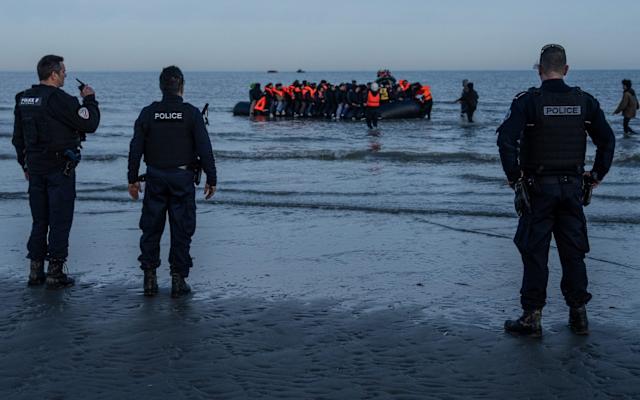
Efforts to stem the flow of migrants crossing the English Channel in small boats have entered a new phase of uncertainty after the United Kingdom and France failed to agree on a long-term replacement for their existing border enforcement deal, exposing deep divisions over policing tactics, funding structures, and humanitarian concerns.
Negotiations had been underway for months, with both sides seeking to renew and expand a multi-year agreement worth hundreds of millions of pounds. However, talks stalled amid a fundamental disagreement over how success should be measured and enforced.

AD: Capeesh Restaurant
The UK government has pushed for a “payment-by-results” model that would tie financial support to a measurable reduction in crossings, while France has rejected the proposal, warning it could incentivise risky interventions that endanger lives.
According to reports on stalled UK–France deal, negotiations broke down primarily over disagreements surrounding policing methods on French beaches, particularly around Calais, where many crossings originate. British officials have argued that more aggressive tactics are needed to intercept boats before they launch, while French authorities insist that safety and legal obligations must remain the priority.
The impasse comes as the current £475 million agreement reached in 2023 expired, forcing both governments into last-minute contingency planning. A temporary extension worth around £16 million has been agreed to maintain patrols for a short period, preventing an immediate collapse in coordination while talks continue.

AD: Oysterian Sea Food Restaurant And Bar
Despite years of cooperation and financial investment, crossings have continued at significant levels. More than 41,000 people made the journey in 2025, underscoring the scale of the challenge and intensifying pressure on policymakers in London to deliver tangible results.
British negotiators have expressed frustration that interception rates remain lower than expected, arguing that current efforts fail to provide sufficient deterrence against smuggling networks. France, however, maintains that the UK’s expectations are unrealistic and potentially dangerous, particularly when it comes to intercepting vessels already at sea or close to departure.
The disagreement also extends to broader funding questions. France has sought additional financial contributions to support policing infrastructure, including detention facilities and personnel, while the UK has resisted covering certain costs without clear evidence of improved outcomes.
The breakdown in negotiations highlights deeper tensions in post-Brexit cooperation between the two countries. While both sides publicly emphasize their commitment to joint action, the dispute reveals contrasting approaches to migration management. The UK has increasingly prioritised deterrence and enforcement, while France continues to emphasise humanitarian obligations and legal constraints.
With coastal regions in northern France, the situation remains complex. Migrants often gather in makeshift camps while waiting for an opportunity to cross, creating ongoing challenges for local authorities. Smuggling networks continue to adapt their methods, using increasingly sophisticated tactics to evade detection and maximize profits.
Without a comprehensive agreement, there are concerns that coordination between the two countries could weaken, potentially leading to an increase in crossings as enforcement gaps emerge. Officials on both sides have sought to downplay the risk of an immediate surge, but acknowledge that uncertainty could embolden traffickers.
Rising Crossings And Political Pressure
The collapse of talks comes at a politically sensitive moment in the UK, where migration remains a central issue in national debate. The government has repeatedly pledged to reduce small boat crossings, framing the issue as both a border security challenge and a test of political credibility.
However, recent data suggests that the problem remains persistent. Early figures for 2026 indicate a continued rise in crossings compared with the same period the previous year, fuelling criticism from opposition parties and adding urgency to ongoing negotiations.
The political narrative surrounding migration has become increasingly polarized. Government officials argue that stronger enforcement measures are essential to disrupt criminal networks and restore public confidence, while critics contend that the focus on deterrence overlooks the underlying drivers of migration, including conflict, poverty, and the lack of safe legal routes.
The Channel itself presents unique operational challenges. With one of the busiest shipping lanes in the world, it combines heavy maritime traffic with unpredictable weather conditions, making interception efforts both difficult and potentially dangerous. Small, overcrowded vessels used by migrants are often ill-equipped for the journey, increasing the risk of accidents and fatalities.
Public scrutiny has also intensified around the cost of existing agreements. The UK has already committed hundreds of millions of pounds to support French enforcement efforts, leading to questions about whether the investment has delivered sufficient results. Critics argue that despite substantial funding, crossings have not decreased significantly, raising doubts about the effectiveness of current strategies.
At the same time, humanitarian organizations warn that tougher enforcement without expanded legal pathways may push migrants toward even riskier routes. The tension between security and safety remains at the heart of the debate, complicating efforts to find a solution acceptable to both governments.
The diplomatic implications of the deadlock are also significant. While relations between London and Paris remain broadly cooperative, the failure to reach agreement underscores the challenges of aligning national priorities on a complex, transnational issue.
Migration flows are influenced by factors far beyond the control of any single country, requiring coordination not only between the UK and France but across Europe and beyond.
A separate “one in, one out” migrant returns scheme introduced in 2025 was intended to complement enforcement efforts by allowing the UK to return some migrants to France in exchange for accepting others through legal routes. However, its limited scale means it has had only a modest impact on overall crossing numbers.
The immediate reality for migrants remains largely unchanged. Many continue to wait in northern France for an opportunity to cross, often relying on smugglers who charge significant fees for passage in unsafe boats. The risks associated with the journey remain high, with overcrowding, poor weather, and heavy shipping traffic all contributing to dangerous conditions.
While negotiations resume, both governments face difficult choices. A more aggressive enforcement strategy could satisfy domestic political demands but risks escalating humanitarian concerns and legal challenges. A more cautious approach may be safer but could be criticized as ineffective in deterring crossings.
The failure to secure a new deal ultimately reflects the limits of bilateral agreements in addressing a complex and evolving migration crisis. While temporary measures may prevent an immediate breakdown in cooperation, the underlying issues remain unresolved.
Until a new framework is agreed or a broader, more coordinated international approach is developed the small boats crossing the Channel will continue to symbolise both a humanitarian emergency and a persistent political challenge at the heart of UK–France relations.

AD: Heritage And Restaurant Lounge Bar