
By Ben Kerrigan-
A fully loaded oil tanker burning off the coast of Dubai has become the latest flashpoint in an already volatile Middle East conflict, after Iranian forces launched a strike that underscores the widening scope of the war and its growing economic consequences.
According to multiple reports, the vessel identified as a Kuwait-flagged tanker was hit by an Iranian drone while anchored near Dubai, igniting a fire and damaging its hull. Emergency crews responded quickly, and early indications suggested that all crew members were rescued without casualties, though concerns remain about potential environmental damage and disruptions to maritime traffic.

AD: Capeesh Restaurant
The attack marks a significant escalation in the ongoing confrontation between Iran and a U.S.-aligned coalition, which has already seen missile strikes, naval incidents, and the near-total disruption of shipping routes across the Persian Gulf. The Strait of Hormuz one of the world’s most critical oil chokepoints has effectively been shut down, halting a substantial portion of global energy flows.
U.S. officials have described the coming days as “decisive,” signaling the possibility of further military action if diplomatic efforts fail. Iran, for its part, has issued stark warnings that it will target Western-linked companies and infrastructure throughout the region, raising fears that commercial shipping and multinational firms could increasingly find themselves in the crosshairs.
The strike near Dubai is not an isolated incident but part of a broader campaign targeting oil infrastructure and transport vessels. In recent weeks, multiple tankers and energy facilities in the Gulf have been attacked, sending insurance costs soaring and forcing shipping companies to reroute or suspend operations altogether.

AD: Oysterian Sea Food Restaurant And Bar
Analysts warn that even limited disruptions in this region can ripple quickly through global supply chains, given that roughly one-fifth of the world’s oil passes through the strait under normal conditions.
Beyond the immediate damage, the psychological impact of the attack is already evident. Energy traders reacted swiftly, pushing crude oil prices above $100 per barrel amid fears of prolonged supply constraints. The incident also highlights how modern warfare particularly the use of drones has transformed the vulnerability of critical infrastructure, allowing relatively low-cost attacks to inflict outsized economic damage.
The geopolitical stakes are equally high. With U.S. and allied forces increasing their presence in the region, the risk of direct confrontation continues to rise. Diplomatic channels remain active, with countries including China and Pakistan reportedly urging de-escalation, but the pace of military developments has outstripped efforts to negotiate a ceasefire.
Gulf states such as the United Arab Emirates, the attack represents both a security challenge and an economic threat. Ports like Dubai serve as vital hubs for global trade, and any perception of instability could deter shipping traffic and investment. The possibility of oil spills or prolonged port closures adds another layer of risk, particularly for economies heavily reliant on energy exports and logistics.
Gas Prices Surge AS Global Supply Tightens
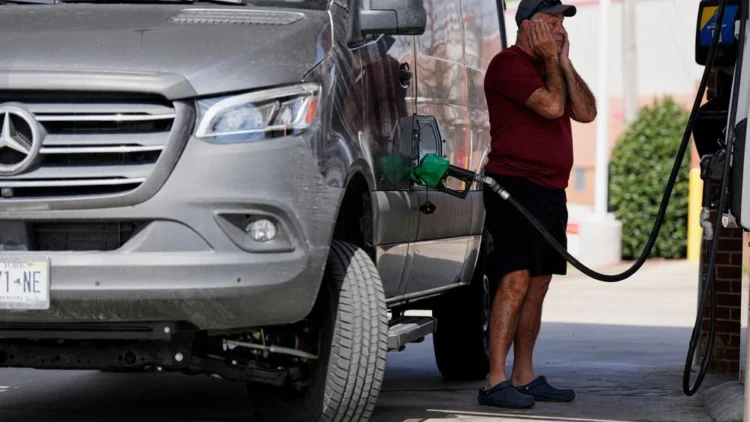
Thousands of miles away, American drivers are already feeling the consequences of the Gulf crisis. U.S. gasoline prices have surged past $4 per gallon for the first time since 2022, reflecting the global nature of oil markets and the speed at which geopolitical shocks translate into everyday costs.
The price spike has been dramatic. In March alone, average gas prices jumped more than 30 percent, marking one of the sharpest monthly increases in decades. Analysts attribute the surge primarily to supply disruptions linked to the conflict with Iran, particularly the closure of the Strait of Hormuz and the targeting of oil shipments.
Although the United States remains a major oil producer, it is not insulated from global price swings. Oil is traded on an international market, meaning that disruptions anywhere especially in a region as critical as the Gulf can drive up prices everywhere. While crude oil costs climb, refiners pass those increases on to consumers, resulting in higher prices at the pump.
The economic implications are broad and potentially long-lasting. Higher fuel costs are already feeding into inflation, raising the price of goods and services across multiple sectors. Transportation, agriculture, and manufacturing are particularly vulnerable, as they rely heavily on fuel.
Diesel prices, which are even more sensitive to supply disruptions, have risen sharply, increasing shipping costs and putting upward pressure on grocery prices.
With households, the return of $4 gasoline carries both financial and psychological weight, as analysts describe the price level as a key threshold that shapes consumer sentiment and behaviour.
Many Americans are already adjusting their habits, driving less or consolidating trips to offset rising costs, while higher fuel prices are expected to eat into discretionary income and limit spending on nonessential goods and services.
Economists and market analysts also warn that growing unease over fuel costs is contributing to weakening consumer sentiment and could ultimately weigh on broader economic activity if elevated prices persist.
Policymakers face limited options. The U.S. government has already taken steps such as releasing oil from strategic reserves and easing certain shipping regulations, but these measures can only partially offset the impact of global supply disruptions. Ultimately, much depends on the trajectory of the conflict and whether oil flows through the Gulf can be restored.
Financial markets are also reacting to the uncertainty. While some investors are betting on eventual de-escalation, others are preparing for a prolonged period of volatility. Energy stocks have surged alongside oil prices, while sectors sensitive to fuel costs such as airlines and logistics have come under pressure.
Looking ahead, analysts warn that the situation could worsen if attacks on energy infrastructure continue or if the conflict expands to involve additional regional actors. In a worst-case scenario, prolonged disruption of Gulf oil exports could push prices significantly higher, potentially triggering a broader economic slowdown or even a global recession.
While tensions continue to mount, the question facing policymakers, markets, and consumers alike is not just how high prices will rise but how long they will stay there.

AD: Heritage And Restaurant Lounge Bar