
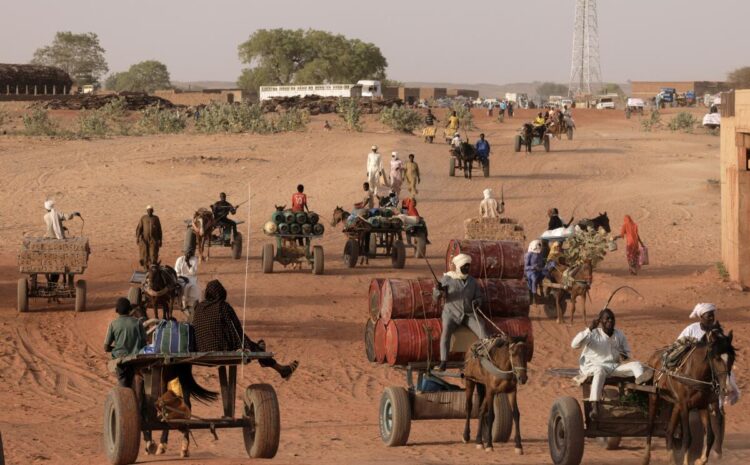
A growing chorus of humanitarian and medical organisations says sexual violence is no longer a by‑product of conflict in Sudan’s brutal civil war it has become a deliberate weapon of war. According to a new report on March 31 by international medical charity Médecins Sans Frontières (Doctors Without Borders, MSF), thousands of women and girls have been raped, often by armed fighters, as part of a pattern of deliberate attacks designed to terrorise, control and demoralise civilian populations.
The nearly three‑year conflict between Sudan’s regular army and the paramilitary Rapid Support Forces (RSF) erupted in April 2023, plunging Africa’s third‑largest nation into one of the world’s most severe humanitarian crises.
Since then, violence has devastated regions such as Darfur and Kordofan, forcing millions to flee their homes and overwhelming health systems already stretched thin. Estimates suggest that well over 40,000 people have been killed and millions displaced figures many aid organisations believe are conservative.

AD: Capeesh Restaurant
MSF’s report, compiled from medical data and survivor testimonies collected at treatment centres in North and South Darfur, highlights a grim reality: between January 2024 and November 2025, at least 3,396 survivors of sexual violence sought care at MSF‑supported facilities.
Most of these survivors identified armed men frequently RSF fighters as the perpetrators, with more than half of the cases involving multiple assailants. The charity emphasised that these figures likely represent only a fraction of the true scale of abuse, as many survivors never reach health centres due to insecurity, stigma, or lack of access.
One survivor recounted being assaulted multiple times in an open area, illustrating the extreme brutality many women have endured. Medical staff said they often saw 10 to 15 new survivors daily, many arriving long after the critical 72‑hour window for optimal treatment for injuries, infections and trauma had passed. The physical and psychological toll reverberates through families and communities, profoundly affecting everyday life.

AD: Oysterian Sea Food Restaurant And Bar
MSF officials and other aid workers describe the pervasive use of sexual violence not as sporadic criminality, but as a systematic tactic intended to instil fear, undermine community cohesion, and drive displacement. “This war is being fought on the backs and bodies of women and girls,” said one MSF emergency health manager, reflecting the view of many humanitarian workers on the ground.
Sudanese women and girls have long faced gender‑based violence, but the current conflict has magnified these abuses to unprecedented levels, international watchdogs say. In some areas, even where active frontline fighting has subsided, sexual violence has become “part of everyday life,” according to the MSF report and corroborating accounts from other charities.
The RSF’s role in these abuses has drawn scrutiny from organisations such as Human Rights Watch and the United Nations, which have previously reported “staggering” levels of rape and sexual assault committed by paramilitary forces. Some reports indicate that these acts extend beyond Darfur, affecting women in residential and urban areas alike.
Amid the escalating violence, the international criminal community is paying attention. The International Criminal Courtand UN human rights mechanisms have been examining allegations of war crimes and crimes against humanity including gang rape and other acts of sexual violence committed during the conflict.
Still, accountability remains elusive, and survivors continue to confront both immediate physical harm and long‑term psychological trauma.
Beyond the personal devastation, the MSF report reveals how the fear of sexual violence disrupts basic social functions like farming, education and community life as women and girls retreat for safety. Many survivors are left with lasting injuries and emotional scars, and lack access to legal recourse or sustained psychosocial support.
International responses have been criticised as insufficient. MSF and other humanitarian agencies, including UN agencies, are calling for enhanced protection measures, increased humanitarian access, and a stronger United Nations presence in Sudan to support both immediate care and long‑term recovery for survivors. Without stronger action, aid workers fear the violence will continue with impunity.
The situation in Sudan confirms how sexual violence is increasingly weaponised in modern conflicts. Experts stress that addressing it requires not only emergency medical care, but also legal accountability, community rehabilitation, and global political will to protect civilian populations in war zones.
While the war grinds on into its third year, survivors and advocates alike are appealing to the international community to recognise the systematic nature of these atrocities and to act before more lives are shattered.
The testimonies emerging from Darfur and beyond depict not only isolated incidents of violence but a widespread pattern that challenges the world’s commitment to upholding human rights in times of war.
In conflict after conflict from Sudan to other war‑torn regions across Africa, the Middle East, and beyond rape and sexual assault are increasingly being weaponised as tools of terror, leaving deep, long-lasting scars on survivors and entire communities.
These assaults are rarely random acts of violence; instead, they are deliberate tactics used to intimidate populations, destabilise societies, and break the spirit of civilian communities.
In places like Darfur, reports from humanitarian groups, including Médecins Sans Frontières, detail how women and girls are assaulted in public spaces, sometimes repeatedly, with the knowledge that fear and stigma will prevent many from seeking help. The physical injuries are often severe, but the psychological trauma is equally devastating, and social ostracization can make recovery nearly impossible.
The urgent question now is whether the international community from global leaders to multilateral institutions will respond with sufficient force and resources to confront this deeply entrenched form of cruelty. Emergency medical intervention, while critical, is only one piece of the solution.
Survivors require long-term access to healthcare, mental health support, and legal avenues to hold perpetrators accountable. Protection measures must be strengthened at both community and national levels, including safe spaces for women and girls, monitoring of armed groups, and enforcement of international humanitarian law.
Moreover, prevention efforts are crucial. Education, community outreach, and training for security personnel can help mitigate the risk of sexual violence before it occurs. Without sustained, coordinated action, sexual violence will continue to corrode societies, exacerbate instability, and perpetuate cycles of suffering for generations.
The world faces not only a moral imperative but also a practical one: ensuring that survivors are not left voiceless and that sexual violence is unequivocally rejected as a weapon of war. Only decisive action can offer both justice and hope for those who have endured unimaginable atrocities.

AD: Heritage And Restaurant Lounge Bar