
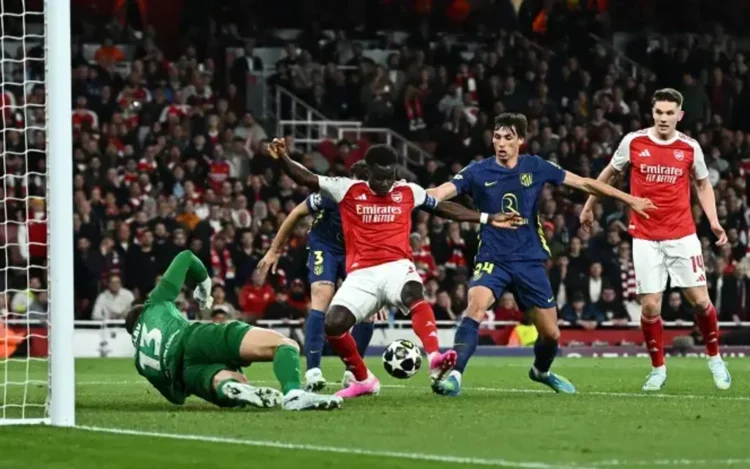
By Tim Parsons-
The anticipation surrounding Arsenal’s return to the UEFA Champions League final has reached extraordinary levels, with airlines now stepping in to accommodate an overwhelming wave of supporters determined to witness what many consider one of the club’s most defining nights in modern football history.
Excitement is intensifying across north London and beyond, with additional flights being arranged to transport thousands of Arsenal fans to Budapest, the host city for this year’s European showpiece.

AD: Capeesh Restaurant
Hungarian airline Wizz Air has confirmed a dramatic expansion of its services from south-east England to the Hungarian capital on 29 May, effectively doubling its normal flight capacity for the occasion. The airline plans to operate eight flights from London Luton and Gatwick airports combined, while a further four services will depart the following day to ensure supporters arrive in time for the 5pm BST kick-off.
The decision reflects not only the scale of demand generated by Arsenal’s long-awaited appearance in Europe’s most prestigious club competition final, but also the emotional significance attached to the occasion. For many supporters, this represents far more than a football match.

AD: Oysterian Sea Food Restaurant And Bar
It is viewed as the culmination of years of rebuilding, heartbreak, near misses, and renewed ambition under a transformed Arsenal side that has re-established itself among Europe’s elite. Fans have rushed to secure travel arrangements despite soaring prices for flights and accommodation, creating scenes reminiscent of previous English club pilgrimages to major European finals.
The scramble for transport has evoked memories of Manchester United supporters descending upon Barcelona in 1999 ahead of their dramatic Champions League triumph over Bayern Munich, a match forever immortalised by Ole Gunnar Solskjær’s stoppage-time winner. Similar travel frenzies occurred when Liverpool reached Istanbul in 2005, a final now widely regarded as one of the greatest comebacks in football history after Rafael Benítez’s side overturned a three-goal deficit against AC Milan.
More recently, supporters of Liverpool and Tottenham flooded Madrid in 2019, while Manchester City fans transformed Istanbul into a sea of sky blue in 2023 as Pep Guardiola’s side finally captured Europe’s biggest prize.
Arsenal’s journey carries its own unique emotional resonance. The club has spent years attempting to reclaim its place at the summit of European football after periods of instability and disappointment. Their previous appearance in a Champions League final came in 2006 against Barcelona in Paris, a night remembered with painful clarity by Arsenal supporters.
Despite taking the lead through Sol Campbell and producing a spirited performance with ten men following Jens Lehmann’s early dismissal, Arsenal ultimately succumbed to late goals from Samuel Eto’o and Juliano Belletti. For many fans travelling to Budapest, the memory of that defeat remains unfinished business.
The current wave of enthusiasm demonstrates how football continues to transcend sport, influencing travel industries, local economies, and international logistics. Airlines and hospitality providers have moved rapidly to capitalise on the unprecedented demand. Wizz Air’s decision to expand its operations illustrates the close relationship between major sporting events and commercial aviation.
Similar patterns have emerged repeatedly throughout football history. During Euro 2020, despite pandemic complications, airlines added emergency routes to host cities as supporters crossed borders to follow their national teams. In 2022, airlines in Argentina reported extraordinary booking surges before and after the World Cup final in Qatar, reflecting the global pull of football’s grandest occasions.
Budapest itself is expected to undergo a dramatic transformation in the days leading up to the final. The Hungarian capital, already renowned for its architecture, thermal baths, and vibrant nightlife, is preparing for an influx of Arsenal supporters expected to dominate the city centre.
Restaurants, bars, hotels, and transport operators are anticipating one of the busiest sporting weekends in recent memory. Local authorities are reportedly coordinating with UEFA and security officials to manage crowd control, fan zones, and transport systems, recognising the enormous scale of international movement tied to the event.
Logistical challenges have become secondary concerns. Ticket prices, hotel shortages, and expensive flights have done little to dampen determination. Social media has been flooded with supporters sharing complex travel plans involving connecting flights, overnight trains, and even lengthy road journeys across Europe.
Some fans unable to secure direct flights have booked routes through Vienna, Prague, or Warsaw simply to ensure they are present for the final. The additional services announced by Wizz Air therefore represent a major relief for thousands still hoping to finalise their plans.
The fervour surrounding the final also highlights Arsenal’s re-emergence as a global football force. Under previous eras, particularly during Arsène Wenger’s later years, Arsenal often faced criticism for lacking the consistency and mentality required to compete with Europe’s strongest sides.
Financial constraints following the move to the Emirates Stadium further complicated the club’s ambitions, forcing difficult transfer policies and periods of underachievement. Yet the current generation has reignited belief among supporters who endured years of frustration. Reaching the Champions League final has become symbolic of Arsenal’s broader revival and renewed identity.
Historically, football finals have often served as defining moments not only for clubs but for entire generations of supporters. Liverpool’s miracle in Istanbul became part of football folklore because it represented resilience against impossible odds. Chelsea’s victory in Munich in 2012 transformed perceptions of a club frequently accused of failing under pressure in Europe.
Manchester United’s 1999 triumph became synonymous with the relentless spirit of Sir Alex Ferguson’s dynasty. Arsenal supporters now hope Budapest will become another city permanently etched into football mythology.There is also a broader cultural dimension to these journeys. Football finals frequently create temporary communities that stretch across borders and languages. Airports become gathering points where chants echo through departure lounges, strangers become companions, and lifelong memories are formed before a ball is even kicked.
Fans travelling to Budapest are likely to experience precisely this atmosphere as flights departing from Gatwick and Luton transform into airborne extensions of the Emirates Stadium. Such scenes have become central to European football culture, where travel itself forms part of the spectacle.
Economic analysts have repeatedly noted the financial impact of football tourism during major finals. Hotels in host cities often sell out weeks in advance, while airlines introduce premium pricing models to match spikes in demand. Similar trends were observed during the Champions League final in Porto in 2021, when thousands of English fans descended upon Portugal despite ongoing pandemic restrictions.
In Cardiff during the 2017 final between Real Madrid and Juventus, local businesses reported one of the most profitable weekends in the city’s modern history. Budapest is expected to experience comparable economic benefits as Arsenal supporters arrive in large numbers.
The emotional stakes for supporters are immense. Many Arsenal fans travelling to Hungary grew up during the club’s celebrated “Invincibles” era but never witnessed the team lift the Champions League trophy. For younger generations, this final represents a first opportunity to see Arsenal contest European football’s ultimate prize on the biggest stage imaginable. Families are travelling together, friends are organising group pilgrimages, and lifelong supporters are spending significant sums to ensure they do not miss what could become a historic triumph.
Football has long demonstrated its ability to mobilise entire populations. When England reached the Euro 2020 final at Wembley, transport systems across the country experienced surges unlike anything seen in years. During the 1998 World Cup in France, supporters famously crossed Europe in caravans and trains to follow their national teams. Arsenal’s journey to Budapest now joins that tradition of football-fuelled migration, illustrating how the sport continues to inspire devotion capable of reshaping travel networks almost overnight.
The additional flights announced by Wizz Air therefore represent far more than a scheduling adjustment. They symbolise the extraordinary power football still holds over millions of lives. Each added service from Luton or Gatwick carries supporters chasing memories they may recount for decades.
Every boarding gate will contain stories of sacrifice, hope, and anticipation. Some fans will travel despite financial strain; others despite work commitments or family obligations. Such dedication reflects football’s enduring role as a source of collective identity and emotional connection.
Arsenal scarves are expected to appear across airports, pubs will overflow with discussion and prediction, and Budapest will prepare to welcome one of the largest travelling contingents in recent Champions League history.
Whether Arsenal ultimately return home with the trophy or endure another painful near miss, the journey itself has already become part of the story. From expanded airline schedules to supporters navigating Europe by any route possible, the road to Budapest encapsulates the passion, drama, and scale that define modern football.
Arsenal fans see this final as an opportunity to witness history, redemption, and perhaps the beginning of a new era. And as extra flights continue to fill with hopeful supporters bound for Hungary, the sense of occasion surrounding this Champions League final grows ever larger, promising a spectacle that extends far beyond the boundaries of the football pitch itself.

AD: Heritage And Restaurant Lounge Bar
-
Share On
- Categories
- Date