
By Kenneth Williams-
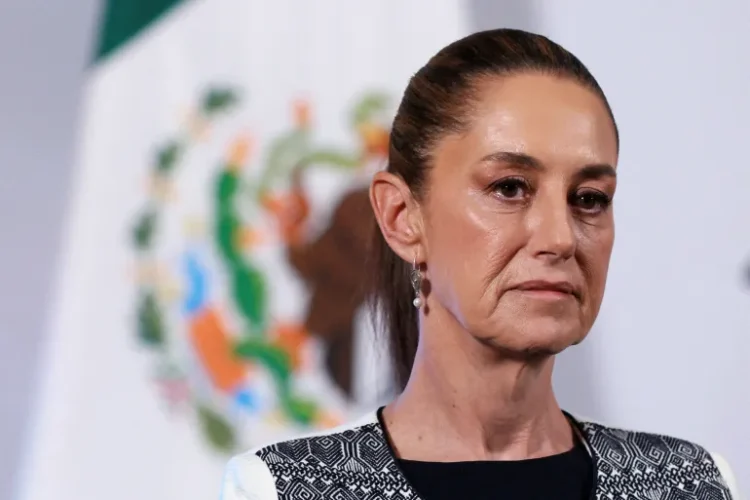
Mexico’s president, Claudia Sheinbaum, has sharpened her rhetoric toward Donald Trump, pushing back against Washington over migrant deaths in US custody and escalating tensions surrounding Cuba, in what analysts describe as one of the most significant strains in US–Mexico relations in recent years.
The dispute has unfolded across two fronts: a growing humanitarian row over the treatment of Mexican migrants detained in the United States, and a broader geopolitical disagreement over US pressure on Cuba, where Mexico has continued to assert an independent foreign policy.

AD: Capeesh Restaurant
The immediate trigger for the latest tensions has been a series of deaths involving Mexican nationals held in US immigration detention facilities. Sheinbaum has publicly condemned the incidents and demanded full investigations, warning that such cases are unacceptable and risk undermining bilateral trust.
Her administration has increasingly signalled it is willing to escalate the issue beyond diplomatic protest. Officials have called for improved conditions in detention centres and suggested Mexico could pursue action through international human rights mechanisms.
The pressure comes amid a broader rise in migrant deaths in custody since Trump returned to office in 2025 with a pledge to intensify immigration enforcement.

AD: Oysterian Sea Food Restaurant And Bar
The issue has resonated deeply within Mexico, where migrant protection remains a politically sensitive topic. Sheinbaum, who initially adopted a cautious tone toward Washington, has shifted toward a firmer stance as the number of reported deaths has grown.
According to recent reporting, her government has also sought increased consular access to detained nationals and greater transparency from US authorities.
This evolving posture reflects both domestic pressure and a recalibration of Mexico’s diplomatic strategy. While economic ties between the two countries remain extensive, the migrant issue has become a flashpoint that underscores the human cost of stricter US border policies.
The dispute highlights the limits of cooperation on migration, an area where both countries have historically relied on close coordination. The deaths have complicated that relationship, raising questions about whether existing agreements can withstand rising political and humanitarian tensions.
Parallel to the migration dispute is a widening disagreement over Cuba, where Sheinbaum has resisted US efforts to isolate the island economically and politically. The Trump administration has intensified pressure on countries maintaining ties with Havana, including threats of tariffs against those supplying oil to Cuba as part of a broader strategy to weaken the Cuban government.
In response, Sheinbaum has defended Mexico’s right to engage with Cuba, framing it as both a sovereign decision and a humanitarian obligation. She has criticised US sanctions as unjust and warned they are exacerbating hardship for ordinary Cubans, while continuing to send aid and maintain cooperation in areas such as medical support.
The disagreement has been further inflamed by US proposals to expand migrant detention operations linked to Cuba, including controversial plans involving facilities at Guantánamo Bay. Human rights organisations have condemned such measures, arguing they risk worsening an already fragile humanitarian situation.
Mexico’s position has placed it in a delicate balancing act. On one hand, the country is deeply economically integrated with the United States, making it vulnerable to trade pressure. On the other, Sheinbaum’s government has sought to maintain a foreign policy rooted in non-intervention and regional solidarity, particularly with Cuba.
The tensions have also been shaped by a wider geopolitical context, including the ongoing Cuban economic crisis and shifting alliances across Latin America. US efforts to curtail oil supplies and tighten sanctions have had ripple effects throughout the region, forcing countries like Mexico to navigate competing priorities between economic pragmatism and political principle.
Despite these pressures, Sheinbaum has shown little willingness to fully align with Washington’s approach. Her administration has instead emphasised humanitarian assistance and diplomatic independence, even as it faces the risk of economic retaliation.
The dual disputes over migration and Cuba now form part of a broader recalibration in US–Mexico relations under Trump’s second presidency. While both governments continue to cooperate on trade and security, the emerging frictions suggest a more complex and potentially volatile relationship.
While the challenge lies in defending its citizens abroad and maintaining its regional commitments without jeopardising its crucial economic ties to the United States. With Washington, the situation underscores the difficulty of enforcing a hardline regional agenda when key partners resist alignment.
The outcome of these disputes may shape not only bilateral relations but also the wider political dynamics of the Americas, where questions of sovereignty, migration and humanitarian responsibility remain deeply contested.
The standoff between Claudia Sheinbaum and Donald Trump is increasingly being viewed as emblematic of a broader regional shift, in which Latin American governments are asserting greater independence from Washington’s foreign policy priorities.
In recent years, several countries across the region have resisted US pressure on issues ranging from migration enforcement to economic sanctions, particularly in relation to Cuba and Venezuela.
Mexico’s stance under Sheinbaum reflects this evolving posture, as her administration seeks to balance cooperation with the United States against a renewed emphasis on national sovereignty and non-intervention. This approach draws on longstanding principles in Mexican foreign policy but has taken on new urgency amid the more confrontational tone of Trump’s second presidency.
The migration dispute, in particular, has the potential to reverberate far beyond the US–Mexico border. With one of the principal transit and origin countries for migrants heading north, Mexico plays a pivotal role in regional migration management.
Any deterioration in cooperation could disrupt existing agreements on border enforcement, asylum processing and deportation procedures, with consequences for countries across Central America. Governments in the region are closely watching how Mexico navigates the issue, as it may set a precedent for how migrant rights are defended or compromised under mounting political pressure.
The disagreement over Cuba highlights a deeper ideological divide over how to address humanitarian crises. While the United States continues to rely on sanctions and economic leverage, Mexico and other Latin American nations have increasingly framed engagement and aid as more effective tools.
This divergence is likely to influence regional alliances and could contribute to the formation of blocs with differing approaches to governance, development and external influence.
There are also economic implications that could further complicate the relationship. The United States remains Mexico’s largest trading partner, and any escalation whether through tariffs, regulatory measures or political retaliation could have significant repercussions for both economies. Mexico’s willingness to challenge US policy suggests a growing confidence in its diplomatic position, even in the face of potential economic risks.
A prolonged impasse risks entrenching divisions not only between the United States and Mexico but across the hemisphere, where debates over sovereignty and responsibility are becoming increasingly central to political discourse.

AD: Heritage And Restaurant Lounge Bar