
Ben Kerrigan-
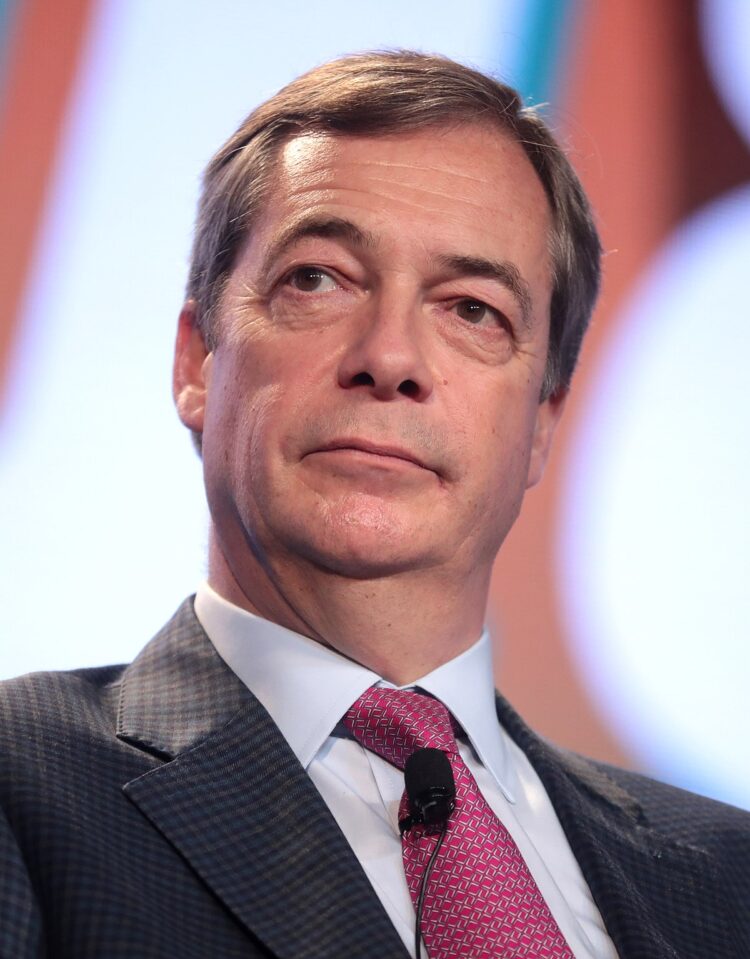
Nigel Farage is to visit Leeds tomorrow as part of Reform Party’s election tour, where the outspoken party leader is heading to the city on Tuesday (March 24). He is set to hold a rally at the First Direct Arena from 7pm. Plans for his visit has already ignited a direct confrontation between a high-profile Reform UK rally set against a determined anti-racism protest, each claiming to speak for the future of Britain. The stage is set for a charged evening in one of England’s most politically and culturally diverse cities.
Farage will take to the platform before supporters inside a major city venue, while, just beyond its doors, activists aligned with Stand Up To Racism prepare to mobilise in opposition. The physical proximity of these events is symbolic of a widening ideological divide—one that is no longer confined to Parliament or social media, but is increasingly playing out on the streets.

AD: Capeesh Restaurant
Leeds is not an incidental backdrop because as a city with a long history of migration, industrial change, and political activism, it embodies many of the tensions that define contemporary Britain. It is precisely this mix that makes it fertile ground both for Farage’s populist messaging and for the counter-mobilisation it provokes. For Reform UK, the rally is part of a broader strategy to expand its footprint beyond its traditional base, tapping into discontent over economic stagnation, public services, and immigration. For protesters, it represents a line in the sand.
Farage’s political persona has always thrived on moments like this. Right from his leadership during the Brexit referendum to his continued presence in British politics, he has positioned himself as a challenger to the establishment—someone willing to articulate concerns that others, he argues, are too cautious to address. His speeches typically blend sharp criticism of immigration policy with broader arguments about sovereignty, identity, and what he frames as a disconnect between elites and ordinary voters.
Nevertheless, it is precisely this style that fuels opposition. Stand Up To Racism and allied groups argue that Farage’s rhetoric does not merely critique policy but risks reinforcing negative stereotypes about migrants and minority communities. Their protest in Leeds is being framed not just as a reaction to a single rally, but as part of an ongoing effort to resist what they see as the mainstreaming of divisive narratives.

AD: Oysterian Sea Food Restaurant And Bar
This pattern—rally and counter-protest—has become a familiar feature of modern British politics. Comparable scenes unfolded during rallies held by Tommy Robinson, where large crowds of supporters were met by equally significant anti-racist demonstrations. Similarly, events organised by UK Independence Party during the height of the Brexit campaign frequently drew vocal opposition, particularly in urban centres. These moments reveal a recurring dynamic: political movements that mobilise strong support often generate equally strong resistance.
What distinguishes the Leeds event, however, is the intensity of the current political climate. Britain in 2026 is grappling with overlapping pressures—economic uncertainty, debates over migration, and a growing distrust of traditional institutions. Reform UK has sought to harness this mood, presenting itself as an insurgent force capable of reshaping the political landscape. Farage’s rally is designed to project confidence and momentum, to show that his message resonates far beyond Westminster.
But outside the venue, a different narrative will be taking shape. Protesters are expected to emphasise solidarity, diversity, and inclusion, framing their presence as a defence of community cohesion. For them, the stakes are not abstract. They argue that political rhetoric has real-world consequences, influencing how people perceive and treat one another in everyday life.
At the centre of this confrontation lies a question that has shadowed Farage throughout his career: are there legitimate grounds to accuse him or his party of racism?
Legally, the answer remains clear. Neither Farage nor Reform UK has been found by a court to be racist. They operate within democratic norms, contest elections, and articulate policy positions that, in formal terms, focus on governance rather than race. This is an important distinction, and one that his supporters frequently emphasise.
Politically and socially, however, the picture is far more contested. Many of Farage’s critics will point to a pattern of statements and positions that, they argue, disproportionately target specific groups—particularly migrants and Muslims. Controversies over remarks about religious practices, as well as broader language around cultural identity, have been cited as evidence that his rhetoric can cross into territory that many consider discriminatory.
However, such claims can be argued to conflate robust debate with prejudice. Many of Farage’s followers, and indeed some neutral critics , believe that concerns about immigration levels, integration, and national identity are legitimate issues that deserve open discussion. From this perspective, accusations of racism are seen not as objective assessments but as political tools deployed to discredit opposition.
This divergence in interpretation is precisely what makes the Leeds confrontation so significant. It is not simply a disagreement over policy, but a clash over the meaning of political language itself—what is acceptable, what is harmful, and who gets to decide. Historically, British politics has seen moments where such tensions boiled over into visible public conflict. During the 1970s and 1980s, marches by the National Front were met with mass counter-demonstrations, most notably the Battle of Lewisham. While today’s context is very different, the underlying dynamic—a contested public space where competing visions of society collide—remains strikingly similar.
Exactly what transpires in Leeds tomorrow may therefore resonate beyond the city itself, serving as a snapshot of a nation wrestling with fundamental questions about identity, belonging, and the limits of political expression. The images that emerge—crowds inside cheering a populist leader, crowds outside chanting in opposition—will encapsulate a divide that is as emotional as it is ideological.
Success for the reform leader will be measured in enthusiasm and visibility, in the sense that his movement is gaining ground. For protesters, it will be measured in numbers and message, in their ability to show that resistance is organised and vocal. For the authorities, the priority will be far more practical: ensuring that both sides can exercise their rights without the situation descending into disorder.
Underlying these immediate concerns lies a deeper reality. The confrontation in Leeds is not an isolated event, nor is it likely to be the last of its kind. It is part of an evolving pattern in which politics becomes increasingly performative and polarised, played out not only through ballots but through rallies, protests, and the contest for public attention.
Some observers believe Leeds will become, for a few hours, a microcosm of Britain’s broader political moment—a place where competing narratives meet head-on, where questions of principle collide with questions of perception, and where the boundaries of political discourse are tested in real time.
In that sense, the significance of Farage’s rally and the Stand Up To Racism protest lies not just in what is said or shouted, but in what they reveal: a country still negotiating how to talk about difference, how to balance freedom with responsibility, and how to navigate the uneasy space between disagreement and division.

AD: Heritage And Restaurant Lounge Bar