
By Ben Kerrigan-
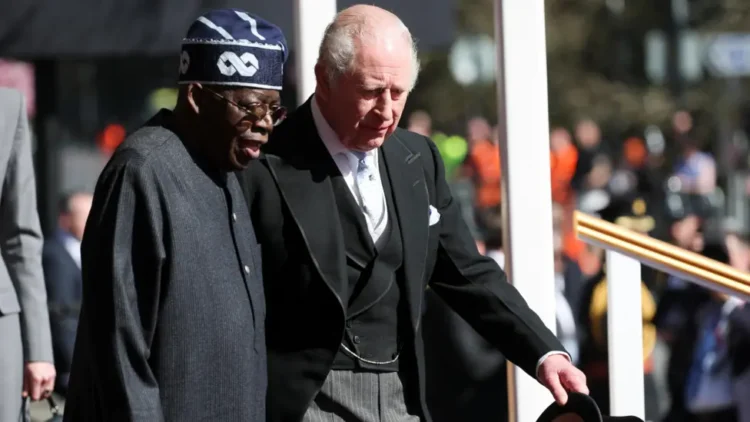
King Charles III welcomed the President of Nigeria to the United Kingdom this week, marking the first state visit by a Nigerian leader in 37 years. The historic occasion, rich in symbolism and diplomatic significance, underscores a renewed commitment to strengthening ties between the UK and one of Africa’s most influential nations at a time of shifting global alliances and economic recalibration.
The ceremonial welcome took place with all the pageantry traditionally associated with a state visit. Crowds gathered along the Mall, Union flags fluttered in the early spring breeze, and the visiting president was greeted with a full military honor guard. The King, accompanied by senior members of the Royal Family, received his guest with a warmth that reflected both the longstanding historical relationship between the two countries and the desire to forge a modern partnership rooted in mutual respect and shared interests.

AD: Capeesh Restaurant
This visit is particularly notable given the length of time since the last such occasion. Nearly four decades have passed since a Nigerian head of state was accorded this level of diplomatic reception in the UK. In that time, both nations have undergone profound transformations. Nigeria has evolved into Africa’s largest economy and most populous country, while the UK has navigated its own shifting role on the global stage, particularly in the post-Brexit era. The meeting, therefore, is not merely ceremonial—it is a strategic recalibration.
At the heart of the discussions between the two leaders are issues of trade, security, climate change, and cultural exchange. Nigeria represents a critical partner for the UK in Africa, offering vast economic potential, a youthful and dynamic population, and significant natural resources. British officials have signaled a strong interest in expanding trade links, particularly in sectors such as technology, renewable energy, and infrastructure development.
The Nigerian president, in turn, has emphasized the importance of attracting foreign investment to support his country’s economic reform agenda. Nigeria has faced a range of economic challenges in recent years, including currency instability, inflation, and the need to diversify away from oil dependency. Strengthening ties with the UK is seen as a key component of this broader strategy, providing access to capital, expertise, and international markets.

AD: Oysterian Sea Food Restaurant And Bar
Security cooperation is another central pillar of the visit. Both nations share concerns about regional instability, terrorism, and organized crime. Nigeria continues to confront insurgencies and security threats in various parts of the country, and collaboration with international partners remains crucial. British support in areas such as intelligence sharing, training, and capacity building has been ongoing, and the visit provides an opportunity to deepen that cooperation.
Climate change has also featured prominently in the discussions. Nigeria, like many countries, is grappling with the environmental and economic impacts of a changing climate, including desertification in the north and flooding in coastal regions. The UK has positioned itself as a global leader in climate action, and both sides have expressed a commitment to working together on sustainable development initiatives, clean energy projects, and climate resilience.
Beyond politics and economics, the visit carries a powerful cultural dimension. The UK and Nigeria are linked by deep historical and social ties, not least through the large Nigerian diaspora in Britain. This community has made significant contributions to British society across fields such as business, academia, the arts, and public service. The state visit serves as a celebration of these connections, highlighting the human dimension of bilateral relations.
Cultural events have been organized to coincide with the visit, showcasing Nigerian art, music, and literature. These initiatives aim to foster greater understanding and appreciation between the two nations, reinforcing the idea that diplomacy extends beyond government-to-government interactions to encompass people-to-people connections.
The symbolism of the King hosting the Nigerian president is also significant in a broader historical context. The relationship between the UK and Nigeria is rooted in a complex colonial past, which continues to shape perceptions and dialogue. While the legacy of that history cannot be overlooked, both countries have increasingly sought to redefine their relationship as one of equal partners.
In recent years, there has been a growing emphasis on acknowledging historical injustices while focusing on future collaboration. The tone of this visit reflects that balance—respectful of the past but firmly oriented toward shared opportunities ahead. The King’s role, largely ceremonial yet deeply symbolic, provides a platform for expressing this evolving relationship.
Observers note that the visit comes at a time when the UK is actively seeking to strengthen its global partnerships beyond Europe. Africa, with its rapidly growing economies and strategic importance, has become a focal point of this effort. Nigeria, as a regional powerhouse, is central to that strategy.
For Nigeria, the visit represents an opportunity to assert its position on the global stage and to build alliances that can support its development goals. The president’s engagements during the visit extend beyond the royal reception to include meetings with government officials, business leaders, and representatives of international organizations.
The business community has shown particular interest in the visit, with forums and roundtable discussions organized to explore investment opportunities. British companies are keen to expand their presence in Nigeria, while Nigerian entrepreneurs are looking to access UK markets and expertise. The emphasis on economic partnership reflects a shared recognition that trade and investment are key drivers of sustainable growth.
Public reaction to the visit has been largely positive, though not without some critical voices. In the UK, there is interest in the potential economic benefits and the strengthening of international ties. In Nigeria, the visit is seen as a sign of international recognition and an opportunity to attract investment, though some have raised questions about the tangible outcomes that will follow.
Diplomatic visits of this nature often serve multiple purposes: they are moments of spectacle, opportunities for negotiation, and signals of intent. The true measure of success, however, lies in what comes next. Agreements reached, partnerships formed, and initiatives launched in the wake of the visit will determine its lasting impact.
As the state visit unfolds, there is a sense that it marks the beginning of a new chapter in UK-Nigeria relations. The combination of historical ties, shared interests, and forward-looking ambition provides a strong foundation for cooperation. Both leaders have emphasized their commitment to building a partnership that delivers benefits for their respective populations.
In a world characterized by uncertainty and rapid change, such partnerships are increasingly important. The challenges facing both nations—from economic pressures to climate change—require collaborative solutions. The state visit, with its blend of tradition and modern diplomacy, serves as a reminder of the enduring value of international engagement.
The image of the King standing alongside the Nigerian president, framed by the grandeur of royal ceremony, encapsulates the essence of the moment: a meeting of histories, a convergence of interests, and a shared vision for the future. Whether this visit will translate into lasting progress remains to be seen, but its significance as a milestone in bilateral relations is already clear.
As the final events of the visit take place and the delegations prepare to depart, attention will turn to the practical steps needed to turn dialogue into action. The commitments made during these few days of high-level engagement will require sustained effort and follow-through. Yet, the tone set by this historic visit suggests a willingness on both sides to rise to that challenge.
In the end, the first UK state visit by a Nigerian president in 37 years is more than a diplomatic occasion—it is a statement of intent. It signals a readiness to move beyond the constraints of the past and to embrace a future defined by partnership, cooperation, and shared opportunity.

AD: Heritage And Restaurant Lounge Bar