
By Tony O’Reilly-
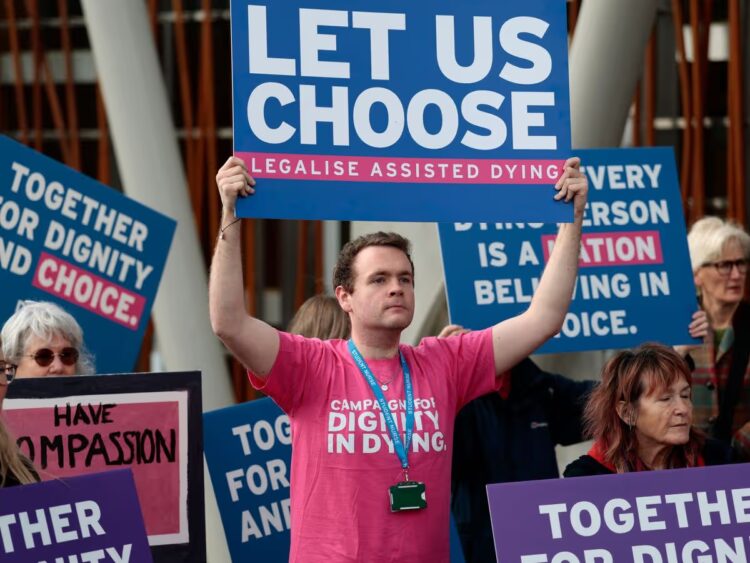
In a dramatic and deeply personal debate that stretched late into the night on 17 March 2026, the Scottish Parliament voted against legalising assisted dying, thwarting a bill that had ignited passions across the country and sparked profound questions about autonomy, compassion and societal responsibility. The result 69 MSPs against and 57 in favour not only preserves the status quo but also exposes deep fractures in Scotland’s political and moral landscape.
Rather than marking an endpoint, the vote has revealed complex fault lines within Scottish society. With proponents, the bill represented a humane response to unbearable suffering; for opponents, it raised thorny concerns about protecting vulnerable people and maintaining the ethical foundations of healthcare and public life.

AD: Capeesh Restaurant
The defeat of the Assisted Dying for Terminally Ill Adults (Scotland) Bill marks not just a political setback for its supporters but a cultural crossroads for a nation wrestling with how it defines dignity at the end of life.
At the centre of the storm was Liam McArthur MSP, the Liberal Democrat lawmaker who introduced the bill and argued passionately that Scotland should join other jurisdictions in offering terminally ill adults the option to choose the timing and manner of their death.
Supporters pointed to what they termed “compassionate choice” and told deeply personal stories of loved ones who endured painful final weeks or months.

AD: Oysterian Sea Food Restaurant And Bar
They said the proposed law included strong safeguards including requirements for two doctors’ approval and strict criteria on mental capacity and prognosis that would make it among the most rigorously regulated regimes in the world.
Yet even as McArthur appealed to MSPs’ sense of empathy and individual freedom, opponents raised equally heartfelt objections. Some MSPs spoke of their own experiences with vulnerable family members, warning that any law allowing assisted dying could be misused or lead to subtle coercion of those less able to resist social pressures.
Others urged caution on moral and religious grounds, arguing that society’s obligation is to care for the dying, not to assist in ending their lives. This split reflected wider public uncertainty and once again underscored why assisted dying remains one of the most contested ethical issues in modern politics.
Complicating the debate were concerns about how assisted dying would be implemented within Scotland’s already stretched healthcare system.
Opponents, including government officials and members of the medical community, cautioned that introducing the service could place additional burdens on the National Health Service (NHS) and hospice care, which are already facing staffing shortages and resource constraints.
Analyses of the Assisted Dying for Terminally Ill Adults (Scotland) Bill highlighted gaps in planning, funding, and operational guidance, raising questions about whether the NHS could safely manage the proposed procedures alongside existing responsibilities.
Similar warnings have emerged from studies in other UK jurisdictions, noting that without substantial investment and careful structuring, assisted dying services could inadvertently strain health services and palliative care provision.
They argued that more pressing priorities palliative care, social support and mental health services deserved focus before expanding the legal framework for assisted death.
The vote’s narrow margin underscored the degree to which MSPs were divided across party lines, with members from across the political spectrum voting both for and against the bill.
In a rare “free vote,” politicians were not whipped by party leaderships but instead cast their decisions in accordance with personal conscience a procedural choice that highlighted the bill’s moral complexity and the gravity with which MSPs approached the issue.
Scotland’s decision has reignited a broader conversation about assisted dying not just within the nation’s borders but across the United Kingdom and beyond. While countries such as Canada, the Netherlands and parts of the United States have legalised forms of assisted dying under strict conditions, the Scottish rejection reinforces the reality that there is no universal consensus even among societies with broadly similar values.
Crucially, supporters of assisted dying point out that this defeat may not be the end of the road. The bill’s backers have already signalled intentions to revisit the issue in future parliamentary sessions, arguing that public opinion particularly among younger generations continues to shift toward greater acceptance of end‑of‑life autonomy.
Religious organisations and disability advocacy groups also played visible roles in the debate, highlighting the diverse and sometimes competing priorities at stake.
Some faith communities espoused traditional positions against assisted dying, reaffirming long‑standing teachings about the sanctity of life, while others called for a re‑examination of doctrinal positions in light of contemporary ethical discourse.
Disability rights advocates raised concerns about how legal frameworks might impact those with reduced agency, emphasising the need for robust safeguards.
The parliamentary rejection also resonates against the backdrop of similar struggles in other parts of the UK. In England and Wales, assisted dying legislation has been debated extensively, with proposals facing continual amendments and delays in the House of Lords and intense scrutiny over regulatory competence and ethical safeguards. Scotland’s vote adds another chapter to this ongoing national and international discussion.
With many Scots, however, the debate is ultimately deeply personal not a theoretical legal exercise, but a visceral reflection of how society chooses to support those in the most vulnerable phases of life. The impassioned speeches, the tears in the parliamentary chamber, and the poignant testimony of constituents all underscored that this is not merely a policy dispute but a question of identity and ethical direction.
In the aftermath of the vote, both sides of the debate have framed the result as a call to action. Opponents see the outcome as a validation of protective principles and a reinforcement of Scotland’s commitment to safeguarding vulnerable people.
Supporters view the narrow defeat as evidence that the momentum behind assisted dying remains strong and that future parliaments may yet succeed where this one did not.
Compassion groups, healthcare professionals and advocacy organisations have all stated that the conversation is far from over. They emphasise the need for ongoing dialogue not only within the corridors of Holyrood but throughout homes, communities and healthcare settings across Scotland.
While one supporter put it after the vote, “This is not the end of the conversation; it’s simply the beginning of a more inclusive and informed public discussion on how we help our fellow citizens at the end of life.”
Ultimately, Scotland’s rejection of assisted dying legislation on 17 March 2026 will be remembered not simply as a legislative defeat but as a moment of national reckoning on one of the most profound ethical issues of the modern age a debate that touches on autonomy, dignity, responsibility and the kind of society Scotland aspires to be.

AD: Heritage And Restaurant Lounge Bar