
By Isabelle Wilson-
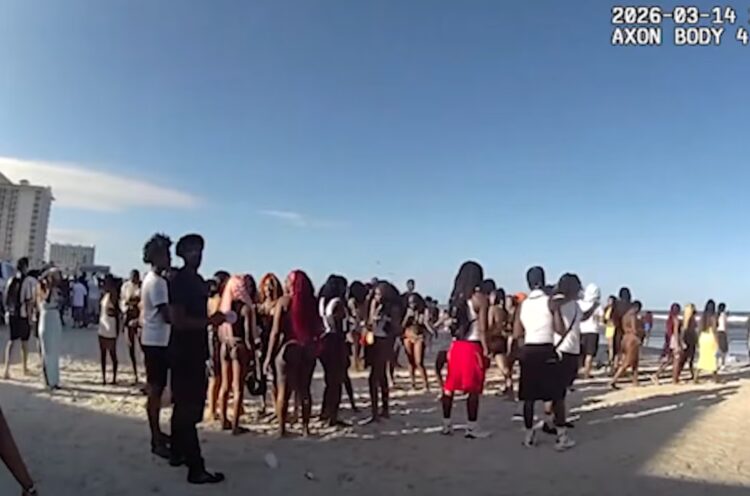
Thousands of spring breakers have flooded Florida’s beaches this month, leading cops to step up their operations and take action against so-called “takeover” events.What was once a predictable annual rite of passage sun, surf and youthful revelry has morphed into a flashpoint of public safety, strained resources and political frustration along Florida’s famed Gulf Coast. This year’s Spring Break “takeovers” have not only overwhelmed local law enforcement but exposed deeper tensions in how coastal communities balance tourism, safety and social media‑fueled mass gatherings.
The week that began with upbeat celebrations quickly devolved into scenes of mayhem and confusion. Thousands of young visitors flocked to Daytona Beach, Panama City Beach and other hotspots, drawn by loosely organised “takeover” events promoted on social platforms.

AD: Capeesh Restaurant
In Daytona Beach, what began as a lively crowd turned into a panicked stampede after the sound of water bottles being crushed was mistaken for gunfire, sending sunbathers and partygoers scrambling despite law enforcement’s confirmation that no shots were fired on the sand.
Law enforcement officials say these events are distinct from traditional spring break celebrations, in part because they are not sanctioned by local authorities and attract attendees with little regard for local laws or public safety.
“These takeover parties are organised by promoters the city isn’t aware of, and they can grow quickly,” Daytona Beach Commissioner Stacy Cantu highlighting the dangerous gap between spontaneous crowds and police preparedness.

AD: Oysterian Sea Food Restaurant And Bar
With local sheriffs and police chiefs grapple with rapidly swelling crowds, many are sounding the alarm on the limits of their capacity. More than 130 people were arrested over one weekend in Volusia County alone, with deputies reporting widespread alcohol violations, public disorder and multiple unrelated shootings in the broader city area.
But for residents and officials in communities like Panama City Beach, the issue is not just arrests it’s a recurring pattern that stretches back several years. Municipal records describe how last year’s takeover gatherings overwhelmed emergency services, led to violent incidents and forced temporary curfews and beach closures to restore public order.
The lure of social media has transformed what used to be word‑of‑mouth spring break trips into viral mass movements where users coordinate meet‑ups without permits, safety planning or clear leadership.
Municipal authorities warn that these gatherings drain municipal resources, from police and fire rescue to emergency medical services, and contribute to “chaotic,” unsafe conditions for both visitors and residents alike.
Local businesses, which traditionally benefit from the spring tourism economy, have expressed mixed feelings. While some welcome the economic surge, others say the volume of disruptive visitors has dampened year‑round tourism and strained community tolerance.
Owners of beachfront properties near Pier Park in Panama City Beach reported crowds that swelled without warning, leaving behind litter, noise complaints and increased demand on sanitation services.
The reaction from residents has been increasingly vocal. Many locals argue that Florida’s reputation as the ultimate spring break destination has shifted from family‑friendly fun to borderline lawlessness.
“When the crowd takes over our streets and ignores public safety, it stops being a celebration and starts being a problem,” said one lifelong Panama City Beach resident at a town meeting focused on spring break planning.
Adding to the tension, communities have begun to adopt restrictive measures in response to the recurring chaos. Panama City Beach has instituted curfews for unaccompanied minors, restricted beach alcohol consumption, and banned certain late‑night activities in high‑traffic areas policies aimed at curbing the very behaviour that authorities say often flares during takeover events.
Not all of Florida has taken the same approach. In parts of South Florida, local leaders have tried to steer the narrative by redefining what spring break means. In Miami Beach, marketing efforts have targeted a health‑conscious visitor demographic while imposing stepped‑up security checkpoints, DUI enforcement and regulated beach access to minimise disorder.
The state’s law enforcement leadership isn’t sitting idle either. Florida Governor Ron DeSantis has ordered enhanced deployment of state troopers to support local police during peak spring break weeks, emphasising that while visitors are welcome to enjoy Florida’s attractions, there must be “order and respect for local law.”
Still, there is growing recognition that the current model of spring break might be unsustainable without new strategies to manage crowds and curb the outsized influence of social media organisers.
Some law enforcement veterans argue that the focus should shift toward education and cooperation working with colleges, tourism boards and local governments to communicate expectations long before students arrive.
Critics of the status quo are quick to point out that spontaneous takeovers aren’t limited to beaches. Similar phenomena have occurred at malls and public parks across the region, where loosely organised groups converge without planning, overwhelming law enforcement and often resulting in fights or disorderly conduct.
The consequences are more than anecdotal. Emergency dispatch centers in several coastal counties have reported critically high call volumes from fights and medical emergencies to traffic gridlocks that strain both personnel and infrastructure.
Reports from municipalities show that local resources are frequently stretched thin during peak spring break weeks, prompting some communities to call for additional state and federal assistance.
Meanwhile, outbreaks of rumours and misinformation during these events only compound public safety fears. Footage circulating online during recent Daytona Beach incidents showed crowds fleeing and posted claims of shootings but authorities later clarified that many of the viral videos were misinterpreted, with panic triggered by harmless noises rather than firearm fire, even as unrelated violence did occur elsewhere in the city.
The picture that emerges isn’t one of isolated incidents but of a broader cultural shift. What was once a seasonal phenomenon has evolved into a yearly stress test of law enforcement readiness, community patience, and the ability of Florida’s cities to host massive unregulated crowds without descending into chaos.
The spring break season continues into April, officials are watching closely to see if this year’s early disruptions signal a worse trend ahead or if the mix of enforcement, community rules and policing tactics can temper the worst excesses.
Some experts believe that unless organisers, participants and authorities find a common ground for crowd management and safety planning, these takeover events will continue to define, rather than just accompany, spring break in the Sunshine State.
With the story in Florida remains one of competing visions: vibrant tourism and youthful freedom versus public safety, local quality of life, and the heavy cost of policing spontaneous mass gatherings. And in this battle of priorities, there are no easy answers.

AD: Heritage And Restaurant Lounge Bar