
By Ben Kerrigan-
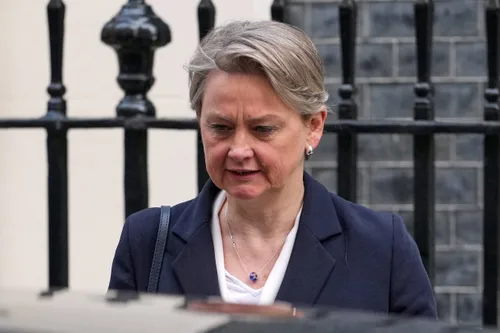
Britain’s foreign policy debate intensified this weekend after UK Foreign Secretary Yvette Cooper firmly rejected calls from former prime minister Tony Blair for the United Kingdom to support American military strikes on Iran ordered by US President Donald Trump. The disagreement has exposed a widening divide within British political circles over how closely the UK should align itself with US military action in the Middle East.
Speaking during a series of Sunday interviews, Cooper defended the government’s decision not to participate in the initial wave of US-Israeli strikes against Iranian targets, arguing that Britain must take a “cool-headed” approach guided by national interests and lessons learned from previous conflicts.

AD: Capeesh Restaurant
She insisted that blindly supporting Washington would risk repeating mistakes associated with the 2003 Iraq war, which continues to shape Britain’s cautious stance toward military intervention.
Blair had earlier criticized the government of Prime Minister Keir Starmer for failing to back Washington from the outset of the escalating confrontation with Iran. The former Labour leader argued that the UK should stand firmly alongside the United States, describing the alliance as a cornerstone of Britain’s security architecture.
He suggested that allowing American forces to use British airbases earlier would have demonstrated unity between the two long-standing allies.

AD: Oysterian Sea Food Restaurant And Bar
Cooper dismissed that argument, stressing that foreign policy decisions must be made independently rather than dictated by alliance expectations. She warned against “outsourcing” British diplomacy to other governments and emphasised that the UK must carefully assess each international crisis on its own merits.
The row comes amid a broader geopolitical crisis following US-led strikes on Iranian facilities, which Washington claims were aimed at weakening Iran’s missile and military infrastructure.
Britain chose not to join those attacks directly, though it later allowed the United States to conduct limited defensive operations from British bases to counter missile threats targeting the Gulf region and protect British nationals.
The disagreement between Cooper and Blair has reopened political wounds tied to the Iraq conflict, when Blair aligned the UK with the United States under President George W. Bush. Critics argue that the legacy of that decision still shapes public skepticism toward military involvement in the Middle East. Cooper alluded to this history, saying Britain must ensure it “learns the lessons” of past wars before committing to new conflicts.
The dispute has also played out against a tense backdrop in relations between London and Washington. President Trump publicly criticized Britain’s reluctance to support the strikes, accusing the UK government of reacting too slowly and suggesting American forces did not need British assistance after the initial operations had already begun.
Trump’s remarks sparked diplomatic efforts to calm tensions. According to update reports, Prime Minister Starmer held a phone conversation with the US president to reaffirm the long-standing military cooperation between the two countries. Officials on both sides described the call as constructive, though differences remain over the UK’s initial refusal to join offensive strikes.
The prime minister has repeatedly stated that Britain will focus on defensive measures rather than direct military engagement. Government sources say this includes protecting British citizens in the Gulf region and supporting allied forces facing missile and drone attacks, without becoming a full participant in the war effort.
Meanwhile, it highlight that the government is preparing contingency military deployments should the situation escalate further. One option under consideration involves the possible deployment of the Royal Navy aircraft carrier HMS Prince of Wales to the region as part of a defensive maritime presence.
Officials emphasise that such steps would not signal participation in offensive strikes but rather strengthen regional security and deterrence.
Domestic political pressure on Starmer has intensified as the crisis unfolds. Some Conservative and security commentators have echoed Blair’s view that Britain risks weakening the “special relationship” by hesitating to support its closest ally during a military confrontation.
Others, however, have praised the government’s cautious approach, arguing that public opinion strongly favors avoiding another Middle Eastern war.
Recent polling reflects this sentiment. Surveys suggest only a small minority of Britons support direct UK involvement in military action against Iran, while a large majority favor defensive measures and diplomatic solutions instead.
Within the Labour Party itself, the debate has revealed generational differences about how the UK should respond to global security crises. Some senior figures believe that maintaining strong ties with Washington requires visible support in moments of conflict. Others insist that modern alliances must allow for disagreement and independent decision-making.
Cooper appears firmly aligned with the latter camp. In interviews, she emphasized that Britain’s responsibility is to protect its citizens and uphold international law rather than simply follow the strategic choices of another country. She argued that the government must weigh the risks of escalation, the legal basis for military action, and the long-term stability of the region before committing to war.
At the same time, she rejected suggestions that the UK was abandoning its alliance with the United States. British officials note that American forces continue to use certain UK facilities for defensive operations and logistical support, demonstrating that cooperation between the two countries remains intact despite political disagreements.
Analysts say the dispute highlights a deeper shift in how Britain defines its role in global conflicts after decades of close military alignment with the United States. While the “special relationship” remains central to British foreign policy, the Starmer government appears determined to assert greater independence when deciding whether to participate in military action.
While the UK’s stance remains unchanged supporting defensive operations, encouraging diplomatic efforts to reduce tensions with Iran, and avoiding direct involvement in offensive strikes—officials acknowledge that the situation remains highly volatile.
Government advisers say Britain is closely monitoring developments across the Gulf region, particularly the risk of retaliatory missile or drone attacks that could threaten international shipping routes or British military personnel stationed abroad.
Senior ministers have emphasized that maintaining stability in the region remains the government’s priority. Diplomatic channels with regional partners and European allies are being intensified in an effort to prevent further escalation.
British officials are also continuing to engage with US counterparts, seeking to balance cooperation with a clear message that the UK’s military participation will remain limited to defensive roles.
Behind the scenes, security planners are reviewing contingency scenarios should the conflict widen. This includes preparing evacuation plans for British citizens in nearby countries and ensuring that Royal Air Force assets in the region remain ready to respond to emerging threats.
Political pressure, however, is unlikely to fade quickly. Critics within Parliament argue that Britain risks appearing indecisive at a critical geopolitical moment, while others warn that deeper involvement could draw the country into another prolonged Middle Eastern conflict. While tension rise and alliances are tested, Britain’s strategy of cautious engagement may soon face its most significant challenge.

AD: Heritage And Restaurant Lounge Bar