
By Aaron Miller-
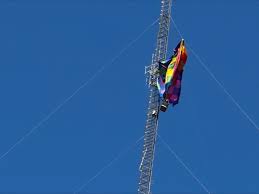
In a dramatic and rare emergency rescue that captured national attention, firefighters from the Longview Fire Department in Texas are speaking out about their role in saving two people stranded more than 900 feet in the air after their hot air balloon became entangled in a cell tower late last month. The daring operation unfolded on Feb. 28, when the basket of a balloon carrying a man and a woman struck a communications tower near Longview, Texas, leaving them trapped high above the ground and sparked what rescuers are now calling the “Super Bowl of rope rescues.”
Lt. Stephen Winchell and firefighter Cliff Patrick, members of the department’s specialist rescue team, described the incident as one of the most technically challenging missions they have ever undertaken.

AD: Capeesh Restaurant
“Everyone showed up and everyone brought their A‑game to it,” Patrick told ABC News, noting that hours of rigorous training made all the difference in bringing the stranded balloonists to safety. “It was a very rewarding experience to be a part of that.”
The sequence of events began early that Saturday when the hot air balloon part of a local flight drifted off course and collided with the towering structure, eventually becoming snagged high above the East Texas landscape. Emergency dispatchers quickly alerted the Longview department’s special operations team, who responded within minutes.
But as crews surveyed the situation, the full scale of the challenge became clear: the balloon’s basket was wedged nearly 920 feet above ground, its occupants clinging to hope amid swaying metal and strong gusts of wind. Traditional rescue techniques and equipment, typically used for lower‑altitude operations, would not suffice.

AD: Oysterian Sea Food Restaurant And Bar
With Winchell, the moment demanded calm and decisive action. “I grabbed a little bit of gear, got the basics of the plan, and started climbing because we knew we had a long way to go,” he said. Firefighters ascended the tower in stages, connecting lengths of rope and anchoring themselves at multiple intervals to steady their progress as they climbed toward the unreachable height.
While they scaled the steel structure, conditions tested both physical strength and mental focus. Winds that varied from 10 to 20 miles per hour with gusts up to 24 made the tower sway, creating a constant sense of motion and danger. “This basket is tenuously hanging on the tower by a thread,” Patrick recalled, underscoring how precarious the entire situation had become.
Once the team reached the balloon, they found the two passengers conscious but clearly shaken by the ordeal. One was standing within the basket, the other seated, clinging to its frame as it swayed in the breeze. Firefighters had to act quickly and methodically to secure them first to the tower itself, and then into harnesses that would allow them to be lowered safely to the ground.
Winchell and his crew worked in a sequence that took precision and trust. Every rope knot was double‑checked, and every movement planned to prevent sudden shifts that could imperil those above and below. The descent took as long as the climb each footstep down carried the same risks as the ascent.
Drone footage captured the heart‑pounding rescue, showing the passengers transitioning from the hot air balloon basket to secure positions on the tower before being carefully lowered. The video has since circulated across social media and news outlets, eliciting both awe and relief from viewers who watched from afar.
After what by all accounts was a prolonged and physically demanding mission, both passengers and rescuers reached the ground safely. The balloonists were transported to a local hospital as a precaution and were later released in stable condition, their families expressing profound gratitude for the work of the first responders.
Public officials wasted little time in lauding the firefighters’ efforts. In a statement shared on social media, the Upshur County Constable’s Office praised the Longview Fire Department’s courage and professionalism, saying their response was “nothing short of extraordinary.”
“They prepared for a moment like this and when the call came, they executed flawlessly,” Constable Tim Barnett said, adding that the balloonists and their families were “beyond grateful” for the lifesaving work.
With Winchell and Patrick, the rescue was both a testament to their training and a reminder of the unpredictable nature of emergency response work. “This wasn’t an everyday rescue,” Winchell said, emphasising how situations like these require a unique blend of physical readiness, technical skill and mental resilience.
Fire departments routinely train for high‑angle rope rescues, but few encounters match the unique challenge of rescuing people from such extreme heights. According to fire rescue specialists, operations of this nature demand specialised equipment and personnel trained in high angle rope rescue a discipline used for cliff, tower and building scenarios where traditional ladders and aerial devices cannot reach.
In Longview’s case, the department’s special operations unit brought together firefighters from multiple stations, each equipped with harnesses, pulleys, and ropes designed to support weight at extended heights. Lt. Winchell said the coordination between team members was seamless, an indication of countless hours of joint training and preparation.
Patrick echoed that sentiment, reflecting on the camaraderie that emerged during the rescue. “Everyone showed up ready,” he said, noting how the team’s preparation allowed them to work with a shared confidence that ultimately saved lives.
Wind conditions, while a complicating factor, also played a less disruptive role than they might have, according to weather reports. The relative stability of the morning breeze gave rescuers a narrow window to carry out their plan without the added danger of turbulent gusts. Still, operating nearly a thousand feet in the air meant there was nothing but sky beneath them a thought that both exhilarated and sobered the firefighters.
While incidents like this remain rare, they highlight the extraordinary situations first responders may face and their readiness to act under pressure. Steep cliffs to high-altitude rescues, firefighters consistently prepare for situations that most individuals would never foresee facing.
When the call finally comes in, it’s up to those crews to convert theory into life‑saving action just as they did in East Texas on that fateful February morning.

AD: Heritage And Restaurant Lounge Bar