
By Isabelle Wilson-
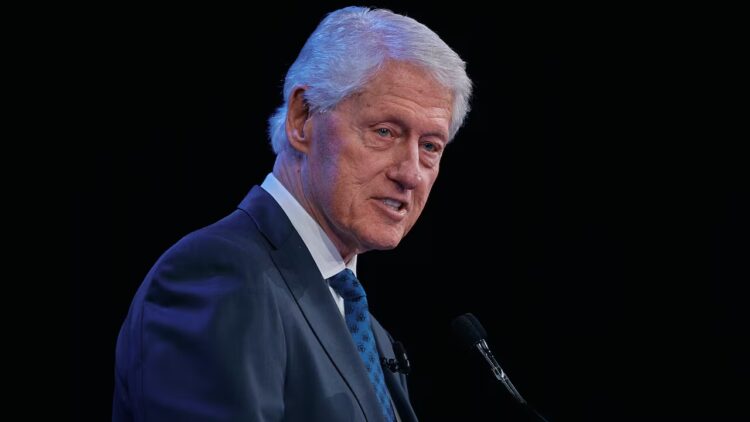
Former President Bill Clinton told lawmakers in a briskly released deposition that he never saw convicted sex offender Jeffrey Epstein engage in any sexual abuse of women or girls, according to video footage and committee releases. In testimony to the House Oversight Committee, Clinton repeatedly stated that while he knew Epstein socially, he never witnessed wrongdoing, did not discuss sexual topics with him, and had no memory of events suggesting abuse remarks meant to distance himself from decades‑old associations.
The deposition the first time a former U.S. president has been compelled to testify before Congress on such a matter was conducted last week behind closed doors in Chappaqua, New York, and footage was subsequently released by House Republicans. It comes amid an ongoing Republican‑led investigation into how the federal government handled Epstein’s criminal cases and the broader network of powerful figures connected to him.

AD: Capeesh Restaurant
At several points, Clinton was asked directly about whether he ever witnessed Epstein sexually abusing anyone. “No,” Clinton replied. When questioned if he ever saw Epstein inappropriately receive massages from young women or girls, Clinton similarly said he could not recall any such moments.
Pressed by lawmakers with the benefit of hindsight whether anything he saw or experienced suggested Epstein was sexually trafficking or abusing women or girls Clinton responded that he did not believe so. He said nothing he encountered made him suspicious of such conduct.
Those lines of questioning reflect the intensely political nature of the inquiry, as Republicans have sought to illuminate past interactions between Epstein and prominent figures in politics, finance and philanthropy.

AD: Oysterian Sea Food Restaurant And Bar
Clinton’s testimony echoed that position: he acknowledged knowing Epstein and traveling on his private jet for Clinton Foundation humanitarian work in the early 2000s, but characterised those interactions as professional and unrelated to any trafficking or abuse.
At one point, Clinton also described Epstein as “odd,” though he said that, in his experience, there was “nothing that I saw when I was around him that made me realize he was trafficking women.”
Clinton’s team described the testimony as a straightforward account of limited acquaintance, emphasising that the former president severed ties with Epstein long before Epstein’s 2008 conviction for soliciting prostitution from a minor and long before investigations into Epstein’s broader trafficking network gained intense scrutiny.
Republican members of the committee used Clinton’s deposition to highlight the contrast between his public record and his past proximity to Epstein.
They referenced archived photos and flight logs of Clinton aboard Epstein’s plane, noting that the former president and his entourage traveled internationally on multiple occasions in the early 2000s as part of global charity missions. Clinton confirmed those trips occurred and reiterated they were related to the foundation’s work.
Lawmakers also reviewed images released in related litigation showing Clinton in social settings with Epstein and others, including one in which an unidentified woman appears in a swimming pool alongside Clinton. He said he did not know the woman and emphatically denied engaging in sexual contact with anyone introduced by Epstein.
During the deposition, some questions took a conspiratorial turn, with one Republican lawmaker alluding to a long‑circulated allegation that Epstein once joked Clinton “likes them young.” Clinton responded forcefully that such a claim was not true and rejected any suggestion of inappropriate conduct on his part.
The release of Clinton’s testimony comes just days after his wife, Hillary Clinton, gave a separate deposition in which she told the committee she did not recall ever meeting Epstein a stark contrast to her husband’s recollections of occasional encounters.
Republican Oversight Committee Chairman James Comer (R‑Ky.) described the testimony as “important context” for understanding how Epstein’s social circle included figures across the political spectrum, while acknowledging that neither Clinton has been accused of criminal wrongdoing.
Comer has also rejected claims from Democrats that the inquiry is partisan, asserting that the goal is to better understand government oversight failures in the Epstein case.
Democratic members, for their part, argued that the testimony raises more questions than it answers, including about the extent of public records and transparency surrounding Epstein’s activities and associations. Some Democrats have called for a broader examination of how law enforcement and prosecutors handled Epstein’s cases years earlier.
Political analysts note that Clinton’s testimony may have ripple effects beyond this investigation, feeding into broader debates over accountability for public figures associated with Epstein.
The fact that a former president had to be subpoenaed and publicly questioned underscores how sensitive and politically charged the issue remains even nearly a decade after Epstein’s death in custody in 2019 while awaiting trial on sex‑trafficking charges.
Clinton also addressed questions about whether other prominent figures, including former President Donald Trump, were discussed in connection with Epstein, saying he had brief personal conversations with Trump about Epstein years earlier but had no knowledge of wrongdoing on Trump’s part in relation to Epstein.
“Those interactions were limited,” Clinton told lawmakers, adding that no discussions involved inappropriate behavior or allegations. However, Clinton’s comments about Trump which surfaced in parallel reporting from other outlets underscored how various political factions are seizing on the deposition to support rival narratives.
Throughout his hours of testimony, Clinton repeated variations of “I do not recall” and “I saw nothing,” language that Democrats and Clinton supporters have used to frame the deposition as a straightforward denial rather than a substantive revelation. They stress that the testimony does not alter legal conclusions about Epstein’s actions or Clinton’s lack of involvement in criminal conduct.
Still, Republicans pointed to Clinton’s own words as affirming that he had no direct knowledge of Epstein’s abuse, while also noting the broader questions raised by Epstein’s continued association with high‑profile leaders before his crimes came to light.
Critics of Republican members of Congress contend the focus on figures like Clinton serves political purposes as the 2026 election cycle begins to take shape an argument amplified on social media and by commentators who believe the investigation conflates political theatre with substantive oversight.
Epstein’s victims and advocates have generally welcomed scrutiny of powerful networks around the late financier but caution that testimony like Clinton’s, which emphasises lack of awareness rather than accountability, does little to address systemic issues in how sexual trafficking cases are pursued and prosecuted. They argue that more transparency and survivor‑centered approaches are needed if public trust is to be restored.
While the political and legal battles continue, the deposition of Bill Clinton stands as a highly unusual moment in modern U.S. political history: a former president under oath before Congress, offering a definitive public account of his interactions with one of the most notorious figures in recent criminal history.
Whether that account satisfies broader questions about influence, responsibility, and justice will likely remain a topic of fierce debate across the nation.

AD: Heritage And Restaurant Lounge Bar