
By Aaron Miller-
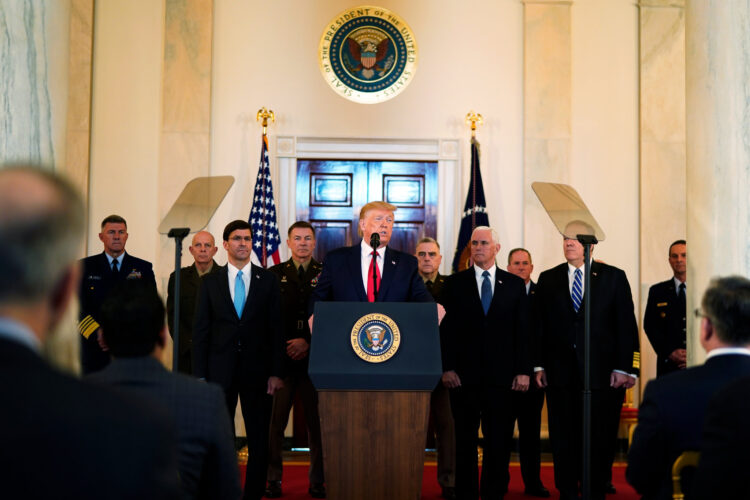
Former U.S. President Donald J. Trump has indicated a willingness to engage in talks with Iran’s remaining leadership, even as the region braces for deeper conflict following unprecedented strikes that toppled Tehran’s supreme authority. The comments made amid tense military escalation have injected a complex new chapter into an already volatile Middle East crisis.
Across capitals and battlefields alike, the landscape is shifting. Days after a coordinated U.S.–Israeli air campaign dubbed Operation Epic Fury killed Iran’s Supreme Leader Ayatollah Ali Khamenei and dozens of senior figures, Trump has publicly stated that he is “open to talks” with what is left of Iran’s governing elite, though no timeline or clear mechanism for such diplomacy has yet been offered.

AD: Capeesh Restaurant
The strikes and ensuing responses have unleashed a cascade of global effects: oil prices have surged, shipping lanes through the Strait of Hormuz have been severely disrupted, and missile exchanges have rattled allied bases in the Gulf. Iran’s interim leadership has vowed to continue the fight, framing the assault as an existential battle rather than a negotiable dispute.
In months prior to the recent violence, U.S. and Iranian officials had engaged in intermittent negotiations in neutral venues such as Muscat and Geneva, often mediated by Oman and other regional powers trying to stave off wider war.
While these rounds like those described in recent reports from others were fraught with disagreement over nuclear limits, ballistic missiles, and regional influence, they demonstrated that channels of communication remained open even under severe strain.

AD: Oysterian Sea Food Restaurant And Bar
Yet beneath this veneer of diplomacy lay simmering mistrust. Trump’s own negotiators were said to be pushing a list of maximalist demands that Tehran saw as tantamount to surrender, and past rounds repeatedly collapsed on differences over uranium enrichment and sanctions relief.
Now, as the drums of war beat louder with Iranian missile strikes against Gulf states confirmed and both U.S. and allied forces sustaining casualties Trump’s statement about possible talks appears to many observers to be as much about managing perceptions at home as it is about genuine diplomacy.
Critics argue that the offer to talk may be aimed at tempering domestic opposition to further military escalation, particularly as some U.S. lawmakers have voiced unease over the strategy.
International responses have been equally mixed. Russia has sharply condemned the U.S.–Israeli operation as “plunging the Middle East into the abyss,” warning of broader humanitarian and even radiological consequences.
Meanwhile, some European leaders have called urgently for renewed focus on diplomacy and civilian safety, underscoring fears that regional tensions could ripple outward with unpredictable effects.
The irony of diplomacy emerging amid such ferocious conflict has not been lost on analysts. While Trump’s openness to negotiation signals a potential shift from unrelenting military talking points, the specifics of any proposed dialogue remain undefined.
The White House has so far declined to lay out either conditions or timing, and Iran’s interim leaders have largely framed their response as contingent on escaping what they call coercive pressure.
Complicating matters further, Iran’s growing retaliation including missile attacks on U.S. bases and Gulf partner infrastructure has lent urgency to global calls for de-escalation. International watchdogs warn that prolonged instability in the Middle East could have cascading effects beyond energy markets and shipping, threatening to pull in powers with competing interests and alliances.
With the world watches as military skirmishes and diplomatic overtures play out in tandem. Whether Trump’s outreach can meaningfully bridge a gap widened by bombs and political brinkmanship remains an open question one with profound implications not only for Tehran and Washington, but for the precarious architecture of regional and global peace.
In recent days the conflict has intensified to levels unseen in decades. A major U.S.–Israeli military campaign, Operation Epic Fury, has struck deep into Iranian territory, resulting in the confirmed death of Supreme Leader Ayatollah Ali Khamenei and a slew of senior military figures in Tehran.
The retaliatory response from Iran has been swift, with ballistic missiles and drone assaults targeting bases and facilities across the Gulf, including in the United Arab Emirates, where attacks have already claimed civilian lives and injured dozens as part of an expanding theatre of conflict.
Amid the clashes, President Trump has publicly signalled his willingness to engage in talks with Iran’s emerging leadership, suggesting that the devastation wrought by recent strikes may have opened a tactical window for negotiation.
In an interview reported by multiple outlets, he described a potential diplomatic solution as “much easier now than it was a day ago,” portraying military pressure as a means to bring Iran back to the table rather than as an end in itself.
Yet on the ground, the picture is far more conflicted. The White House has made clear that its immediate focus remains on military pressure, with operations continuing unabated even as discussions about dialogue are mooted in public statements.
Some U.S. lawmakers support the hard-line stance, insisting that Tehran must drastically curb its nuclear ambitions, ballistic missile development, and support for regional proxies before any meaningful negotiation can succeed.
At the same time, Iranian officials both hard-line and moderate have offered a range of responses. Some in Tehran’s political apparatus have indicated they are prepared for negotiations, particularly on specific issues like nuclear constraints, while emphasising that talks cannot occur under what they view as coercive military duress.
Other elements within Iran’s leadership, especially the Revolutionary Guard, have warned that sustained U.S. pressure will only deepen resistance and fuel broader regional retaliation.
The immediate effects of this dual path of war and diplomacy are already reverberating beyond the Middle East. International markets have been unsettled by disrupted oil exports and closed airspace over key shipping lanes, with commercial carriers cancelling flights and insurers reassessing risk across Eurasian routes.
Regional powers from Turkey to Qatar have tried to cushion tensions by hosting preliminary negotiations or acting as intermediaries, hoping to avert a slide into a broader conflict that could engulf neighbouring states.
Their efforts illustrate a persistent desire among many governments to avoid a full-scale war, even while acknowledging the deep mistrust and stark strategic differences that separate Washington and Tehran.
But the stakes could not be higher. In a Middle East already fractured by overlapping conflicts in Yemen, Syria, and Gaza, and with non-state militant groups still active, the risk that U.S.–Iran tensions might ignite wider confrontations hangs over global security.
If diplomacy fails to temper the fallout of recent violence, political analysts warn that the region could face a protracted cycle of retaliation and counter-retaliation, with far-reaching consequences for energy security, refugee flows, and alliance structures around the world.
Ultimately, whether Trump’s overtures evolve into substantive negotiations and whether those talks can coexist with the ongoing military confrontation will be a defining test of modern diplomacy. The world watches not just for ceasefire lines on maps, but for signs of a fragile peace that might yet take root amid the echoes of missiles and the rhetoric of statesmen.

AD: Heritage And Restaurant Lounge Bar