
By Ben Kerrigan-
A controversial new border policy reshaping how travellers enter the United Kingdom has ignited political outrage, sparked emotional stories from affected citizens, and provoked heated debate in Westminster.
The Home Office has strongly rejected accusations that it botched the rollout of rules requiring all British dual nationals to prove their right of abode with specific documentation a move critics warn could leave people stranded overseas or denied boarding at airports and ferry terminals.

AD: Capeesh Restaurant
Government ministers have dismissed the criticism as “absurd,” while opposition MPs and campaigners argue the department failed to communicate effectively and neglected transitional safeguards.
With reports of disrupted trips, costly last‑minute paperwork, and mounting public frustration, the controversy raises urgent questions about how the policy was implemented and whether the concerns of those most affected were properly considered.
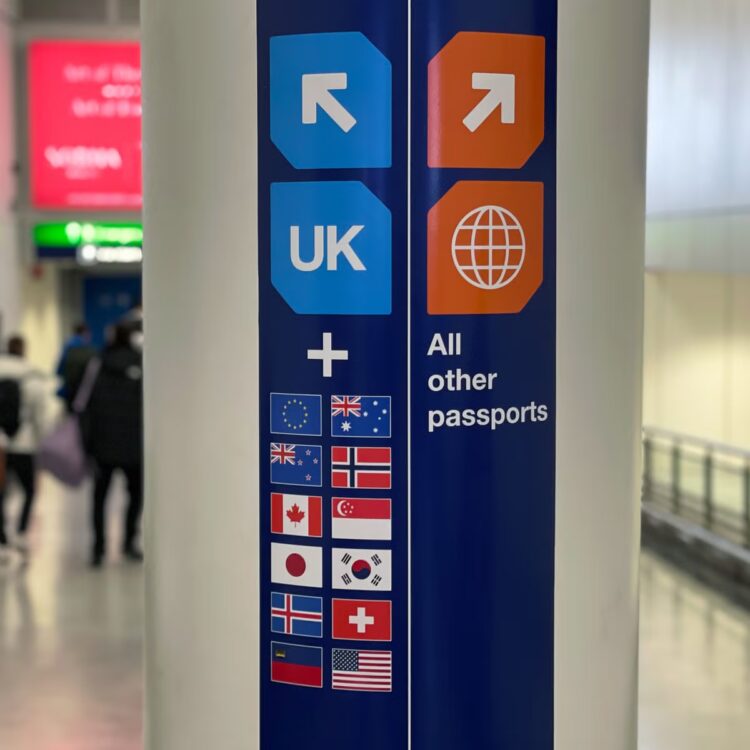
Dual British nationals -people who hold UK citizenship alongside another nationality- can from this week, no longer enter the UK simply by using their non‑British passport, even if they have the right of abode.

AD: Oysterian Sea Food Restaurant And Bar
Instead, to enter the UK and to board a flight, ferry or train, carriers must see one of the following: a valid British passport, a foreign passport with a Certificate of Entitlement to the right of abode, or in limited and discretionary cases an expired British passport issued after 1989.
The Certificate of Entitlement, which must be digitally linked to a passport, costs £589 a price many travellers have described as punitive while a standard British passport typically costs far less but can take several weeks to issue.
These changes are part of the UK’s move towards a fully digital border system, including the introduction of the Electronic Travel Authorisation (ETA) for most visitors.
Although British and Irish citizens are exempt from needing an ETA, carriers are now required to check travel permission before departure, ending previous lenience where carriers could simply check documents at the border.
Government documents state that guidance advising dual nationals to hold appropriate documents has been available on GOV.UK since October 2024 and that a communications campaign has been running since 2023. Yet because there is no central register of British citizens, there was no way to directly notify those most likely to be affected.
Opposition MPs, civil liberties groups and travel bodies have urged ministers to either delay enforcement or introduce grace‑period measures. Campaigners have pointed to low‑cost temporary authorisation systems used in countries such as Canada as examples of how the transition could have been managed more smoothly.
The policy’s implementation has coincided with a wave of personal accounts from travellers caught unawares. Some British dual nationals only discovered the new requirements when planning flights or attempting to check‑in.
Without valid UK passports or certificates, there have already been reports of passengers denied boarding a situation that has prompted public appeals for urgent government action and stories of lost weddings, business trips and family reunions.
Labour MP Kerry McCarthy shared testimonies from constituents who were unaware of the changes until reading news reports including coverage who feared they might not be able to return home from honeymoons or family visits.
Liberal Democrat Will Forster accused the Home Office of “haphazard communication” and insisted better transitional support was necessary.
Critics also highlight the cost implications. While applying for a British passport is relatively straightforward and typically costs around £94.50, the Certificate of Entitlement’s fee is around six times that amount, and persuading carriers to accept alternative documents such as expired passports remains at the discretion of airlines, ferries and train companies.
Adding to the controversy, some commentators and MPs have pointed out that as the UK’s ETA scheme applies to citizens of around 85 countries who previously enjoyed visa‑free travel, dual nationals effectively find themselves in a bureaucratic limbo: they are excluded from applying for the ETA yet must prove their British citizenship more rigorously than before.
Despite these complaints, the Home Office maintains that the changes are necessary to modernise border control and improve system security. Minister for Migration and Citizenship Mike Tapp told parliament the criticism was unfair, stressing that information about the requirement for British documentation has been publicly available for more than a year.
He reiterated that consular services and emergency travel documents are available to assist travellers who find themselves unexpectedly lacking the required paperwork.
In debates in the House of Commons, MPs such as Manuela Perteghella and Imran Hussain warned that the policy risks pricing people out of returning to their own country and urged ministers to reconsider. They cited examples from other countries where phased approaches and low‑cost authorisations helped ease transitions without undermining border integrity.
Government supporters have countered that extending deadlines would simply prolong confusion and that the information had been widely disseminated online and through official guidance.
They have emphasised that the fundamental principle that UK citizens should travel to and enter their own country with documentation proving their status is not controversial in itself.
While the debate continues, campaigners and travel groups are urging anyone with dual British nationality planning journeys to the UK to check that they hold the correct documentation well in advance of travel, to avoid boarding refusals or delays.
Even with recent concessions allowing expired passports to be used at the discretion of carriers, many travellers feel the policy shift was implemented too abruptly and without sufficient public awareness.
With ongoing reporting and personal accounts from those affected by the changes, These first-hand accounts illustrate the very real challenges facing dual nationals, from missed flights and cancelled family reunions to costly emergency travel documents.
Readers have shared experiences ranging from being turned away at airport check-ins to discovering only at the gate that their documentation did not meet the new requirements.
The newspaper is also documenting the emotional toll these policies are taking. Many travellers report heightened stress and anxiety, particularly when attempting to return from urgent situations such as medical emergencies, funerals, or work commitments.
Some families have been forced to delay reunions, while young people studying or working abroad have found themselves navigating a complex web of bureaucracy at short notice.
Through these reports, the aims to give a voice to those most impacted by the policy and to highlight systemic issues in communication and implementation. The ongoing coverage provides guidance for dual nationals on how to comply with the new requirements, including practical advice on obtaining certificates of entitlement, renewing passports, and contacting consular services.

AD: Heritage And Restaurant Lounge Bar