

By Tim Parsons-
In a night that blended tension, controversy and vindication, Vinícius Júnior had the final say as Real Madrid booked their place in the Champions League last 16 with a gritty 2‑1 victory over Benfica at the Santiago Bernabéu.
The aggregate scoreline of 3‑1 masks a contest that was far from straightforward, and a tie that had been overshadowed by unsettling allegations of racial abuse from the first leg in Lisbon. Yet for all the noise off the pitch, it was the Brazilian winger who proved decisive once more scoring in both legs and sealing victory with a composed finish just after the 80th minute.

AD: Capeesh Restaurant
The second leg began with early promise for Benfica, and they stunned the home crowd by taking the lead inside the first quarter. But Real Madrid responded swiftly, and after a dogged 80 minutes of ebb and flow, Vini Jr. proved the difference.
Moments like these crucial goals in European competition, performed under pressure are what define not just matches, but careers and club legacies. With Los Blancos, a side with a record 15 Champions League titles, progression now sets up a fresh chapter in their European campaign.
Yet the story of the tie was never just about football alone. The week leading up to this match was dominated by the fallout from allegations of racist abuse directed at Vinícius in the first leg.

AD: Oysterian Sea Food Restaurant And Bar
Benfica’s Gianluca Prestianni was provisionally banned for the second leg by UEFA, while the incident continues to be investigated a reminder that the game’s most elite stages are not insulated from the broader challenges facing football today.
The match began with Benfica surprising many observers by beginning with real intensity and intent. In just the 14th minute, Rafa Silva pounced after a scramble in the Madrid defence, tapping home to give the visitors a shock lead on the night and momentarily levelling the tie on aggregate. It was a bright start from the Portuguese side, one that showcased a willingness to attack and disrupt Real Madrid’s rhythm.
Silva tapping the ball in to make a shock lead in the 14th minute at the Santiago Bernabéu
But Real Madrid’s response was almost immediate. Within two minutes, Aurélien Tchouaméni seized on a loose ball and, with composure and precision, curled a shot into the net to restore Madrid’s aggregate edge.
The quicksilver nature of the turnaround seemed to settle the home crowd, though the Bernabéu still sensed that the tie was far from comfortable.
What followed was a tense midfield battle, sprinkled with opportunities at both ends. Benfica, for all their bright start, found it difficult to sustain pressure, while Real’s usual attacking fluency was occasionally stifled by a disciplined and increasingly confident Lisbon side.
Despite the occasional foray into the final third, neither team would add to the scoreline in the first half, leaving it poised and nervy at the break.
The second period continued in a similar vein chances created and missed, half‑opportunities ebbing away without the decisive touch. It was a match where tactical discipline battled flair, and where individual moments looked destined to decide the tiniest of margins. Then, in the 80th minute, a loose ball in midfield fell kindly to Federico Valverde, who released Vinícius on a dangerous run.
The Brazilian, cool and clinical, advanced into the box and slotted the ball past goalkeeper Anatoliy Trubin to effectively end Benfica’s hopes and confirm Real’s progression.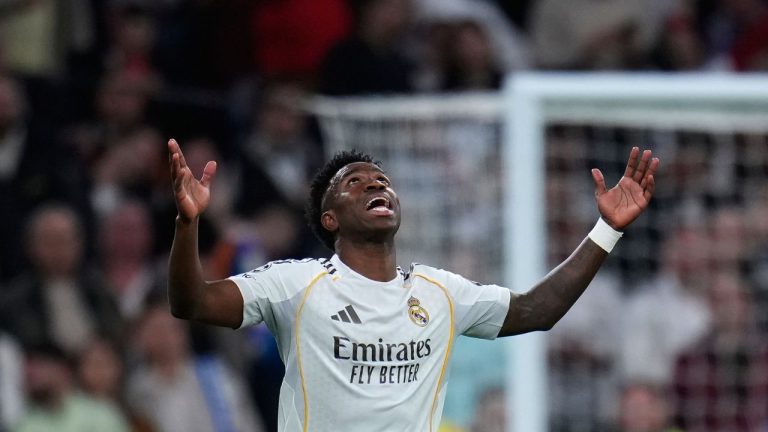
Vini Jr making it 2-1 in the 80th minute after slotting past the goalkeeper Anatoliy Trubin
The stadium erupted. Vinícius celebrated with his trademark jig by the corner flag a familiar flourish that had caught headlines in last week’s first leg and the home fans responded with wild applause. It was more than just a goal; it was a moment of catharsis in a tie filled with emotional swing and off‑field tension.
Yet this tale was never going to be told by goals alone. The first leg in Lisbon was overshadowed by allegations that Vinícius was racially abused by Benfica’s Gianluca Prestianni an incident that led UEFA to take the rare step of a provisional suspension ahead of the return leg.
Benfica’s appeal against the ban was rejected, meaning Prestianni missed the Santiago Bernabéu fixture, while Real Madrid displayed a banner reading “no to racism,” underscoring how deeply the matter resonated with players and supporters alike.
The alleged incident has sparked debate across European football circles, with former players, managers and anti‑racism campaigners urging governing bodies to take firmer action to eradicate discrimination from the sport.
Real teammates and staff have publicly supported Vinícius, while voices from inside the game have reiterated that racist abuse has no place in football.
The situation shows how the beautiful game for all its passion still grapples with society’s deeper problems, and how stars like Vinícius continue to bear the emotional weight of standing up within that context.
Real Madrid’s progression to the Champions League last 16 is a significant step in their European journey. The club now turns its attention to the draw for the next round, where elite opponents await.
While the result suggests a routine night for a record‑holding club like Madrid, the match as played required resilience and determination qualities that could prove vital as the campaign progresses.
Benfica, meanwhile, can take heart from a spirited performance over two legs. Despite falling short, the Portuguese side showed organisation, attacking intent and belief qualities that have earned them respect across European competition this season.
Their challenge now is to regroup and focus on domestic objectives, while reflecting on what might have been in this compelling and emotionally charged tie.
With Vinícius himself, the night will be remembered for more than just a winning goal. It stands as a testament to his resilience, work rate and impact at the highest level traits that have seen him flourish at the zenith of European football.
In scoring not once but twice against Benfica, he ensured that Real Madrid’s Champions League hopes lived on, even as the shadows of controversy lingered.
Football is often described as a game of moments from an audacious finish to a flashpoint controversy and this tie offered both in generous measure. In the end, it was Vinícius who had the last word, delivering a decisive blow and sending Real Madrid onward in Europe’s premier competition.
Yet as players, fans and pundits reflect on this night, the broader conversations sparked by the tie about race, respect and the responsibilities of clubs and governing bodies may prove equally significant in shaping the game’s future.

AD: Heritage And Restaurant Lounge Bar